Wuthering Waves Beginner's Guide: Resonators, Echoes & Astrite
By John Ganang 14 August 2026, 08:00 WIB
In Wuthering Waves your account is worth exactly the limited Resonators it holds, because those 5-star characters leave the Convene pool once their banner ends and cannot be summoned again, so buying the account is the only reliable way to inherit a roster you missed. This guide is the map to the whole game: how Resonators, elements, and weapon types work, what Convene and the pity system actually cost, how Astrite and Lunite differ, how Echoes decide your real power, which server to pick, and how to buy or sell an account without getting burned. Wuthering Waves is Kuro Games' open-world action RPG, released globally on 22 May 2024, and because every limited character you pull is permanent and bound to one account, the market that trades those accounts is one of the busiest in gacha gaming. Everything below ties back to that single idea, and to the part of GameMarket.gg where you can act on it.
Before diving into the systems below, new and returning Rovers should redeem any active Wuthering Waves codes for free Astrite and materials, since it costs nothing and stacks with whatever you farm here.
Why is there a Wuthering Waves account market?
The market exists because everything valuable in Wuthering Waves is permanent and account-bound. Resonators you pull and their Resonance Chains never expire, and limited event-Convene 5-stars cannot be summoned again once their banner closes, so buying the account is the only reliable way to inherit someone else's roster.
That permanence turns a lucky patch into a lasting asset. A Rover who won a limited 5-star a year ago still owns it today, while a newcomer who missed that banner has no in-game route back to it except hoping for an uncertain rerun. The account becomes the item, and its price tracks which Resonators and Resonance Chains it holds far more than how many hours have been logged. This scarcity logic is the foundation for everything else in this guide, from reading a character's rarity to judging whether a listed price is fair. Once a listing looks fair, the next question is what actually changes hands when the trade closes, covered in our guide to Wuthering Waves account transfer and ownership.
How do Resonators, elements, and weapon types work?
Every playable character is a Resonator with a rarity, an element, and a weapon type, and those three tags decide where a unit fits on a team. Rarity is 4-star or 5-star; the element is the damage attribute; the weapon type is the gear class the character can equip.
The six elements are Glacio, Fusion, Electro, Aero, Spectro, and Havoc, and enemies react to Resonance and Concerto build-up rather than simple weakness charts, so a roster that covers several elements can field flexible teams that a one-element account cannot. The five weapon types are Sword, Broadblade, Pistols, Gauntlets, and Rectifier, and each Resonator is locked to one, which matters because weapons are shared only within a type. On a team, a Resonator plays a role such as main DPS, sub-DPS, or support healer, and the two skills that stitch a team together are the Intro Skill and Outro Skill, which trigger when you swap characters in and out. Because a balanced team usually pairs a main damage dealer with a sub-DPS and a support, an account with strong coverage across elements and roles is more flexible, and therefore more valuable, than one stacked with three carries and no support. Building on that, the depth of any single Resonator is measured by its Resonance Chain.
What is a Resonance Chain, and why does it change an account's price?
A Resonance Chain is the duplicate-fuelled upgrade path that makes a Resonator stronger, running from S0 (one copy) to S6 (six copies). Each Sequence node adds a permanent power boost, and because every copy after the first demands another successful Convene, high Resonance Chains represent enormous invested luck and currency.
This is exactly what the "RC5", "R6", or "S6" tags in account listings mean. An S0 unit is the base version you get from a single 5-star win; an S6 unit has been pulled seven times over and is dramatically more powerful, which is why a listing reading "Cartethyia S6" commands a premium far above the same character at S0. A signature weapon, the character-specific 5-star from the Featured Weapon Convene, works the same way as a value multiplier, and listings flag it as "+Sign" or "Signature." Because each step up the Resonance Chain is really a step up in scarce duplicate pulls rather than playtime, two accounts naming the same headliner can be priced worlds apart once you read the Sequence level beside it. Those headliners are usually limited Resonators, which brings up the question every buyer asks.
What are limited Resonators, and do they come back?
Limited Resonators are the 5-stars that only appear on time-boxed Featured Resonator Convene banners, and they drive most of an account's value because they leave the summon pool the moment their banner ends. They are not part of the permanent standard pool, so the only two ways to own one are to have pulled it in its window or to buy an account that did.
Here is the accurate version of the "limited" claim, because it matters when you pay for a specific unit. These characters are available for a fixed period, and once the banner closes they leave the pool. Some return later through a rerun banner, but the timing is never guaranteed and Kuro Games rarely confirms reruns far in advance, so nobody should promise that a given Resonator "will come back soon." Standard-pool 5-stars behave differently, since they are always obtainable through Lustrous Tide, which is why a limited unit on an account is worth more than a standard one at the same Sequence. That uncertainty is precisely why an account already holding a retired limited Resonator is priced on scarcity, and why buyers chasing one specific character often decide the account is a safer route than waiting on a rerun that may never be announced. Owning those characters, of course, first depends on Convene.
How does Convene and the pity system work?
Convene is Wuthering Waves' gacha, and its pity system guarantees you a 5-star within a fixed number of pulls so luck never runs infinitely bad. On the Featured Resonator Convene there is a hard pity at 80 pulls, with the real odds climbing sharply from around pull 66, and the Featured Weapon Convene uses the same 80-pull hard pity.
The mechanic that decides which 5-star you get on the character banner is the 50/50. When you win a 5-star on a Featured Resonator Convene, there is a 50% chance it is the featured Resonator and a 50% chance it is a standard-pool unit instead; if you lose that coin flip, your next 5-star is guaranteed to be the featured one. According to Kuro Games' official Convene details, the Featured Weapon Convene has no 50/50 at all, so the 5-star you pull there is always the featured weapon, and pity progress carries over between banners of the same type. Each Convene costs 160 Astrite or one matching Tide. This math is why account listings quote a pity count and a "guaranteed" status, since a seller who is one loss into the 50/50 is effectively offering the next featured 5-star at a discount. Every Convene draws on premium currency, which is the next thing to understand.
What are Astrite, Lunite, and the Tides?
Astrite is the premium currency you spend to Convene, and Lunite is the paid currency you top up to create more of it. Each Convene costs 160 Astrite or one Tide, and Lunite converts into Astrite at a 1:1 rate, so Lunite is effectively the cash price of pulls.
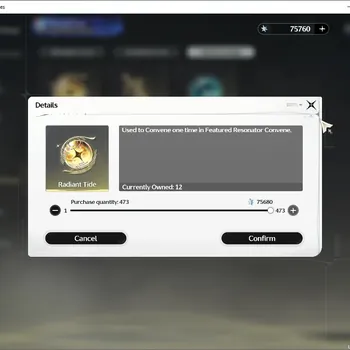
The three Tides map to the three banners: Radiant Tide pulls on the Featured Resonator Convene, Forging Tide pulls on the Featured Weapon Convene, and Lustrous Tide pulls on the permanent Standard Convene. You earn Astrite for free through story progress, exploration and 100% region progress, events, daily activity, and the generous rewards Kuro Games hands out at version launches, and free Astrite spends identically to Astrite made from Lunite. Lunite is the only part of this economy you buy directly, whether through the roughly five-dollar monthly Lunite Subscription that pays out daily Astrite for its duration or through one-off Lunite packs, and because top-up disputes are painful to resolve after the fact, funding through a verified channel matters. If you would rather pay through a protected checkout than an unfamiliar reseller, you can secure your Wuthering Waves Lunite top up through the same system that backs account and service orders. Where those Convenes and currencies get spent depends heavily on the other half of your power, the Echoes.
How do Echoes work, and why do they decide real power?
Echoes are the gear system of Wuthering Waves: you absorb defeated monsters as equippable Echoes that carry a Cost, a main stat, substats, and a set bonus. A Resonator equips five Echoes, and their quality often matters more to your damage than the character's Resonance Chain. Our Wuthering Waves Echo guide to Cost, main stats, and Tuning breaks the system down piece by piece.
Each Echo has a Cost of 1, 3, or 4, and a Resonator has a Cost budget of 12, so the classic build is a 4-3-3-1-1 or 4-4-1-1-1 layout that squeezes in the strongest pieces. The set bonus is called a Sonata Effect, and matching Echoes of the same Sonata unlocks two-piece and five-piece bonuses tuned to elements or playstyles. Substats are rolled through Tuning, and dialing in Crit Rate, Crit Damage, and the right attack stats is what separates a mediocre account from a strong one, and our Wuthering Waves Echo farming guide covers how to grind those pieces efficiently. All of this is gated by your Data Bank, the collection level that raises the maximum rarity and level of the Echoes you can drop, so a high Data Bank account can farm better gear than a fresh one. Because a fully tuned Echo set represents dozens of hours of farming that a Resonance Chain cannot replace, buyers should read an account's Echo quality, not just its character names. Farming and tuning that gear at scale is exactly where players book help, and reliable Wuthering Waves boosting and Echo farming services can build a set for you far faster than grinding alone. How much you can farm at all depends on progression.
How do Union Level and the endgame modes work?
Union Level is your overall account level, and it gates your World Level, which raises enemy strength while improving drops. Together they set the ceiling on what you can farm and which endgame modes you can attempt, including the Tower of Adversity and its zones, Vigor cost and rewards and the Whimpering Wastes with its stage scoring and token rewards, which is why a higher Union Level account is worth more.
Union Level, shown as "UL 70" or "UL 80" on listings, rises with almost everything you do and unlocks new regions, systems, and the harder World Levels. The stamina you spend farming is called Waveplate, which regenerates over time up to a cap, and you pour it into Tacet Fields and other sinks to collect ascension and weapon materials. The signature endgame is the Tower of Adversity, a rotating combat tower that refreshes on its own cycle and pays out Astrite for clearing its floors, alongside modes like the Whimpering Wastes and limited-time Holograms that test a deep, well-tuned roster. Clearing these consistently takes both strong characters and correct Echo tuning, which is why many players book help rather than grind alone: Wuthering Waves hourly services cover the daily and weekly upkeep, from Waveplate farming to material runs, when you are away. All of that progress, though, lives on one server.
Those harder modes are won on execution rather than raw levels, and our Wuthering Waves combat guide to parry, dodge and rotation basics covers the timings that decide those clears.
Which server should you choose?
Wuthering Waves runs regional servers, including America, Europe, Asia, SEA, and HMT, and your account is tied to one of them, so the server is a permanent property to confirm before buying. Most account listings on the market are SEA-region, and the region you pick mainly affects your ping and the reset time your dailies follow.
Because the game shares one Kuro Games account across PC, mobile, and PlayStation, progress is cross-platform: the same login carries your roster wherever you play. What does not move is the server region itself, so a SEA-region account stays SEA even if you relocate. That makes matching the listed server to where you actually play the single most important compatibility check after the roster, since a strong account on the wrong region means higher latency for the ranked-style endgame you bought it to clear. With server and roster understood, the account tiers make sense.
What separates a reroll, starter, midgame, and endgame account?
Accounts are grouped into tiers that describe how far the roster has been built, and matching the tier to your goal is the fastest way to avoid overpaying. The ladder runs reroll, starter, midgame, and endgame, with each band priced by the number and Resonance Chain depth of its limited 5-stars.
A reroll or "ready gacha" account is a fresh, low-Union-Level start whose value is its stockpiled Astrite and Tides plus one or two early 5-stars, ideal when you want to build the account yourself from a strong opening. A starter account adds some story progress and a small limited roster, enough to skip the earliest grind on your chosen server. Midgame accounts carry a workable bench of several limited Resonators with the Union Level and Data Bank to clear most content and attempt the easier endgame floors. Endgame accounts are the premium band: high Union Level, a dozen or more limited units, meaningful Resonance Chains and signature weapons, and the tuned Echoes to clear the Tower of Adversity immediately. Because each step up is a step up in scarce characters and farmed gear rather than hours played, deciding your target tier before you browse keeps a purchase honest, and it tells you exactly which numbers to read on a listing.
What should you look for when buying a Wuthering Waves account?
Read a Wuthering Waves listing like an inventory sheet, because the tags describe the roster precisely and a few of them do most of the work: the Union Level, the limited-character count, the named Resonators with their Resonance Chains and signature weapons, and the login method. Confirm the server, then work through those in order.
Start with Union Level ("UL 76") for a snapshot of overall development, then the limited count ("5 Limited") for how many event-Convene 5-stars the account holds. Next read the named Resonators with their Resonance Chains, since a headliner at S6 with a signature weapon (marked "+Sign") is a completely different asset than the same unit at S0, and note the Data Bank level ("DB Lvl 30") because it caps Echo quality. Finally, read the login method carefully: "TakeMail" means you receive the original email and can fully bind the account to yourself, which is the safest handover, while "Check SS" means the seller provides screenshots you should study to verify the claimed roster before you commit, and the "Log Kuro" or "Log Google" tag tells you which login the account uses. When these checks line up with the screenshots and the server matches where you play, you are ready to transact safely.
How do you buy or sell safely, and secure the account afterward?
Buy and sell through a system that holds the payment until the account is verified, then lock the account down the moment it is yours. On GameMarket.gg every order is covered by Buyer Protection, which releases money to the seller only after you confirm the account was delivered as described.
Before paying, match the listing checks above against the seller's screenshots and keep all communication inside the platform, because deals moved to outside apps fall outside Buyer Protection. Right after purchase, secure access immediately: change the password, bind the account to your own email where the login method allows, and enable Kuro Games' two-step verification, which closes the door on the previous owner for good. Selling works in reverse, so list the true Union Level, server, Data Bank, and Resonators, show clear screenshots of your best units with their Resonance Chains, price against comparable listings rather than guessing, and let payment release once the buyer confirms the handover. The same scarcity that sets a high buy price works in your favour as a seller, so an account holding retired limited Resonators should never be listed as though it were a generic starter.
Once a handover completes, resetting the password and rebinding the email is what actually secures the account going forward, and it is worth knowing the difference between that step and permanently closing an account: GameMarket's guide to Wuthering Waves account deletion walks through what the Delete Account option under Account Settings actually removes, so a freshly acquired roster never gets erased by the wrong menu tap.
Whether you want an endgame roster deep in Resonance Chains, a specific server, or a clean reroll to build on, it all runs through one protected system. Browse verified Wuthering Waves account listings to find the exact server, tier, and Resonators you want, and start from the full Wuthering Waves marketplace to compare accounts, top up, boosting, and hourly services in one place, each order backed by Buyer Protection from checkout to confirmation.
Beginners who reach the shop screen and want to understand what Lunite (the paid currency used to buy Astrite) actually gets you can read Wuthering Waves Lunite Explained: Bundles, Subscriptions and Uses.
GameMarket.gg is a trusted digital marketplace for everything gaming-related. We serve the gaming community by providing secure access that enhances every gaming journey.


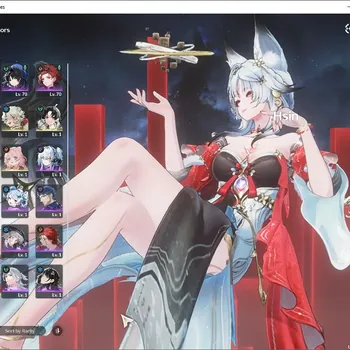
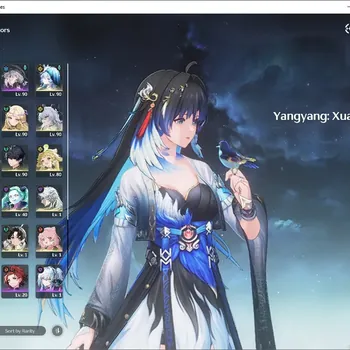
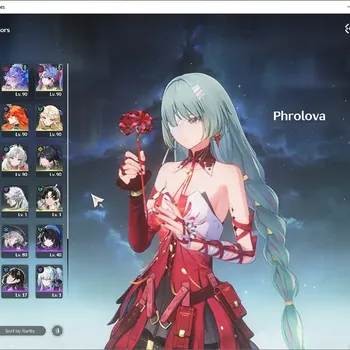
![Wuthering Waves Accounts Mid-Game SEA|UL 48|Rank 5|4 Char Limited [Hsin R2,Chisa]+Sign,Suisui,Rebecca|Mc Female|Check SS](https://img.gamemarket.gg/products/ihw1rdhx/wuthering-waves-accounts-sea-ul-48-rank-5-4-char-limited-hsin-r2-chisa-si-itq-thumbnail.webp "SEA|UL 48|Rank 5|4 Char Limited [Hsin R2,Chisa]+Sign,Suisui,Rebecca|Mc Female|Check SS WW510B")