HSR Endgame Modes Explained: Memory of Chaos & Pure Fiction
By John Ganang
Honkai: Star Rail's endgame is three rotating combat modes: Memory of Chaos rewards clearing two stages inside a cycle limit, Pure Fiction rewards scoring points against waves of weak enemies, and Apocalyptic Shadow rewards breaking and killing a single boss quickly. Each needs two separate teams, and each rewards a different roster shape.
The reason these modes matter beyond their Stellar Jade payout is that they are the only honest measure of an account. Character levels and a high Trailblaze Level tell you how much time someone has spent; endgame star counts tell you whether the account can actually convert that time into damage. This guide covers what each mode asks for, why one roster can clear one mode and stall in another, and how to read your own account's weak point from the results.
What counts as endgame content in Honkai: Star Rail?
Endgame in Star Rail means the three repeatable combat modes that rotate on their own schedules and pay Stellar Jade for performance: Memory of Chaos, Pure Fiction and Apocalyptic Shadow. All three sit inside the Forgotten Hall interface, all three unlock through story and Trailblaze progress, and all three demand two teams rather than one.
That two-team requirement is the design decision that shapes everything else. A single strong five-star carry can walk through the story and most daily content, but the endgame splits your roster in half and asks the weaker half to perform on its own. This is why accounts that look impressive on the character screen often stall at the same place, because the depth is not there behind the headline unit. If you are still building towards that first full clear, the HSR progression guide covering levels, warp and characters lays out the order to raise things in.
The modes also rotate rather than sitting still, so the roster that clears comfortably in one cycle can struggle in the next when the enemy line-up changes. Treat a clear as a snapshot of a match-up, not as a permanent rating of your account.
How does Memory of Chaos work?
Memory of Chaos is the turn-efficiency mode. Each stage has two halves, you field one team per half, and your reward depends on finishing inside a cycle limit rather than simply surviving. Clearing everything at the top rating is what a fully built account is measured against.
Because the scoring is a cycle count, Memory of Chaos punishes slow damage far more than it punishes fragility. A team that survives comfortably but takes twelve cycles to kill an elite scores nothing, whereas a glass-cannon team that kills in four scores full marks. That is why the mode rewards specialists: a carry whose element matches the stage's weaknesses, a support who buffs that carry's specific damage type, and a healer or shielder chosen for how little turn economy they consume rather than how much they heal.
The practical planning step is reading the stage's weakness types before you build the teams, since a carry hitting a weakness breaks toughness bars far faster and effectively doubles the value of the same damage number. For how Toughness and Break Effect actually convert into damage, see our Weakness Break Explained guide. Splitting your two best supports across the two halves rather than stacking them behind one carry is usually worth more than any single upgrade, because the mode scores both halves and one failed half caps your rating regardless of how well the other went.
How is Pure Fiction different, and why do some accounts find it easier?
Pure Fiction replaces the cycle limit with a score target and replaces elite bosses with continuous waves of weaker enemies. Points come from kills and from meeting the cycle's special conditions, so the mode rewards characters who hit many targets at once rather than characters who hit one target hard.
This is where roster shape shows most clearly. An account built around single-target hypercarries can hold a full Memory of Chaos clear and still fall short in Pure Fiction, because the same damage spread across five enemies scores far less than a blast or area attacker who clears a whole wave in one turn. Characters on the Erudition Path, which is built for multi-target damage, are the natural answer, and a support who generates extra turns or extra attacks compounds that value because every additional action is additional score.
Pure Fiction also tends to be the friendlier mode for newer accounts, since waves of low-health enemies forgive weaker relic quality in a way that a boss health bar does not. If your account clears Pure Fiction but not Memory of Chaos, the gap is usually relic substats and team focus rather than missing characters, and the fix is farming rather than pulling.
What does Apocalyptic Shadow test that the other two do not?
Apocalyptic Shadow is the single-boss mode, and it scores on how quickly you break the boss and kill it. Toughness damage and Break Effect matter far more here than in the other two modes, which makes it the one endgame mode where Break-focused builds outperform pure damage builds.
Because the scoring leans on breaking, characters whose value comes from applying toughness damage in bulk become main-slot picks rather than niche ones, and a Nihility unit built for Break Effect can outscore a higher-rarity damage dealer on the same team slot. The mode also punishes teams with no answer to the boss's specific mechanic, since there is nothing else on the field to farm score from while you wait out a phase. For the underlying mechanics of how breaking converts into damage, the wider systems are covered across the HSR beginner's guide to warp, characters and Stellar Jade.
Taken together, the three modes form a deliberate spread: one tests speed against elites, one tests area damage against crowds, and one tests breaking against a single target. An account that clears all three has genuine depth, and that is precisely why endgame results are the fastest way to judge one.
What do the endgame modes actually pay, and how often?
Each mode pays Stellar Jade for star or score thresholds, plus relic and upgrade materials, and each resets on its own multi-week cycle rather than daily. Across a full rotation the three modes together are one of the largest non-event Stellar Jade sources available to an established account.
Exact payouts and cycle lengths have been adjusted several times, and HoYoverse publishes the current values in each version's official patch notes, so treat any fixed number you read as version-dependent and check in game. What has stayed constant is the structure: first-time clears pay a one-off bonus, and every subsequent rotation pays a repeatable amount tied to your rating. That repeatable portion is the reason endgame progress compounds, because the jade it pays funds the warps that raise the roster that clears more of it next rotation.
Rewards also arrive as a lump sum at the end of a cycle rather than immediately, which catches out players who clear late and then reset their teams before collecting. Claim before the rotation ends.
What does an account need before endgame becomes realistic?
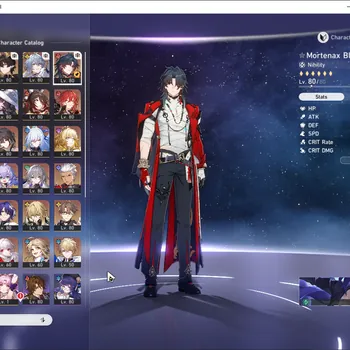
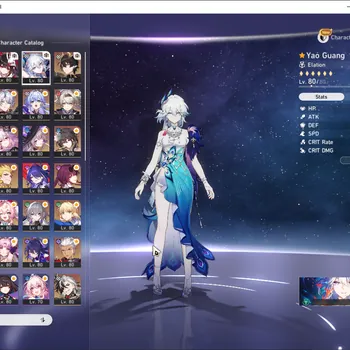
Two functional teams, each with a damage dealer, a support, and a sustain unit, with relics at a usable quality and the main characters at or near the current level cap. Roster breadth matters more than a single top-tier unit, because both halves are scored.
Trailblaze Level and Equilibrium Level set the ceiling underneath all of this, since they gate character and gear levels as well as the quality of relics that drop. Pushing endgame before those are raised means fighting enemies scaled above your gear, which is why the usual advice is to finish world and story progress first. On the roster side, the two most common blockers are having only one sustain unit, which makes the second team unplayable, and having only one element covered well, which leaves you helpless whenever the rotation favours something else.
Character investment depth is the third factor. Traces raised on the wrong skill, Light Cones left unascended and Eidolons that have not been considered all reduce output in ways that look invisible on the character screen. Our guides to HSR Light Cones, Paths and Superimposition and to which HSR Eidolons actually matter cover where that investment pays back and where it does not.
How do you read your own weak point from an endgame result?
Compare which half of a stage failed and how. Running out of cycles points at damage, dying points at sustain or team composition, and clearing one half comfortably while the other collapses points at roster depth rather than at any single character.
If both teams run out of cycles against enemies you are hitting for weakness, the problem is almost always relic substats, because a well-chosen but poorly rolled set can leave a character at half of its realistic damage. If one team dies repeatedly, look at whether the sustain unit is simply outclassed by the stage's damage pattern rather than assuming it needs more levels. And if your second team is visibly weaker in every category, the answer is breadth: a second sustain unit and a second element carry will do more for your clear rate than another copy-level upgrade on the main carry. Team-building shapes for both halves are covered in the HSR characters and best teams guide.
Common questions about Star Rail endgame content
Do I need two five-star carries to clear endgame? No. Well-invested four-star damage dealers clear all three modes when they hit enemy weaknesses and are supported properly. What you cannot substitute for is having two working teams.
Does a higher Equilibrium Level make endgame harder? It raises enemy scaling, but it also raises the level caps and relic quality you need to keep up, so staying at a low Equilibrium Level to avoid difficulty ends up slowing your account down.
Why did a team that cleared last cycle fail this one? The modes rotate their enemies and their special conditions, so a match-up that suited your carry's element can disappear entirely at the next reset. This is normal and is not a sign that your account regressed.
Should I clear endgame before or after finishing the story? After. Story and world progress raise Trailblaze Level, unlock the modes themselves, and pay the materials that make endgame teams viable in the first place.
Where to Find Honkai: Star Rail Accounts and Top Up
On GameMarket.gg you can browse Honkai: Star Rail top-up options, the Honkai: Star Rail market hub.
If you are comparing what a developed roster looks like before committing months to one, browse the available Honkai: Star Rail accounts to see how endgame-ready rosters are actually put together.
GameMarket.gg is a trusted digital marketplace for everything gaming-related. We serve the gaming community by providing secure access that enhances every gaming journey.