HSR Eidolons Explained: How They Work and Which Ones Matter
By John Ganang 22 August 2026, 08:00 WIB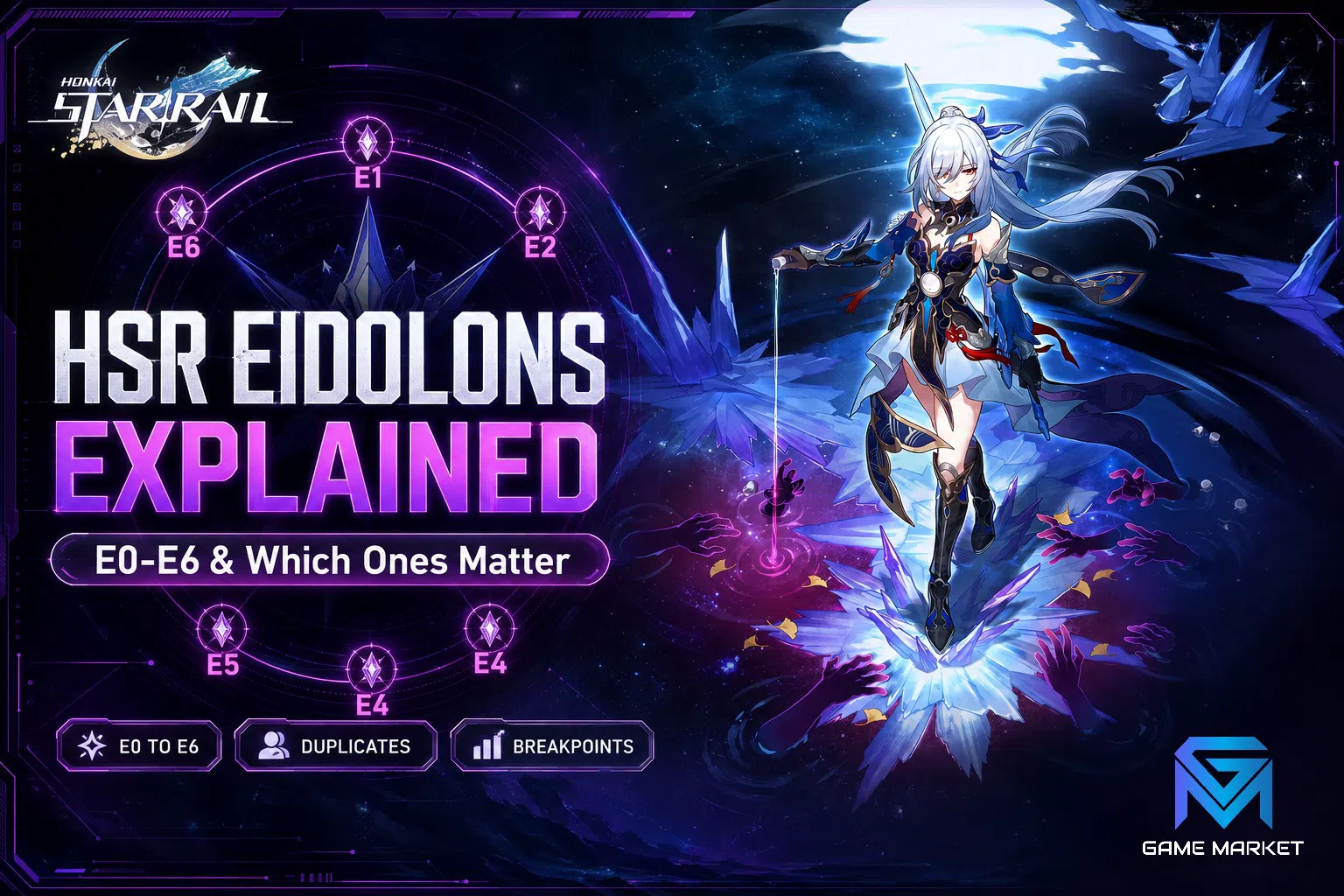
Eidolons are Honkai: Star Rail's duplicate-unlock system: pulling a character you already own grants the next of their six Eidolons, each one strengthening or rewriting part of that character's kit. E1, E2, E4 and E6 add new effects, while E3 and E5 simply raise ability levels.
That split is the single most useful thing to know about them, because it explains why some duplicates transform a character and others barely register. This guide covers how Eidolons unlock, what each of the six slots actually does, how you obtain them outside of pulling, why E1 and E2 carry most of the practical value, and how to read an account's Eidolon levels when you are trying to judge how strong a roster really is.
What are Eidolons in Honkai: Star Rail?
An Eidolon is a permanent upgrade unlocked by acquiring a duplicate of a character you already own. Every character has six, labelled E1 through E6. Each one either enhances an existing ability, adds a new passive effect, or raises the level ceiling of the character's Skill, Ultimate, Talent or Basic ATK.
The term you will see used interchangeably in the community is "E-level" — a character at E2 has two Eidolons unlocked, and a character with none is described as E0. This shorthand matters because it is the standard way players describe roster strength, and it appears constantly in team guides and damage comparisons.
Eidolons are per-character and permanent. There is no way to move an Eidolon from one character to another, no way to refund one, and no mechanism that lets you skip ahead — you unlock them strictly in order, E1 first. A character sitting at E0 with excellent gear can still outperform a poorly built E2 of the same unit, so Eidolon count on its own never tells the whole story.
It is also worth separating Eidolons from the two other systems people confuse them with. Traces are the skill tree you level with materials, available to everyone at no pull cost. Superimposition is the equivalent duplicate system for Light Cones rather than characters. Eidolons sit alongside both, and a character's real ceiling is the combination of all three plus relics.
How do you unlock Eidolons?
You unlock an Eidolon by obtaining a duplicate of a character you already own. The most common route is pulling the same character again from a Warp banner, but duplicates also come from the Starlight Exchange, from Stellar Convergence, and from events that hand out specific characters directly.
For limited five-stars, pulling duplicates is effectively the only route, and the cost scales brutally. A single copy already sits behind the banner's pity system, so an E1 means clearing that pity twice, an E2 three times, and so on. This is why limited five-star Eidolons cluster among heavy spenders and long-term savers rather than the general player base.
Standard five-stars work differently and much more gently. Because duplicate pulls convert into Undying Starlight, and characters in the Starlight Exchange cost 140 Undying Starlight each, a patient free-to-play account can accumulate Eidolons for standard-pool units over months without spending. Pulling a five-star you already have at maximum Eidolon converts into a larger Starlight payout instead, so nothing is wasted.
Four-star characters are where Eidolons are genuinely accessible. They appear as rate-up units on limited banners, drop from the standard pool, and turn up in events and shops, so E6 on a favourite four-star is a realistic goal rather than a fantasy. Duplicate four-stars also feed Undying Starlight once maxed, which then loops back into the Starlight Exchange.
Free characters follow their own rules. The Trailblazer earns Eidolons through story progression and the Herta store rather than through Warps, which means every account can reach high Eidolon levels on those units regardless of spending.
What does each of the six Eidolon levels do?
The six slots follow a consistent structure. E1, E2, E4 and E6 grant unique new effects written specifically for that character. E3 and E5 are fixed ability-level increases — typically two levels to a Skill, Ultimate or Talent, or one level to a Basic ATK — and never introduce new mechanics.
Knowing that pattern up front saves a lot of disappointment. If you are pulling toward a specific effect you read about, check whether it sits at E1, E2, E4 or E6, because the levels in between are pure numbers. Someone chasing an E2 is buying two unique effects; someone chasing an E4 is buying three unique effects plus one filler level. For the detail behind that, see How to Buy an HSR Account Safely.
E1 is usually the smallest meaningful change and often the most efficient. Common patterns include an extra charge on a Skill, a longer buff duration, a reduced cooldown, or an additional stack on a Talent. For supports and sustain units in particular, E1 frequently solves a specific uptime or rotation problem rather than simply adding damage.
E2 tends to be the largest single jump before the ceiling. It is where many characters gain a genuine quality-of-life change, such as an action-advance, a resource refund or an extra hit, that alters how the unit is played rather than just how hard it hits. Where a character is described as "needing" an Eidolon, it is almost always E1 or E2 that is meant.
E4 is generally the weakest of the unique slots, often a conditional damage or defensive bonus that only applies in specific team setups. E6 is the character's ceiling and is written to be spectacular: new mechanics, large multipliers, or a rewrite of how an ability functions. It is also the most expensive point in the entire game to reach for a limited unit.
Which Eidolons are actually worth chasing?
For most accounts, E1 and E2 on characters you already play constantly are the only Eidolons worth deliberately targeting. They are the cheapest unique effects, they most often fix a real problem, and they leave enough resources to pull for new characters rather than deepening one you already own.
The comparison that decides this is almost always breadth against depth. A second strong damage dealer, a missing sustain unit, or a support that unlocks a whole team archetype usually contributes more to your account than an extra Eidolon on a character already in your best team. Endgame modes in Honkai: Star Rail run multiple teams simultaneously, which structurally rewards having more usable characters over having fewer, deeper ones.
There are exceptions, and they follow a pattern. Support and sustain units tend to have the highest-value early Eidolons because their kits are built around uptime, energy and turn order rather than raw multipliers, and a small change to any of those propagates through the whole team. Damage dealers more often need E2 or higher before the difference is felt.
E6 is best understood as a collector's goal rather than an optimisation. The damage or utility gain is real, but the pull cost is far beyond what any account needs to clear content, and the same investment spread across new characters would produce a stronger roster overall. Treating it as an aspiration rather than a target is the healthier framing. Our guide breaks down Simulated Universe Explained Blessings, Curios & Paths.
One practical caveat: Eidolon value shifts as the game adds characters and content. An Eidolon that was defining when a character released can become less relevant once a newer unit fills the same role, and conditional effects can improve when a teammate arrives that satisfies their condition. Any ranking of "best Eidolons" is a snapshot, so check current community discussion for the character you care about rather than trusting an old list. If you are still working out how the characters themselves slot together, the HSR guide to characters, Paths and team building covers which roles you should be filling first.
How do Eidolon levels affect an account's overall strength?
Eidolons are one of four factors that determine how strong a roster is, alongside character breadth, relic quality and Light Cone superimposition. A high Eidolon count on one character narrows an account rather than broadening it, so it raises the ceiling of a single team without helping the second or third team an endgame mode requires.
This is why experienced players read Eidolon levels in context. E1 or E2 spread across two or three characters that anchor different teams generally indicates a healthier account than E4 on one unit and nothing elsewhere, because the former can field multiple complete teams and the latter cannot. The same logic applies to Trailblaze Level and Equilibrium Level, which gate the content those teams are meant to clear.
Relics deserve equal weight in that assessment and are frequently underrated. A character at E0 with well-rolled relics on the correct main stats will usually outperform the same character at E1 or E2 with mediocre pieces, because relic substats scale the character's entire damage formula rather than adding a single conditional effect. Gear is also fixable through farming, whereas Eidolons are not.
Light Cones are the third axis, and their duplicate system runs on Superimposition rather than Eidolons. A signature five-star Light Cone frequently contributes more than an early Eidolon on the same character, which is why comparisons between two accounts have to look at both together. The HSR progression guide covering levels, Warp and characters sets out how these systems unlock relative to one another.
Finally, remember that none of it is transferable. Eidolons, relics, Light Cones and levels all live on a single account and a single server, and that server choice is fixed at the point of creation. The HSR servers and cross-progression guide explains what does and does not carry across platforms.
How should you plan Warps around Eidolons?
Decide before a banner starts whether you are pulling for a character or for an Eidolon, and set a hard pull budget for each. Mixing the two mid-banner is how accounts end up with a half-finished Eidolon and no saved currency for the next character they actually needed.
The first rule is to secure breadth before depth. If your account is missing a sustain unit, a break-focused damage dealer, or a support for an element you have no coverage in, that gap costs you clears in endgame modes far more reliably than a missing E1 does. Fill the hole first, then consider deepening.
The second is to be honest about usage. An Eidolon on a character you field every single week compounds across dozens of runs; an Eidolon on a character you pulled because the design appealed to you does not. Looking at which units are actually in your endgame teams is a more reliable guide than looking at which units have the highest tier-list placement.
The third is to respect the Starlight route for standard-pool characters. Because standard five-stars can be bought outright with Undying Starlight and duplicates keep feeding that currency, Eidolons on those units accumulate as a by-product of pulling rather than as a dedicated expense. Checking the Starlight Exchange before committing pulls to a standard character is a habit worth building.
The last is to track your pity honestly. Eidolon hunting on a limited banner means clearing pity repeatedly, and the cost of an E2 is roughly three times the cost of a single copy, not one and a half times. Players new to how Warp currency accumulates will find the HSR beginner's guide to Warp, characters and Stellar Jade a useful starting point before planning any of this.
Common questions about Honkai: Star Rail Eidolons
Can you unlock Eidolons without pulling duplicates? For standard-pool and free characters, yes: the Starlight Exchange, Stellar Convergence, events and the Herta store all provide copies. For limited five-stars, duplicate pulls from their banner are effectively the only route.
Do Eidolons carry over between characters? No. Eidolons are permanently bound to the specific character who received them. There is no transfer, refund or reset, and they unlock strictly in order from E1 upward.
Which Eidolon gives the biggest single improvement? It varies by character, but E2 is most often the largest jump before E6, and E1 is usually the most efficient. E3 and E5 never add new effects; they only raise ability levels.
Are Eidolons or relics more important? Relics, for most accounts. Well-rolled relics on correct main stats scale a character's entire output and can be farmed for free, whereas an Eidolon adds one effect and costs pulls that cannot be recovered.
Is E6 required to clear endgame content? No. Honkai: Star Rail's endgame modes are designed around having multiple complete, well-geared teams rather than a single maximised character, and high Eidolon levels are never a clearing requirement.
Where to Find Honkai Star Rail Top Up and Accounts
On GameMarket.gg you can compare Honkai: Star Rail top-up options before you spend.
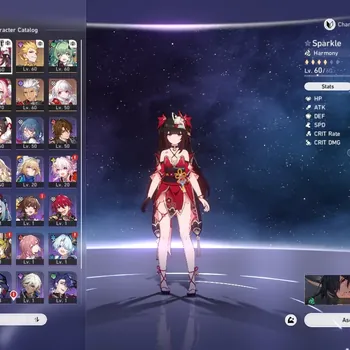
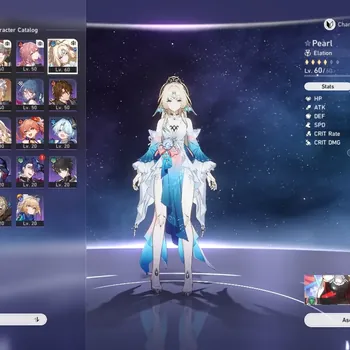
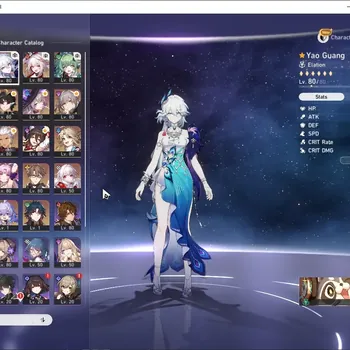
If you are comparing rosters and want to see how Eidolon levels, relics and character breadth are presented in practice, browse the Honkai: Star Rail account listings from verified sellers and check each listing's stated server and character details before ordering.
GameMarket.gg is a trusted digital marketplace for everything gaming-related. We serve the gaming community by providing secure access that enhances every gaming journey.