eFootball Shadow Hunt and Other Skills: What Each Skill Really Does
By Sir Ayup 4 October 2026, 10:00 WIB
The Shadow Hunt skill in eFootball raises a defender's speed-related abilities the moment an opponent plays a pass in behind him, and it only works for players deployed at DMF, RB, LB or CB. It fires on its own, with no button to press, which tells you something important about every skill of its kind: a Show Time skill is a conditional boost that waits for one specific situation, so its value depends on how often your matches create that situation. Read the trigger first and the skill name second, and you will stop overpaying for cards whose best ability almost never activates in your setup.
This guide works through those triggers skill by skill. It starts with Shadow Hunt, explains how Show Time skills differ from the standard skills you can train, then covers the shooting, playmaking, dribbling and defensive skills that decide most online matches, including Low Screamer and Attack Trigger. Skill names and effects below are accurate as of the v6.0 season.
What the Shadow Hunt Skill in eFootball Actually Does
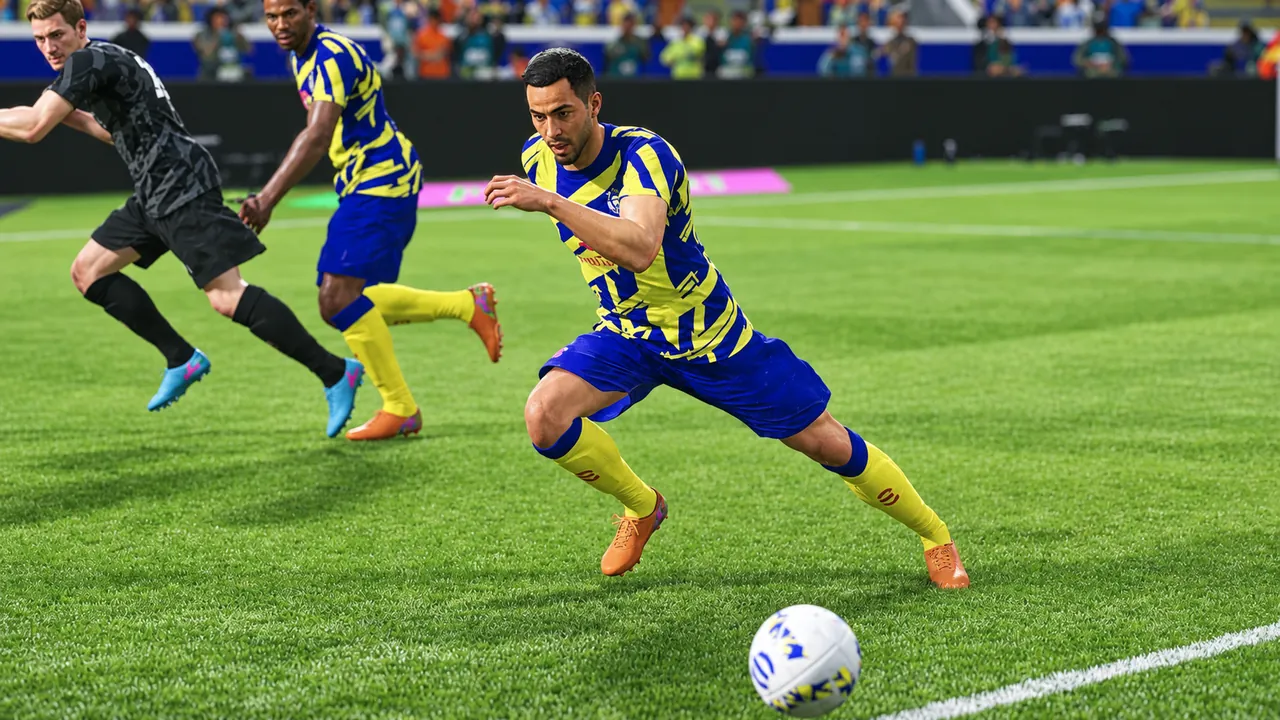
Shadow Hunt debuted in May 2026 on Epic cards of Fabio Cannavaro, Paolo Maldini and Daniele De Rossi, and it has since appeared on a small number of other Epic, Highlight and Trending defenders. Its effect is narrow by design: when a pass travels into the space behind the skill holder, his acceleration and speed-related abilities rise so he can turn and chase the runner. Nothing changes while the ball is played in front of him, so the skill does not make a slow defender quick in ordinary jockeying or pressing.
That narrow trigger is exactly why the skill matters. The most common way to concede in online matches is a through ball over or between a high defensive line, and those are the moments Shadow Hunt is built for. A centre-back who would normally lose a footrace by two metres gets a real chance to recover, which means you can hold a higher line without being punished every time the opponent's forward makes a run on the shoulder.
Three conditions decide whether you actually feel the boost:
- Position: the player has to be set at DMF, RB, LB or CB. A Shadow Hunt card moved into midfield as a CMF loses the trigger entirely.
- Defensive height: teams that defend deep rarely concede passes in behind, so the skill fires far less often. It earns its slot in setups with a high line or an aggressive press.
- Manual control: the boost helps most when you switch to the defender and sprint the recovery yourself, because the AI's chase angle is often too cautious to use the extra pace.
Shadow Hunt does not decide how high your line should sit; it only makes a high line less risky once you have committed to it. That decision still comes down to how well you press, match up and time your tackles, and the skill simply gives your defenders a second chance when that plan breaks.
Show Time Skills Are Conditional Boosts, Not Extra Moves
eFootball skills fall into two layers, and mixing them up is the most common reason players misjudge a card. The first layer is the standard skill list of roughly sixty abilities such as Double Touch, Through Passing, Interception or Heading. These are binary: the player either has the move available or he does not, and most cards can learn up to 5 additional standard skills through Skill Training. That makes them the flexible part of a card, while its attributes and Playing Style set the foundation every skill sits on.
The second layer is Show Time skills, the special abilities shown on premium cards. Some, like Blitz Curler or Long-Reach Tackle, unlock a stronger version of an action. Others, like Shadow Hunt, Fortress or Game-changing Pass, only switch on under a match condition: a pass in behind, a half-time lead, a draw or deficit after the break. The newest card-exclusive ones, including Shadow Hunt, Snap Strike and Tap Trick, sit on a very small number of Epic, Highlight and Trending cards, so the only way to get them is to sign a card that already carries them. Training cannot add them to a player you already own.
That split changes how you should spend. Standard skills are cheap to fix later through training, so a card missing Interception or One-touch Pass is not a dealbreaker. A missing Show Time skill is permanent, which is why it should be the deciding factor between two otherwise similar cards, but only if its trigger matches how you play. In practice, these skills cluster on Epic, Big Time and other special cards, so that is where most of your comparing will happen.
Shooting Skills Each Change a Different Part of the Shot
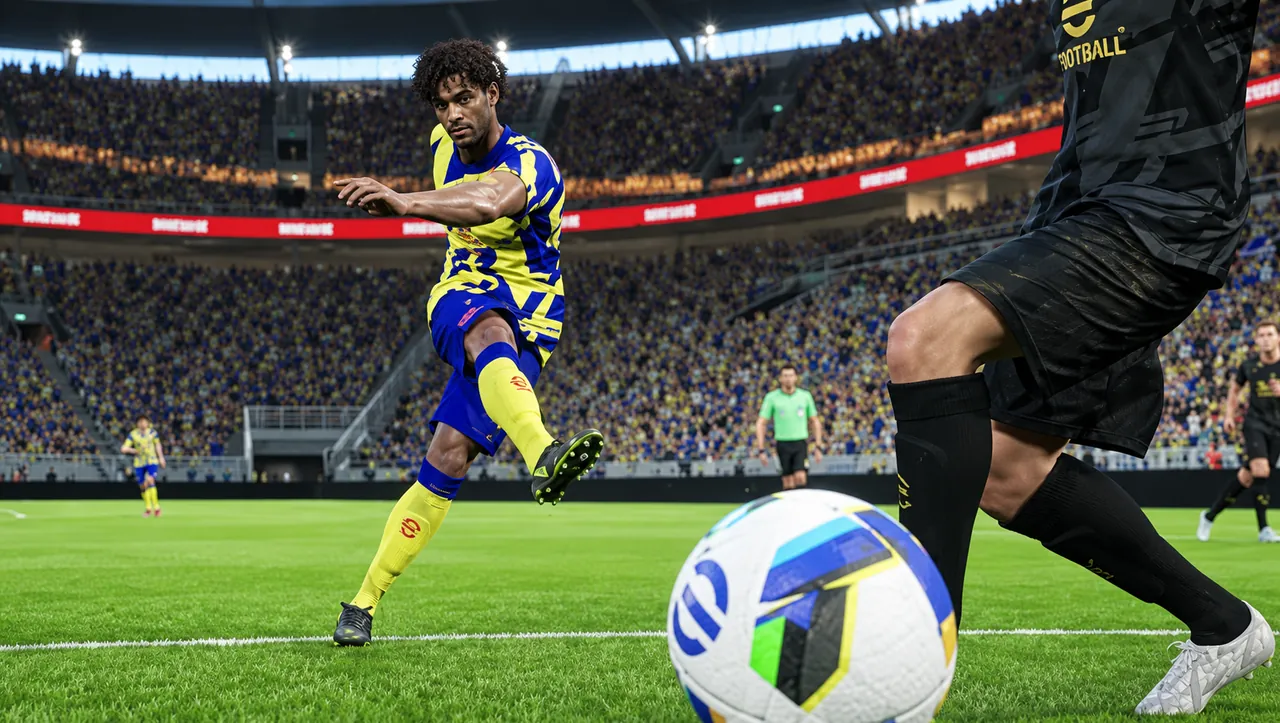
Four of the strongest attacking skills all involve shooting, and they are easy to confuse because their names sound alike. The useful way to separate them is to ask which part of the shot each one changes: the speed of the ball, the time before contact, the curve, or the accuracy from a bad body position.
- Low Screamer: when you take a Stunning Shot with the power gauge under 50%, the ball travels faster. It also stops the shot from turning into a Dipping Shot, so low-power strikes stay flat and quick instead of looping toward the keeper. It suits strikers who shoot early from the edge of the box rather than walking the ball in.
- Snap Strike: reduces the wind-up before the player strikes a Stunning Shot, so the shot leaves earlier. It debuted in September 2026 on Epic cards of Adriano, Francesco Totti and Andriy Shevchenko. Where Low Screamer makes the ball faster after contact, Snap Strike makes contact happen sooner, which gives defenders less time to block. The two stack well on the same striker.
- Blitz Curler: produces sharp controlled shots with heavy topspin when you curl toward the far post with the stronger foot, and with the weaker foot as well if Weak Foot Usage is Very High. It widens the area from which a controlled shot can beat the keeper and remains one of the most valued skills on wingers and forwards.
- Phenomenal Finishing: improves power and accuracy when shooting from awkward or off-balance positions, so rushed finishes under pressure stay on target more often.
- Willpower: shooting ability builds with each attempt the player takes during a match, rewarding a volume shooter who keeps trying from range.
- Bullet Header: adds force and accuracy to attacking headers aimed at goal, best on a target forward fed by crosses.
The point is that none of these replaces finishing technique. A low-power shot only helps if you already take that shot, and a curl skill only helps if you attack the far post, so the chances your team creates through patient build-up and well-timed through balls still matter more than the skill printed on the card.
Attack Trigger and the Playmaking Skills That Work Through Teammates
Attack Trigger arrived in February 2026 on Show Time cards of Bruno Fernandes, Frenkie de Jong and Reece James, and it is unusual because the skill holder gains nothing personally. While he has the ball, every other teammate's Attacking Awareness increases, so forwards start runs earlier and full-backs push into better support positions. The value grows the more often that player is on the ball, which makes it strongest on a CMF or AMF who receives in every build-up.
The other playmaking skills follow the same logic of improving what happens after the pass leaves:
- Visionary Pass: makes teammates more effective when receiving this player's passes, especially their first touch and one-time actions.
- Phenomenal Pass: improves power and accuracy on passes made from difficult or unconventional body positions, so a pass under pressure still arrives.
- Game-changing Pass: improves passing in the second half when the team is drawing or losing, which makes it a late-match comeback tool rather than an everyday boost.
- Edged Crossing: produces crosses with a sharp dipping trajectory that defenders struggle to read, ideal on wide players feeding a strong header of the ball.
Attack Trigger pairs especially well with a team style that already sends runners forward. If you use a counter or long-ball approach, its extra awareness is partly wasted because your attackers are already high; in a possession setup, it can be the difference between a sideways pass and a real forward option. A skill that boosts teammates is only as good as the players around it, so it is worth getting the basics of building a balanced squad right before paying for one.
Dribbling Skills Reward Specific Inputs
Dribbling Show Time skills only pay off if you use the inputs or situations they are tied to, so they are easy to overrate on paper.
- Momentum Dribbling: tightens ball control and speeds up touches while dribbling in advanced attacking areas, which helps a winger beat a full-back one-on-one.
- Acceleration Burst: produces an explosive burst from a low-speed or standing start, so a player receiving with his back to goal can escape before the defender closes.
- Magnetic Feet: keeps better ball control while surrounded by several defenders, useful for a central playmaker who receives in crowded zones.
- Tap Trick: unlocks a quick feint performed by holding the right stick backward relative to the dribbling direction and tilting the left stick sideways. It was added in July 2026 and sits on very few cards.
Tap Trick and the standard feints are only as good as your execution, so it pays to get comfortable with the basic skill moves and dribbling inputs in practice before building a team around them.
Defensive and Goalkeeper Skills Protect a Lead or a Back Line
Defensive Show Time skills split between ones that improve an action and ones that react to the score. Knowing which is which tells you whether a defender helps every minute or only in certain matches.
- Long-Reach Tackle: greatly extends the range and success of standing tackles, so a defender can win the ball from a distance where others would have to commit. It improves an action every time you use it, which is why it ranks among the most valued defensive skills.
- Shadow Hunt: covered above; it boosts recovery speed only when a pass goes behind the defender.
- Fortress: raises defensive and physical performance in the second half when the team leads at half-time. It does nothing in a draw or when behind.
- Aerial Fort: strengthens aerial duels in the penalty area, valuable against teams that cross often.
- GK Directing Defence: a goalkeeper skill that improves the defensive abilities of the defenders in front of him.
- GK Spirit Roar: a goalkeeper skill that boosts the physical strength of his defenders.
A back line that combines one action skill, such as Long-Reach Tackle, with one situational skill, such as Shadow Hunt, covers both the duel in front and the run in behind. Two situational skills on the same pair of centre-backs leave you exposed in the matches where neither condition appears.
Which Skills Are Worth Building Around
The fastest way to judge a skill is to count how many times per match its condition happens in your games. That gives a clear order of priority:
- Always-on action skills first: Blitz Curler, Long-Reach Tackle, Phenomenal Finishing and Phenomenal Pass improve actions you perform every match, so they almost never sit idle.
- Style-matched triggers second: Low Screamer and Snap Strike for early shooters, Attack Trigger for possession teams, Shadow Hunt for high lines. These are excellent when they match your style and close to useless when they do not.
- Score-based skills last: Fortress and Game-changing Pass only activate in specific match states, so treat them as a bonus rather than a reason to sign a card.
Free-to-play players should spend on standard skills through training first, since those can be adjusted later, and save coins for a single card whose Show Time skill matches their system. Spenders chasing a complete squad are better off covering one action skill per line of the pitch before stacking situational ones. Either way, a skill only pays off if the attributes behind it keep up, which is exactly what Progression Points and training programs are for.
Even with the right skills mapped out, collecting the cards that carry them through draws and campaigns can take months, and the skill only pays off once you have mastered the timing in real matches. If you would rather skip that wait, you can start from one of the eFootball Accounts that already has Show Time cards in the squad, have an experienced player handle the grind through eFootball Hourly Services, or reach a target division with eFootball Boosting while you learn how each skill fits your team.
GameMarket.gg is a trusted digital marketplace for everything gaming-related. We serve the gaming community by providing secure access that enhances every gaming journey.