eFootball Beginner's Guide: Player Cards, Coins & Squads
By John Ganang 13 August 2026, 14:00 WIB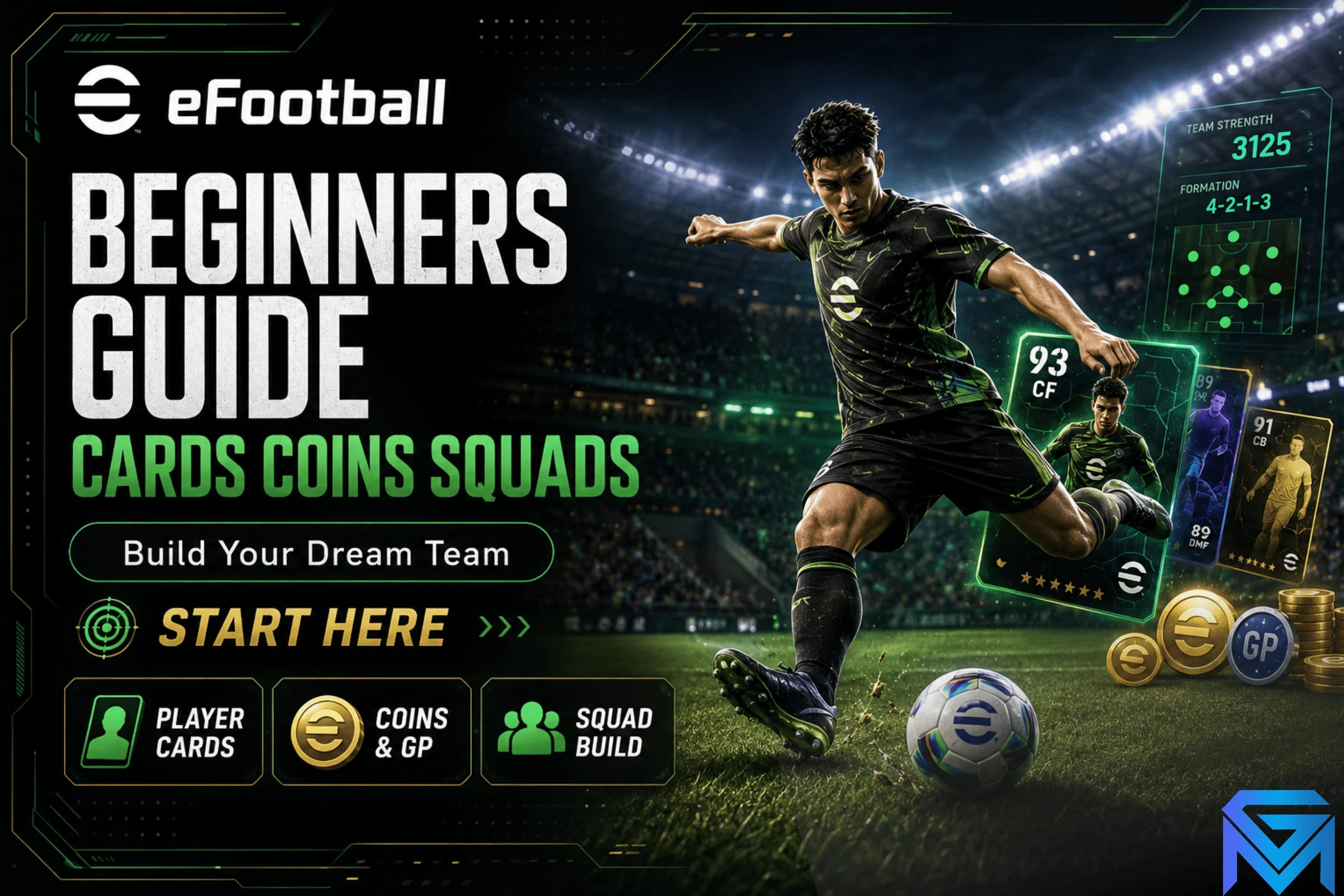
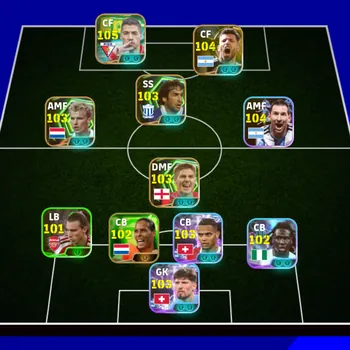
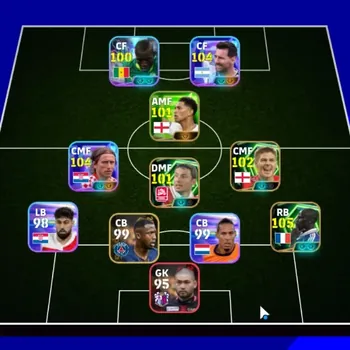
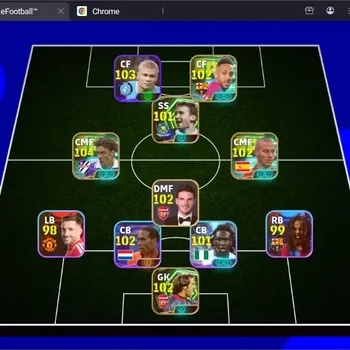
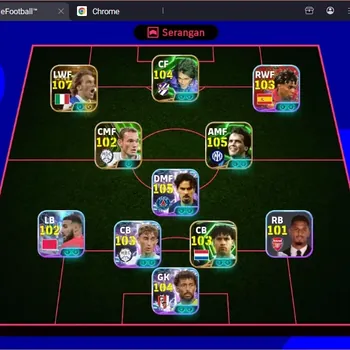
In eFootball your account is worth the cards it holds, because standout Epic, Big Time, and Show Time players arrive on time-limited deals and cannot simply be summoned back once their campaign ends, so buying a loaded Dream Team is often the fastest way to inherit a squad you missed. This guide is the map to the whole game: how player cards are graded, what Coins and GP actually pay for, how Dream Team squad-building and Team Playstyles work, how a KONAMI ID binds an account and what that means for transfers across devices, and how to buy or sell an account without getting burned. eFootball is Konami's free-to-play football title, the successor to Pro Evolution Soccer, and because its most desirable cards are tied to rotating campaigns, a busy secondary market has grown up around the accounts that already own them. Everything below points back to that single idea, and to the part of GameMarket.gg where you can act on it.
Why is there an eFootball account market?
The market exists because the best cards are scarce and time-boxed. High-grade players such as Epic, Big Time, and Show Time cards appear on rotating deals and special packs, so a manager who missed a campaign has no guaranteed route back to that exact card except pulling on a future rotation or buying an account that already holds it.
That scarcity turns a strong squad into a lasting asset rather than a temporary lineup. A player who packed a prized Epic legend a year ago still fields it today, while a newcomer starting fresh faces a long grind and a great deal of luck to reach the same Team Strength. Because the account becomes the item, its price tracks which cards and how much squad depth it carries far more than how many matches have been played. This logic is the foundation for everything else in this guide, from reading a card's grade to judging whether a listed price is fair.
How do eFootball player card types work?
Every player in eFootball is issued as a card with a grade that signals how strong and how special it is. The ladder runs from Standard cards up through Trending, Featured, and Highlight boosters to the premium Show Time, Epic, Big Time, and Legendary tiers, and the grade decides both a card's ceiling and its market value. Each type is broken down in our eFootball player card types guide.
Standard cards are the base version of a real player, and they shift week to week through Live Updates that mirror real-world form. Highlight cards carry different, usually improved stats over their Standard counterparts and can be developed further, while Show Time is a premium subsection of Highlight whose players come with special skills and playstyles that reward creative attacking. Above those sit the collector grades: Epic cards recreate a standout season from a player's career with unique artwork, mostly retired greats plus a few active stars; Big Time cards commemorate a historic real-world moment, ship with boosted stats, and can trigger a Monumental Celebration that recreates the player's famous goal celebration. Legendary cards round out the top, offering elite performance with a permanent high Live Condition rating so their form never dips. Because each step up the grade ladder is harder to obtain, the cards near the top are exactly what buyers scan a listing for.
Which cards and stats drive an account's value?
An account's price is set mainly by its count of premium cards and its overall Team Strength. A squad packed with multiple Epic, Big Time, and Show Time players commands far more than one built on Standard and Highlight cards, because those premium grades are the scarce, campaign-locked pieces that cannot be farmed on demand.
Team Strength, shown on many listings as a collective rating in the low-to-mid thousands, is the aggregate quality of your first eleven and bench, so a higher number signals a squad that can compete in tougher divisions straight away. Beyond raw grades, buyers weigh how well the roster fits a coherent formation and playstyle, since eleven mismatched stars underperform a balanced side. Listings on the market reflect this directly, sorting accounts into bands like Legends & Iconic Players and High-End, and naming the marquee cards in the title so shoppers can price the squad at a glance. Because the value lives in the cards rather than the hours, deciding which players you actually want is the first step before you compare prices.
What are eFootball Coins, GP, and Points?
eFootball runs on two everyday currencies plus a paid unit that funds them. GP is the free currency earned by playing; eFootball Coins are the premium currency you top up or win from events; and eFootball Points, or Coins bought directly, are the real-money layer that converts into the packs and deals you spend on. Our eFootball Coins and GP guide explains how each currency is earned and spent. For a deeper breakdown, read what eFootball Coins are actually used for and the best ways to earn Coins and GP.
GP piles up from playing matches, clearing daily and event objectives, progressing modes, and releasing high-rated players you do not need, and it covers standard signings, training items, and routine squad management. Coins are the harder currency: they come from top-ups, login and campaign rewards, and division milestones in the eFootball League, and they unlock the premium player packs, chance deals, and Match Passes where the best cards live. Because Coins are the only part of this economy you pay cash for, and because top-up disputes are painful to resolve after the fact, funding through a protected channel matters. If you would rather pay through a secure checkout than an unfamiliar reseller, you can arrange your eFootball Coins top up through the same system that backs account orders. Where those Coins and players get deployed is the Dream Team. For the detail behind that, see how to farm GP without spending.
How does Dream Team and squad building work?
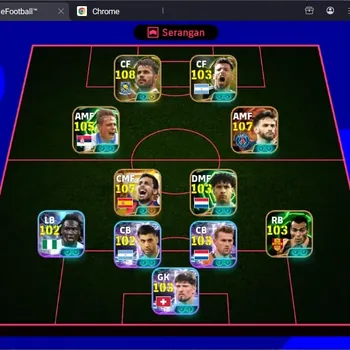
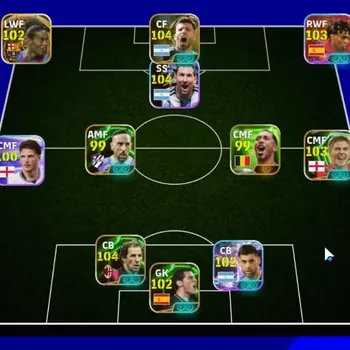
Dream Team is eFootball's online club-building mode, the successor to myClub, where you sign real players and legends to assemble a squad and climb competitive divisions. You start from a base club or nation, spend GP and Coins to sign cards from the deals and transfer pools, then shape the side around a manager who sets your formation, tactics, and Team Playstyle.
The manager choice matters as much as the players, because a formation and playstyle that clash with your roster will make even elite cards underperform. Team Playstyle governs how your side defends, builds up, attacks, and transitions, and it is configured under Game Plan and Tactics into approaches such as Possession Game, Quick Counter, Long Ball Counter, and Out Wide. A well-matched playstyle also raises player familiarity, so movement becomes sharper and more synchronized the better your lineup fits its system. Because a coherent, well-managed squad is what actually wins divisions, an account that has already solved this puzzle, not just hoarded names, is the one worth paying for. All of that progress, though, lives behind one login.
What is KONAMI ID, and how does account binding work?
A KONAMI ID is the account that backs up and restores your eFootball data, and it is the single most important thing to confirm before buying. Linking a game to a KONAMI ID lets you recover your squad after reinstalling or switching devices, which is exactly why a clean handover of that ID decides whether a purchased account is truly yours.
You link one through the in-game Extras and Support menu, scanning a one-time barcode to bind the game data to the ID. Because that binding controls recovery, a safe account sale hands over full control of the login rather than leaving the previous owner able to restore the data later. Konami also cautions that a data transfer performed through a platform account like Game Center will not restore across a different operating system, so the KONAMI ID route is the reliable one. When you buy, the priority right after payment is to secure that ID and its email so the door closes behind the former owner for good. The binding also shapes a question many first-time buyers get wrong, which is how eFootball behaves across platforms.
What platforms does eFootball run on, and does progress carry across them?
eFootball runs on mobile, PlayStation, Xbox, and PC through Steam, and it supports cross-play so players on different devices can compete against each other. What it does not offer is unified cross-progression: data linked to the same KONAMI ID on two different platform families is kept as separate game data rather than one merged account. Our guide breaks down how division points, phases and promotion work.
This is the correction that saves buyers money, because cross-play and cross-progression are easy to confuse. You can play opponents across platforms, but a mobile Dream Team and a console Dream Team are distinct save files even under one KONAMI ID, so a strong account is tied to the platform it was built on. That makes the listing's platform tag, whether Android, iOS, or a console build labelled with the current PES-engine year, a core compatibility check rather than a footnote. Matching that platform to where you actually play is second only to the card list itself, since a superb squad on a device you do not own is a squad you cannot field. With platform and login understood, the account tiers start to make sense.
What separates a starter, mid, and high-end eFootball account?
Accounts fall into rough tiers set by squad depth and premium-card count, and matching the tier to your goal is the fastest way to avoid overpaying. The bands run from cheap starter and reroll accounts, through mid-range squads with a handful of strong cards, up to the High-End and Legends-stacked accounts that headline the market.
A starter or reroll account is a fresh save whose value is one or two lucky early cards, ideal when you want to build the squad yourself from a good opening. A mid-tier account adds a workable core of Highlight and a few premium cards with enough Team Strength to hold its own in the middle divisions. High-end accounts are the premium band: several Epic, Big Time, and Show Time players, a high collective Team Strength, and the depth to compete at the top of the eFootball League immediately, which is why listings flag them as High-End or Legends & Iconic Players. Because each step up is really a step up in scarce cards rather than playtime, deciding your target tier before you browse keeps a purchase honest and tells you exactly which numbers to read.
What should you look for when buying an eFootball account?
Read four things before you pay: the platform, the named premium cards, the Team Strength, and the binding status. Together these tell you whether the account fits your device, holds the players you want, can compete where you play, and can be transferred cleanly into your control. It is worth knowing how training programs raise level and progression points.
Start with the platform tag so the account works on your hardware, then check the listed marquee cards against the seller's screenshots, since the title advertises the Epic, Big Time, and Show Time names but only images confirm they are really there. Read the Team Strength or collective-strength figure to gauge which divisions the squad can handle, and confirm the account can be unbound from the seller's KONAMI ID and rebound to yours, because an account you cannot fully control is an account you can lose. Keep every message and payment inside the platform, and treat a deal that rushes you to an outside app as the warning sign it is. Those checks feed directly into the safety question every buyer and seller should settle first.
Does trading eFootball accounts break Konami's rules?
Account trading sits against the letter of Konami's user agreement, as it does for most publishers, since terms of service generally restrict selling or transferring accounts. In practice a large resale market exists anyway, so the realistic protection is not pretending the rule does not exist but reducing the risk around a transfer you choose to make.
That risk is lowest when the handover is clean and verifiable: full control of the KONAMI ID and its recovery email moves to the buyer, the login details are changed immediately, and nothing about the trade relies on trusting a stranger to behave later. It is highest when an account stays recoverable by its former owner or when payment happens with no protection in place. Because the account itself is the thing of value, treating the transfer seriously, rather than casually, is what separates a purchase you keep from one that vanishes. That is precisely what a protected marketplace is built to handle.
How do you buy or sell safely, and secure the account afterward?
Buy and sell through a system that holds the payment until the account is verified, then lock the account down the moment it is yours. On GameMarket.gg every order is covered by Buyer Protection, which releases money to the seller only after you confirm the account was delivered as described.
Before paying, match the four listing checks above against the seller's screenshots and keep all communication inside the platform, because deals moved to outside apps fall outside Buyer Protection. Right after purchase, secure access immediately: change the password, take over the bound KONAMI ID and its email, and enable Konami's own security options so the previous owner is locked out for good. Selling works in reverse, so list the true platform, Team Strength, and headline cards, show clear screenshots of your best Epic and Big Time players, price against comparable listings rather than guessing, and let payment release once the buyer confirms the handover. The same scarcity that sets a high buy price works in your favour as a seller, so a squad stacked with premium cards should never be listed as though it were a generic starter.
Whether you want a High-End squad deep in Epics, a specific platform, or a clean starter to build on, it all runs through one protected system. Browse verified eFootball account listings to find the exact platform, tier, and players you want, and start from the full eFootball marketplace to compare accounts and top-up in one place, each order backed by Buyer Protection from checkout to confirmation.
Once you are earning Chance Deals and Nominating Contracts regularly, the guide on which eFootball Chance Deal or Contract to use first explains how to sequence them when several land in your inbox at once.
Once you have an account, protecting it matters just as much as building it; see eFootball Account Security: KONAMI ID Protection and Recovery for how to keep your Konami ID safe.
GameMarket.gg is a trusted digital marketplace for everything gaming-related. We serve the gaming community by providing secure access that enhances every gaming journey.
As a squad grows past the basics, it helps to know that Manager Level and Team Strength don't always move together, since one tracks account activity while the other only reads the current starting eleven.