7DS Grand Cross Festival Heroes Explained: Banners and Ranks
By John Ganang 20 September 2026, 06:00 WIB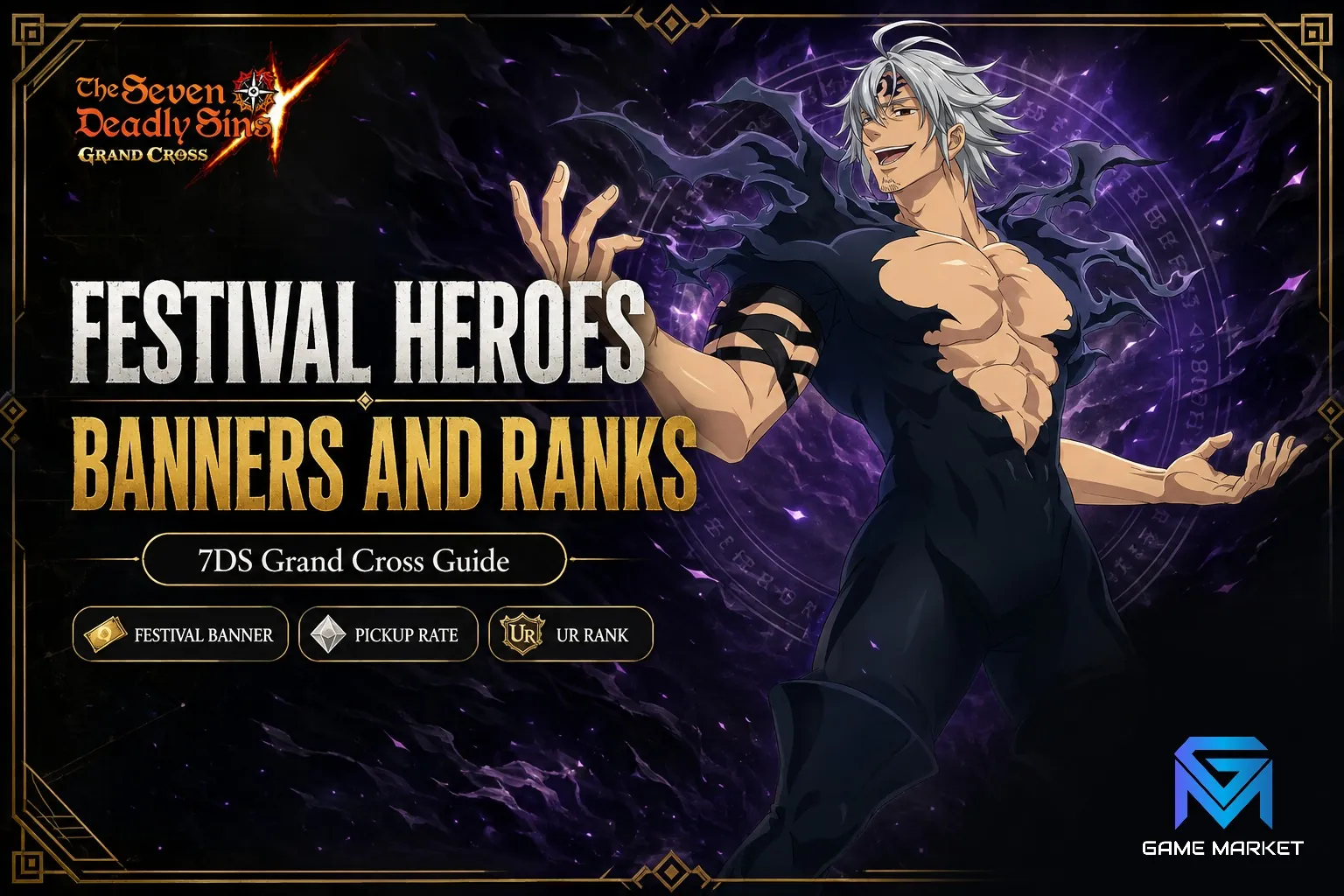
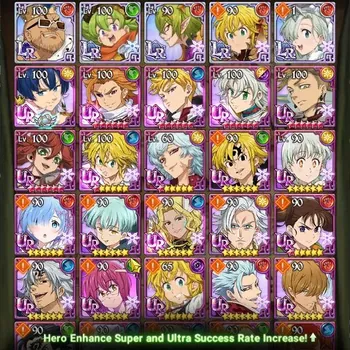
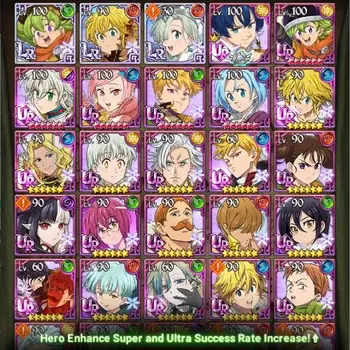
Festival heroes in The Seven Deadly Sins: Grand Cross are limited-period SSR units released on their own dedicated banners, built around a stronger passive identity and a kit that is designed to define a team rather than fill a slot. They are not a separate rarity tier: a Festival hero is still an SSR, but Netmarble reserves the label for units whose passives, ultimate scaling and Awakening path are tuned above the standard roster of the same grade.
That distinction matters because almost every planning decision an account makes — how many diamonds to hold, when to spend Hero Coins, which unit to evolve first — ends up orbiting these banners. Understanding what actually changes when a hero carries the Festival tag is the difference between a roster that stays relevant across patches and one that has to be rebuilt every few months.
What are Festival heroes in 7DS Grand Cross?
Festival heroes are SSR units introduced during a Festival period — a marked in-game event window with its own banner, its own draw pool and usually its own login and mission rewards. They are distinguished by tuned passives, distinct card sets and an intended role as a team's centrepiece.
The Festival framing is a release format, not a hidden stat bracket. When you inspect one in the hero list it shows the same SSR grade, the same six-slot gear layout and the same Awakening track as any other SSR. What is different is design intent. Standard SSR releases tend to slot into an existing archetype: another debuffer, another single-target damage dealer, another healer with a slightly different cleanse. Festival releases are usually written to change how a team is assembled — a passive that alters card drawing, a stance that rewrites how ultimates charge, or a buff that only pays off if the two units beside it are chosen deliberately.
The practical consequence is that Festival heroes tend to be evaluated as team packages rather than as individual power. A Festival unit whose passive multiplies debuff damage is weak on an account with no debuffers and dominant on one that already invested in them. This is why two players can draw the same hero in the same week and reach opposite conclusions about it: the unit did not change, the roster around it did. If you are still mapping how those roster layers stack, the 7DS Grand Cross account progression guide lays out how heroes, gear and grade interact before any single banner enters the picture.
How do Festival banners differ from standard hero draws?
Festival banners run for a limited window, carry a narrowed featured pool, and usually pair the headline unit with its own pity bar and event shop. Standard banners rotate constantly and share the general pool; Festival banners concentrate your draws on a small set of outcomes for a fixed period.
Three structural differences do most of the work. First, pool width: a narrower featured pool means each draw has a better chance of producing the specific unit you are chasing, which is exactly why these periods absorb saved currency so quickly. Second, the pity structure — the accumulating counter that guarantees a featured result once you have drawn enough — is typically scoped to the banner itself, so an unfinished bar does not carry forward once the window closes. Third, Festival periods usually stack surrounding systems: exchange shops that convert event currency into draw tickets, missions that award diamonds, and step-up structures that discount the early multi-draws.
Reading those three together tells you the real cost of a banner, which is rarely the sticker price of a single draw. The honest question is not "can I afford ten draws" but "can I afford to reach the guarantee if the early draws miss". Because pity progress does not survive the window, entering a Festival banner with half a bar's worth of currency is the most expensive position on the board. The 7DS Grand Cross draw guide covers how the pity bars and Hero Coin conversions behave in detail; treat it as the arithmetic layer under everything in this article.
One accuracy note worth carrying: banner formats have changed across the game's lifespan, and Netmarble adjusts rates, step-up structures and shop contents per event. Always read the banner's own details screen in-game before committing currency rather than assuming last Festival's structure carried over.
What makes a Festival hero's kit different in combat?
The difference is usually concentrated in the passive and in how the unit's cards interact, not in raw attack numbers. Festival kits commonly bend a core rule of combat — card ranking, ultimate gauge generation, buff duration or debuff stacking — so their value scales with the team built around them.
Combat in Grand Cross is a card game wearing an RPG's clothes. Each turn you are offered cards, you merge matching cards to raise their rank, and rank changes both the effect size and any attached rider such as a stun, a freeze or a debuff extension. A standard SSR wins by having efficient cards. A Festival SSR tends to win by changing the economy of those cards: guaranteeing a specific card type, converting one card into another, retaining ultimate gauge between waves, or making rank-two merges behave like rank three.
That is why their damage on a spreadsheet can look unremarkable while their real output is high. A passive that reliably produces one extra usable card per turn compounds across a fight in a way that a flat percentage buff does not. It also explains their PvP presence: in a mode decided by who executes their combo one turn earlier, consistency in what you draw is worth more than a larger number on a single hit.
The flip side is fragility of assumption. A Festival unit built around debuff extension is only strong while the debuffs it extends stay relevant, and content that resists status effects flattens it immediately. Judge these heroes by whether the rule they bend is a rule you actually rely on.
How do UR evolution and Awakening change a Festival hero?
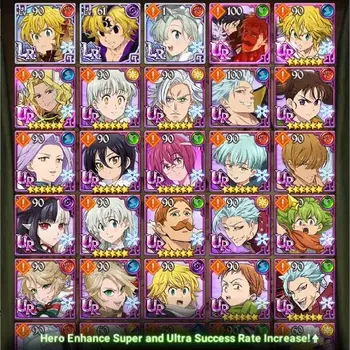
Awakening raises a hero's base stats through repeated upgrades, while UR grade extends an SSR beyond its normal ceiling using dedicated evolution materials. Both apply to Festival heroes the same way they apply to other SSRs, but the investment cost makes the choice of target far more consequential.
Awakening is the routine layer: it consumes hero-specific materials and lifts the unit's stat line in fixed steps. UR is the scarce layer. It requires evolution materials that arrive slowly, and because those materials are limited, a UR decision is effectively a declaration about which hero you intend to keep using for the next several months. Spending them on a unit whose passive is already covered elsewhere in your roster is the most common way accounts stall.
Festival heroes are frequent UR candidates precisely because their passives tend to age well — a rule-bending effect stays useful longer than a raw damage number, which gets outscaled by every subsequent release. But "frequent candidate" is not "automatic". Before committing evolution materials, check three things: whether the unit has a defined home in at least two content types, whether its buffs are duplicated by a cheaper unit you already own, and whether your gear depth can actually support another fully built hero. The 7DS Grand Cross UR grade guide walks through the evolution requirements and the pendant and book costs behind them.
Gear is the constraint people underestimate. A UR hero with mismatched substats loses to a well-geared SSR often enough that the safest sequencing is usually gear first, evolution second.
Which account resources should you protect before a Festival banner?
Diamonds are the obvious one, but the resources that actually decide outcomes are Hero Coins, saved draw tickets, awakening materials for the archetype the new unit belongs to, and enough gear-enhancement stock to make the hero usable the day it arrives.
Diamonds accumulate from story clears, event missions, achievements, daily and weekly content, and the periodic compensation Netmarble issues after maintenance. Because that inflow is steady but slow, the players who consistently land Festival units are rarely spending more — they are simply not spending between banners. Every ten-draw taken on a rotating banner out of impatience is progress deleted from the next Festival window.
Hero Coins deserve specific attention. They accrue from duplicate results and convert into targeted purchases, which makes them the closest thing in the game to insurance against bad luck. Holding a coin balance means a failed banner still ends with a chosen unit rather than nothing, and that transforms the risk profile of drawing at all.
The under-planned resource is readiness. Pulling a Festival hero and then discovering you have no spare gear set, no awakening stones for its type and no costume investment means the unit sits unused for weeks — and an unused hero contributes nothing regardless of how strong its kit is on paper. Keeping a spare set of appropriate gear and a small material buffer converts a draw into an immediately playable unit. The 7DS Grand Cross diamonds guide covers the earn-and-spend side of that reserve in more depth.
How do Festival heroes fit into PvP and PvE teams?
In PvP they are usually built as the turn-one enabler — the unit that guarantees the combo lands before the opponent's does. In PvE they are more often the sustained-damage or utility anchor across longer fights, where their passive compounds over many turns instead of deciding a single exchange.
Grand Cross PvP rewards speed and predictability. Matches are decided by whether your ultimate resolves before theirs, so a Festival passive that guarantees a card type or accelerates gauge generation reads directly as tempo. That is also why the PvP meta shifts sharply around Festival releases and then settles: the first weeks reward whoever owns the newest enabler, and the following months reward whoever built the supporting cast correctly.
PvE inverts the emphasis. Boss content, demon fights and long event stages run over enough turns that consistency beats burst, and mechanics such as resistances, revives and enrage timers punish teams built purely for a fast opening. A Festival hero can absolutely anchor those teams, but the units flanking it — the cleanser, the healer, the debuffer whose stacks the passive multiplies — are what determine clear reliability.
Two habits keep both modes healthy. Build depth in one archetype rather than one hero in each. And treat a Festival unit as a hypothesis to test in real content before deciding it is your account's centrepiece — the strongest kit in the roster is still worthless if nothing else you own supports it. Costume investment is the quiet multiplier here, since costume stats apply account-wide to the hero rather than to a single build.
Do Festival heroes stay useful after their banner ends?
Generally yes, though not permanently at the top. Because their advantage sits in mechanics rather than raw numbers, Festival heroes usually age more slowly than standard SSRs — but power creep is real, and no unit stays definitive across an unlimited number of releases.
The pattern most veteran accounts describe is a long tail rather than a cliff. A Festival unit that dominates its release window typically settles into being a strong, situational pick: still the correct answer in the content its passive was designed for, no longer the automatic answer everywhere. Units whose passives interact with permanent systems — card ranking, ultimate gauge, buff duration — hold value longest, because those systems do not get replaced.
What genuinely retires a hero is a mechanical shift: new content that resists the status effect it applies, or a later unit that provides the same rule-bending effect plus something else. Even then, retired-from-meta rarely means unusable, since Grand Cross runs multiple content types simultaneously and a unit pushed out of PvP often remains fine in PvE.
A fair caution on returns: limited units may become available again through reruns, anniversary pools or selector rewards, but that is not guaranteed for any specific hero and the timing is not something a player can plan around. Treat a missed Festival banner as missed, and plan the next one properly rather than waiting on a rerun that may not arrive.
How do you plan a diamond budget around Festival periods?
Work backwards from the guarantee, not forwards from your balance. Estimate what reaching the banner's pity threshold costs, compare that to what you hold plus what you will earn inside the window, and only draw if you can realistically finish — otherwise keep saving.
A workable planning loop looks like this. First, audit: count diamonds, tickets and Hero Coins before the banner opens rather than after you have started drawing. Second, forecast the window's own income — event missions, login rewards and shop exchanges frequently add a meaningful fraction of a pity bar on their own. Third, set a stop line in advance and write it down somewhere outside the game, because the decision to continue drawing is much harder to make well mid-session.
Fourth, sequence multiple banners honestly. When two Festival periods overlap or fall close together, splitting currency across both usually finishes neither. Choosing one and fully committing produces a hero; hedging produces two half-bars that expire.
Finally, keep a floor. Emptying the account to zero leaves nothing for the surprise banner, the collaboration unit or the anniversary selector — and those windows are exactly when a small reserve produces the largest outcome. A recurring monthly floor of untouched diamonds is a boring rule that quietly outperforms most drawing strategies.
Frequently asked questions
Are Festival heroes a higher rarity than SSR?
No. Festival heroes are SSR units. The label describes the banner and release format they arrive through, plus the stronger design intent behind their passives — not a rarity tier above SSR. Grade progression beyond SSR happens through UR evolution, which is available to eligible SSRs generally.
Does pity progress carry over to the next Festival banner?
Typically no — pity is usually scoped to the individual banner and resets when that window closes. Because event structures vary, confirm on the banner's own details screen before drawing rather than assuming it carries forward.
Should I evolve a Festival hero to UR immediately after drawing it?
Usually not immediately. Gear quality and awakening materials contribute more early usable power than grade alone, and evolution materials are scarce enough that the decision deserves a settled roster plan behind it. Build and test the hero first, then evolve.
Will missed Festival heroes return?
Some limited units have returned through reruns, anniversary pools or selector rewards, but no specific return is guaranteed and the timing is not announced far ahead. Plan around the banners in front of you rather than an expected rerun.
If you would rather start from a roster that already has the Festival units and the gear depth to support them, you can browse available 7DS Grand Cross accounts and compare what each roster actually brings before you commit.
GameMarket.gg is a trusted digital marketplace for everything gaming-related. We serve the gaming community by providing secure access that enhances every gaming journey.