eFootball Division Climb Guide: Match Tactics That Win Points
By John Ganang 12 September 2026, 12:00 WIB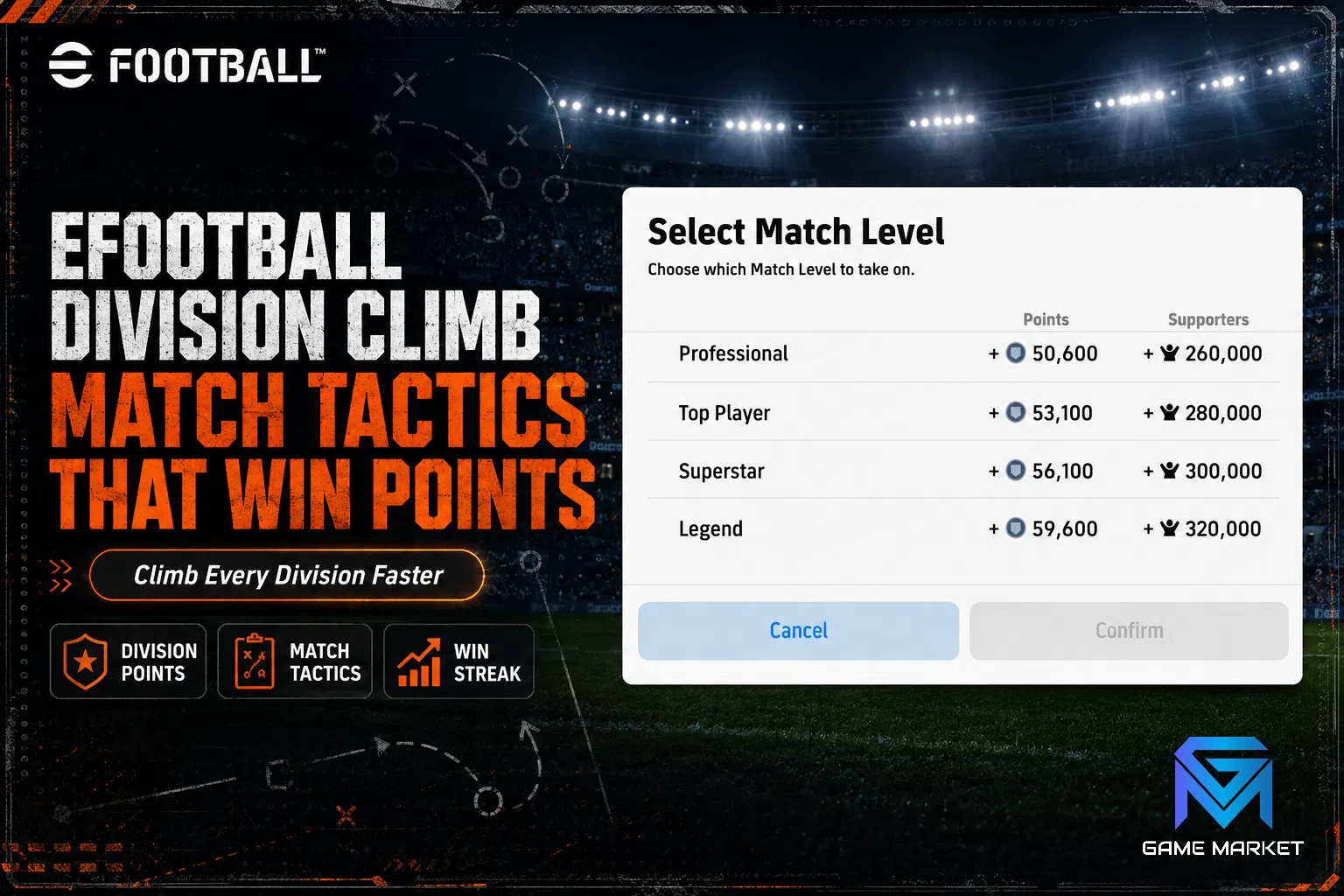
Climbing eFootball League divisions comes down to points per match, and points come from wins and draws under a two-phase cycle. Win consistently against similar-rated opponents, avoid the loss streaks that erase a week of progress, and promotion follows. Tactics matter more than squad rating.
That last sentence is the part most players resist. A Division 6 squad full of Epic cards still loses to a disciplined Standard-card team that defends its own box, keeps possession under pressure, and converts two clear chances per match. The eFootball League rewards repeatable habits, not highlight goals. This guide covers what those habits are, how the division and phase structure turns them into points, and where players quietly leak the points they worked for.
How do you actually earn points in the eFootball League?
You earn points per completed match: a win pays the most, a draw pays a smaller amount, and a loss pays nothing while often costing points at higher divisions. Accumulate enough points inside the phase window and you promote to the next division.
eFootball League runs on Divisions numbered from the entry tier down to Division 1 at the top, and Konami structures play into phases with a fixed length announced in-game. Each phase gives you a points target; reach it and you move up, fall short repeatedly at the higher tiers and you can drop. Because the exact point values and phase lengths are adjusted by Konami between seasons, treat the numbers on your own division screen as authoritative rather than any figure you read secondhand, including here.
The structural consequence is what matters for strategy. Points are earned per match, but your rating is compared against opponents of similar strength, so matchmaking will always hand you roughly even fixtures. You cannot out-squad the ladder for long. What you can do is raise your win rate by two or three matches in ten, which across a phase is the entire difference between stalling and promoting. If you want the tier-by-tier structure, points thresholds and relegation mechanics laid out separately, the eFootball division system guide covering points, phases and promotion handles that in detail.
One more piece of framing. A draw is not a failure. Against an opponent who is clearly stronger on the ball, closing out a 0-0 banks real points and denies them theirs. Players who chase a winner in the 85th minute with a full-team push convert a point into zero more often than they convert it into three.
Which formation and tactics suit division climbing?
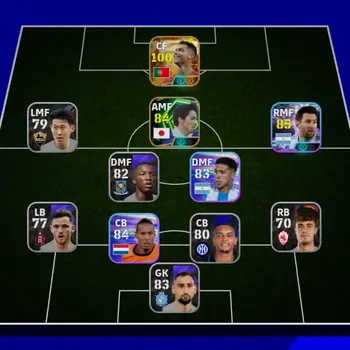
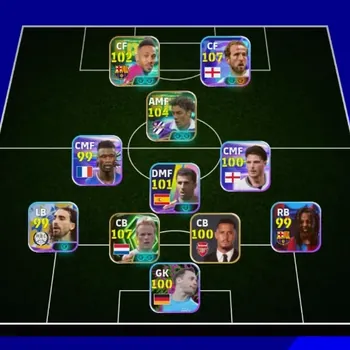
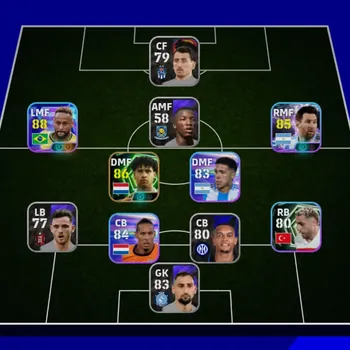
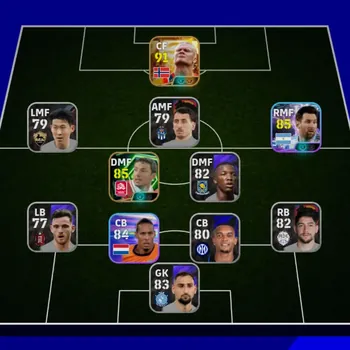
Pick a formation you can defend with first: a back four, two holding-capable midfielders, and a shape that keeps at least six outfield players behind the ball when possession is lost. Shapes in the 4-2-3-1 and 4-3-3 families give that balance without sacrificing counterattack speed.
eFootball's Team Playstyle setting sits above the formation and changes how your AI teammates move off the ball. Possession Game asks your players to hold shape and circulate; Quick Counter tells them to break vertically the moment you win the ball; Long Ball Counter aims for a direct out-ball; Out Wide pushes width and crossing. The setting is not cosmetic. A Quick Counter team leaves gaps behind the full-backs, which is fine when you are actually counterattacking and disastrous when you are trying to protect a lead.
For climbing, the practical answer is to carry two setups and switch between them mid-match with the Advanced Instructions and preset menus. Start with a balanced possession-leaning shape so you can see what your opponent does in the first ten minutes. If they commit numbers forward, switch to counter and punish the space. If you go a goal up after the 70th minute, drop the defensive line, tighten the compactness, and take the draw-or-win outcome rather than the win-or-loss one.
Individual Playing Styles matter as much as the formation. A striker with Goal Poacher behaves nothing like a Deep Lying Forward; a full-back with Offensive Full-back will vacate his position in ways an Anchor Man never does. Build the eleven so that the styles agree with the shape you actually want. A common self-inflicted problem is stacking three players who all want to occupy the same half-space, then wondering why the midfield looks empty on the counter.
How do you defend without giving away easy goals?
Defend with your team shape rather than with the player under your cursor. Hold the containment input to stay goal-side, use a second defender to apply pressure only when the ball carrier is facing his own goal, and commit to a tackle only when you have cover behind you.
Most goals conceded in the middle divisions come from three repeatable errors. The first is chasing: sprinting the cursor player at the ball, getting turned, and opening a running lane straight at the back four. The second is over-pressing with the second-defender call, which pulls a centre-back out of the line and leaves a gap for a through ball. The third is manual slide tackling inside your own third, which converts a recoverable situation into a penalty or a red card.
The fix is unglamorous. Stand in front of the attacker, angle him toward the touchline, and let your AI defenders occupy passing lanes behind you. eFootball's defensive AI is competent at intercepting when it is allowed to keep its shape; it is helpless when you have manually dragged three players to the ball. Set the Defensive Line to a middle or slightly deep value when you face pace, and use the Aggressiveness setting to control how far your unit steps up.
Match-Up Defence is worth practising specifically. It locks your defender's movement to the attacker's, which is what you want in the box against a dribbler, and it is what you do not want in open midfield where you need to cover a lane instead. Knowing which situation you are in is the actual skill.
What attacking patterns reliably break down defensive opponents?
Move the ball faster than the opponent can shift his shape. Short passes to feet, a wide switch to the free side, then a cutback from the byline breaks compact blocks far more often than through balls into a crowded centre, which is what most opponents are set up to intercept.
Three patterns carry most of the goals at climbing level. Cutbacks from the goal line, played to an arriving midfielder rather than a marked striker, produce high-percentage shots because the goalkeeper is committed to the near post. Second, the one-two around the edge of the box using the give-and-go input, which drags a centre-back out of position by forcing him to choose between the passer and the runner. Third, the low driven cross to the back post against opponents who defend narrow.
Shooting deserves its own discipline. Charge the shot only as far as the situation needs, aim with a light directional input rather than a full swing, and take the first clear look you get. Waiting for a perfect chance against a defensive opponent usually means taking a worse chance three seconds later under pressure. Finesse shots from the edge of the area are strong with the right Playing Style but wasteful when spammed.
Possession without penetration is its own trap. If you have had the ball for two minutes and taken no shots, you are not controlling the match; you are being contained. Force the issue with a run in behind, even one that fails, because it pulls the defensive line back and creates the space your passing needs.
How much do squad depth, condition and training actually matter?
Depth matters more than the peak rating of your best eleven. Condition arrows shift each week, stamina drains across a match, and a phase asks for dozens of games. Two credible options in every position keeps your effective quality high on the days your headline players are out of form.
Condition arrows in eFootball adjust a player's performance for that period. A player with a downward arrow is measurably worse in the areas the arrow affects, and starting him out of habit costs you matches you will not be able to identify afterward. Check the arrows before each session and start the players who are actually sharp, even where that means benching a higher-rated name.
Squad building also carries a progression cost. Training programmes, level-ups and progression points let you raise a player you already own instead of chasing a new card, which is usually the more efficient path when you are mid-climb and cannot afford to rebuild an entire line. Player levels raise the stats the card was already built around, so invest in players whose base profile suits your system rather than spreading progression thinly across the roster.
If you are still assembling a first eleven and need the fundamentals of cards, GP and squad structure, the eFootball beginner's guide to player cards, coins and squads is the right starting point before you worry about ladder tactics.
How should you manage stamina and substitutions across a match?
Track your stamina bars from roughly the 60th minute and make substitutions before players visibly drop, not after. Tired players lose acceleration and defensive reaction speed first, which is exactly when late goals get conceded, and eFootball gives you a limited window to react.
Sprinting is the main stamina cost, and most players spend it badly by holding the sprint input during build-up play in their own half where it achieves nothing. Sprint to break a line, to chase a genuine counterattack, or to close a shooting angle. Walk the ball through midfield.
Substitution timing follows the scoreline. Ahead by one after the 70th, bring on a fresh defensive midfielder and a fresh full-back, because that is where late equalisers come from. Behind by one, refresh the wide attackers rather than the striker, since fresh legs on the outside create the cutbacks that actually score. Level in a match you need to win, make the changes early enough that the substitutes have twenty minutes to influence play.
How do you stop a losing streak from erasing a phase?
Stop playing. Loss streaks in eFootball are usually a fatigue and tilt problem rather than a squad problem, and the ladder punishes tilt directly because you concede sloppy goals and then over-commit trying to recover them. Three losses in a row is the signal to close the session.
There is a measurable pattern behind this. After a frustrating concession, players press earlier, tackle more aggressively, and push the defensive line up, all of which increase the chance of conceding again. The next match starts with that same habit set. What looks like bad matchmaking is often four matches of your own degraded decision-making stacked together.
When you come back, do one thing deliberately: watch the first ten minutes without forcing anything, and confirm whether your defensive shape is holding. If it is, the tactics were never the problem. Some players find it useful to review a replay of a conceded goal from the defensive camera, where the shape error is usually obvious in a way it never is in the moment.
Phase endings deserve a note of their own. If you are a handful of points from a threshold with limited time left, prioritise finishing matches over experimenting with a new formation. Save the experiments for the start of the next phase, when a few dropped points cost you nothing.
Common questions about climbing eFootball divisions
Does a higher overall rating guarantee promotion?
No. Matchmaking pairs you against opponents of comparable strength, so rating advantage is usually neutralised. Consistency in defending, chance conversion and stamina management moves your win rate far more than a few points of team rating.
Is it better to take a draw or push for a winner?
Take the draw when the opponent has controlled the match, because banked points beat a coin-flip. Push for the winner only when you have been creating clear chances and the scoreline does not reflect the run of play.
How often should I change formation?
Rarely between matches, frequently within them. Keep one base system you know well, and use the in-match preset switches to react to what the specific opponent is doing rather than rebuilding your tactics after every defeat.
Do condition arrows really change results?
Yes. Konami applies condition as a real performance modifier for the period, affecting how players perform on the ball and in duels. Starting a player on a downward arrow out of loyalty is one of the quietest ways to lose winnable matches.
If you would rather have experienced players handle the grind of a phase while you focus on the matches you enjoy, browse the available eFootball boosting services on GameMarket.gg, and check the eFootball hourly services listings if you want shorter, session-based help instead.
GameMarket.gg is a trusted digital marketplace for everything gaming-related. We serve the gaming community by providing secure access that enhances every gaming journey.