eFootball: How to Beat Higher-Rated Squads in Online Matches
By John Ganang 18 September 2026, 08:00 WIB
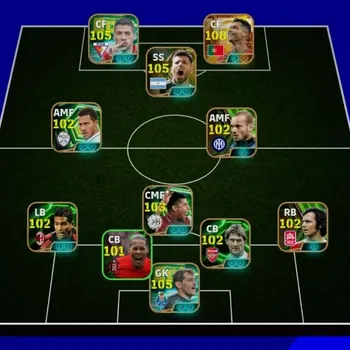
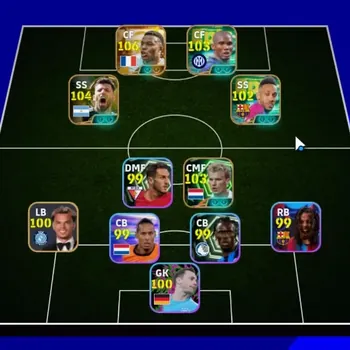
Beating a higher-rated squad in eFootball comes down to tactics, not Team Strength. Team Strength is an average of your starting eleven's ratings, and it never enters the match engine as a bonus. Your opponent's stronger numbers only win if you let the match be played on their terms.
That single fact is why a 2,700-rated squad can lose to a 2,400-rated one on any given night, and it is the thesis this guide keeps returning to: every advantage a highly rated squad has is conditional, and every one of those conditions can be taken away. Whether you have just reached Division 5 and keep running into stacked Epic squads, or you are grinding the top divisions where everyone owns the same meta cards, the counter-play is the same. You control tempo, you control space, and you make the opponent's expensive attackers do the one thing they are bad at: defending in a hurry.
⚖️ Does Team Strength actually decide eFootball matches?
No. Team Strength is a display average of your starting eleven's overall ratings plus tactical fit; it is a squad-building shorthand, not a stat the engine applies during play. Konami's own in-game description frames it as a guide to squad balance, and matches are resolved by inputs.
The number moves for reasons that have little to do with winning matches. Placing a player in a position he is not proficient in drags Team Strength down, and stacking your bench with high-rated cards nudges it up without changing a single touch on the pitch. Because the figure is an average, one 100-rated superstar can lift it while your actual weak link, usually a slow centre-back or a midfielder with no defensive awareness, is the player the opponent will attack all match.
What genuinely transfers into gameplay is narrower and more useful to know: individual stats at the point of contact, Playing Styles, Playstyle Proficiency, condition arrows, and stamina. A 96-rated striker with a red-down condition arrow and 20% stamina left is worse than an 82-rated fresh substitute for the last fifteen minutes. That is your opening, and the rest of this guide is about widening it.
🔍 How do you read the opponent's squad before kick-off?
Check the formation, the condition arrows, and the shape of the bench during the pre-match screen. You are looking for three things: which flank is defensively thin, whether the centre-backs are slow, and whether the squad is front-loaded with attackers and short on holding midfielders.
Front-loaded squads are the most common shape you will meet, because most players spend their GP and Coins on attackers. A team fielding a 4-2-4 or an aggressive 4-3-3 with two wingers pushed high has committed bodies forward, so the space behind their full-backs is permanent, not occasional. Against that, you do not need a better team; you need a fast winger and the discipline to wait.
Condition arrows are the cheapest read available and most players ignore them. An arrow is the small marker next to each player showing their form for that match, running from red-down through orange, white, green-up to a rare blue-up. A green-up or blue-up arrow gives a real lift to physical and technical output, while a red-down arrow saps it. If the opponent's star striker is on a down arrow, their attack is measurably slower than the squad rating suggests, so you can afford a slightly higher defensive line.
Finally, look at who is missing. If there is no anchor-type midfielder with a Destroyer or Anchor Man Playing Style, the area in front of their back four is unguarded, and your central through balls will find a receiver far more often than they should against a squad rated that highly.
⚡ Why is the counter-attack the great equaliser?
Because a counter-attack attacks the one moment when squad quality does not help: the seconds after the opponent loses the ball, when their defenders are out of position and their expensive attackers are 60 metres from home. Speed and timing beat ratings there.
The mechanism is simple to describe and hard to execute well, so most opponents never defend it properly. You concede possession deliberately in your own half, hold a compact shape, win the ball, and release a forward pass within two touches. The window closes fast because the opponent's midfield will recover, which is why the pass has to leave before you look up rather than after.
A few specifics make this consistent rather than lucky. Use a lofted through ball into the channel between centre-back and full-back instead of a ground through ball down the middle, since the ground pass runs into recovering midfielders while the lofted one travels over them. Aim for the side where the opponent's full-back was highest up the pitch. Set your team playstyle to Quick Counter or Long Ball Counter so your teammates actually sprint forward when you regain the ball, because with a Possession Game playstyle your own attackers will hold their shape and the run will not exist.
The counter is also the reason patience wins these matches. Every minute you spend probing sideways is a minute the opponent's superior squad has to settle. Sitting deeper feels passive, but it manufactures the disorganised transitions you need, so passivity here is a weapon rather than a concession.
🛡️ How do you defend against better attackers?
Defend with positioning and containment rather than tackles. Hold the pressure input to jockey and shepherd the attacker toward the touchline, keep a second defender behind the first as cover, and only commit to a tackle when the ball is clearly loose or the attacker has taken a heavy touch.
Better attackers punish two behaviours above all others: chasing the ball with the wrong defender, and sprinting into contact. The moment you sprint, you lose the ability to change direction, and a high-agility winger will simply cut inside the gap you opened. Containment is slower and less satisfying, but it forces the attacker to keep making decisions, and every extra decision is another chance for them to make a bad one.
Use Match-Up sparingly. It is the physical duel input that locks a defender onto the attacker's body, and it is genuinely strong when your defender has the strength to win a shoulder-to-shoulder battle. Against a quick, low-strength dribbler it is a trap, because losing the duel removes your defender from the play entirely. As a rough guide, use Match-Up on strikers who hold the ball up and avoid it against wingers who run at you.
Guard the centre first. Crosses from wide positions are the most survivable attack in eFootball if you have a competent centre-back pairing, whereas a through ball split between your two centre-backs is close to a guaranteed one-on-one. Conceding the flank while sealing the middle is a deliberate trade, and against a squad that outrates you it is almost always the correct one. Our eFootball division system guide covers why one avoided goal is worth more than one extra goal scored in ranked point terms.
🧩 Which tactical settings help an underdog most?
Pick a compact defensive shape with a low or medium defensive line, a narrow compactness setting, and a team playstyle built on transitions. The combination shrinks the space your defenders must cover and lengthens the space your attackers can run into.
Concretely, three settings do most of the work:
- Defensive line: low to medium. A high line against superior attackers hands them the through-ball space that decides these matches. Dropping the line costs you territory but removes the fastest way to lose.
- Compactness: narrow. Narrow compactness pulls your midfield block into the central corridor, so the passes your opponent wants to play become the passes they cannot play.
- Support range: short to medium. A short support range keeps players connected when you regain possession, which is what makes the counter reach the final third instead of dying at halfway.
Formation matters less than shape discipline, but some structures suit the underdog better than others. A 4-2-3-1 gives you two holding midfielders in front of the back four and an attacking midfielder positioned exactly where loose balls land. A 4-4-2 offers the flattest, most forgiving defensive block for players who do not enjoy manual defending, and it keeps two strikers up top so counters start with numbers. A 5-3-2 or 3-4-2-1 with wing-backs is the most conservative option, useful when the opponent's wingers are clearly the threat.
Whichever you choose, players must be in positions they are proficient in. Playstyle Proficiency is the game's marker for how naturally a player performs a role, and a player out of position loses effectiveness in ways the rating does not show. This is where underdog squads quietly beat expensive ones: a fully proficient 82-rated right-back defends better than a 92-rated centre-back shoved out wide.
🎯 How do you score against a stronger defence?
Attack the spaces their shape leaves open rather than the players. The reliable underdog goals come from three sources: balls in behind the full-backs, cutbacks from the byline, and set pieces. All three bypass a strong centre-back pairing instead of testing it.
The cutback deserves particular attention because it is the most under-used attack at every skill level. Once you get to the byline, a low pass rolled backwards into the edge of the box finds an arriving midfielder while every defender is facing the wrong way and moving toward their own goal. It converts far better than a first-time shot from a tight angle, and it does not care about the defender's rating, because the defender is not in the frame.
Manual shooting and controlled finishing are worth the practice cost here. Holding the shot input with the finesse modifier and aiming toward the far post produces the placed low finish that goalkeepers in eFootball handle worst. Blasting from distance against a well-rated keeper is the shot most likely to be saved, so save it for the moments when the keeper is off his line.
Do not neglect dead balls. A stronger squad usually means taller defenders, but corner and free-kick outcomes hinge on delivery timing and the runs you trigger, and a team that has practised its set-piece routine converts them at a rate that has nothing to do with squad average. If you are outmatched in open play, dead-ball goals may be the cheapest ones you will find all season.
🔋 When does the match actually turn in your favour?
Usually between the 60th and 75th minute, when stamina depletion starts biting. Sprinting drains stamina quickly, and a tired defender loses acceleration and reaction quality first, so the opponent's back line becomes measurably beatable before their attack does.
This is the single most exploitable pattern in ranked eFootball. Opponents with expensive squads tend to hold sprint constantly in the first half because they can, and by the hour mark their full-backs are the slowest players on the pitch. If you have defended patiently, your own attackers are comparatively fresh, and the counter you could not complete in the 20th minute completes in the 65th.
Plan substitutions around that window rather than reacting to it. Bringing on a fast forward at 60 minutes turns a fresh runner loose against tired defenders, whereas making the same change at 85 gives you five minutes to use it. Watch the opponent's stamina bars, not just your own, and target the flank where their full-back has been sprinting all match.
Managing your own stamina is the other half. Use sprint in bursts for the runs that matter instead of holding it as a default, keep possession with short passes when you need to recover shape, and accept that a slower, less spectacular first hour is what buys you a decisive final thirty minutes.
🚫 What are the mistakes that lose these matches?
Chasing the game early, defending with sprint and constant tackling, and trying to out-pass a better squad in midfield. Each one hands the opponent the match on their preferred terms, and together they explain most losses to higher-rated teams.
Conceding first triggers the worst of them. The instinct is to push the defensive line up and commit numbers forward, which is exactly the state a stronger attack wants to face. Trailing by one goal with sixty minutes left is not an emergency, so the correct response is to keep the shape and wait for the stamina window described above. Panic converts a one-goal deficit into a three-goal one more often than it produces an equaliser.
The second habit is over-tackling. Every failed slide tackle removes a defender from the play for several seconds, and against good attackers those seconds are the whole attack. If you find yourself pressing the tackle button repeatedly, switch to containing and let the cover defender do the work.
The third is a squad-building error rather than an in-match one. Chasing the highest possible Team Strength by signing attackers produces exactly the front-loaded, defensively thin team described earlier, which is the shape you have just learned to beat. Build the spine first: a competent goalkeeper, a centre-back pairing with acceptable speed, and a defensive midfielder who reads passes. The eFootball beginner's guide to player cards, Coins and squads walks through how those pieces fit together, and the wider eFootball guide hub collects the rest of the tactical library.
❓ Frequently asked questions
Does eFootball give a hidden bonus to the higher-rated team?
No. There is no documented rating handicap in eFootball's online matches. Outcomes come from inputs, individual stats at the point of contact, condition arrows and stamina. A rating gap changes the odds of winning individual duels; it does not apply a match-wide modifier.
Do Playing Styles matter more than a player's overall rating?
Often, yes. A Playing Style dictates how a player moves without the ball, so a Prolific Winger who makes the right runs will beat a higher-rated forward who stands still. Match the style to your tactic before you chase the bigger number.
Can you beat stronger squads without manual defending?
Yes, though it is harder. Assisted defending handles positioning acceptably if you hold a low defensive line and narrow compactness, since the block does the work. Manual control mainly helps you decide which duel to enter, and that decision is what patient containment already solves.
Is a 4-4-2 still viable in the higher divisions?
It is, precisely because it defends the central corridor well. The flat midfield four denies the through-ball lanes that stronger squads rely on, and two strikers give you an outlet on every regain. It asks less of your reactions than a possession shape does.
If you would rather have an experienced player handle the division grind while you focus on squad building, browse the available eFootball boosting services on GameMarket.gg and pick a seller whose track record fits what you need. For shorter, session-based help such as practising these tactics live, the eFootball hourly services listings cover the same ground by the hour.
GameMarket.gg is a trusted digital marketplace for everything gaming-related. We serve the gaming community by providing secure access that enhances every gaming journey.