eFootball Division System Guide: Points, Phases & Promotion
By John Ganang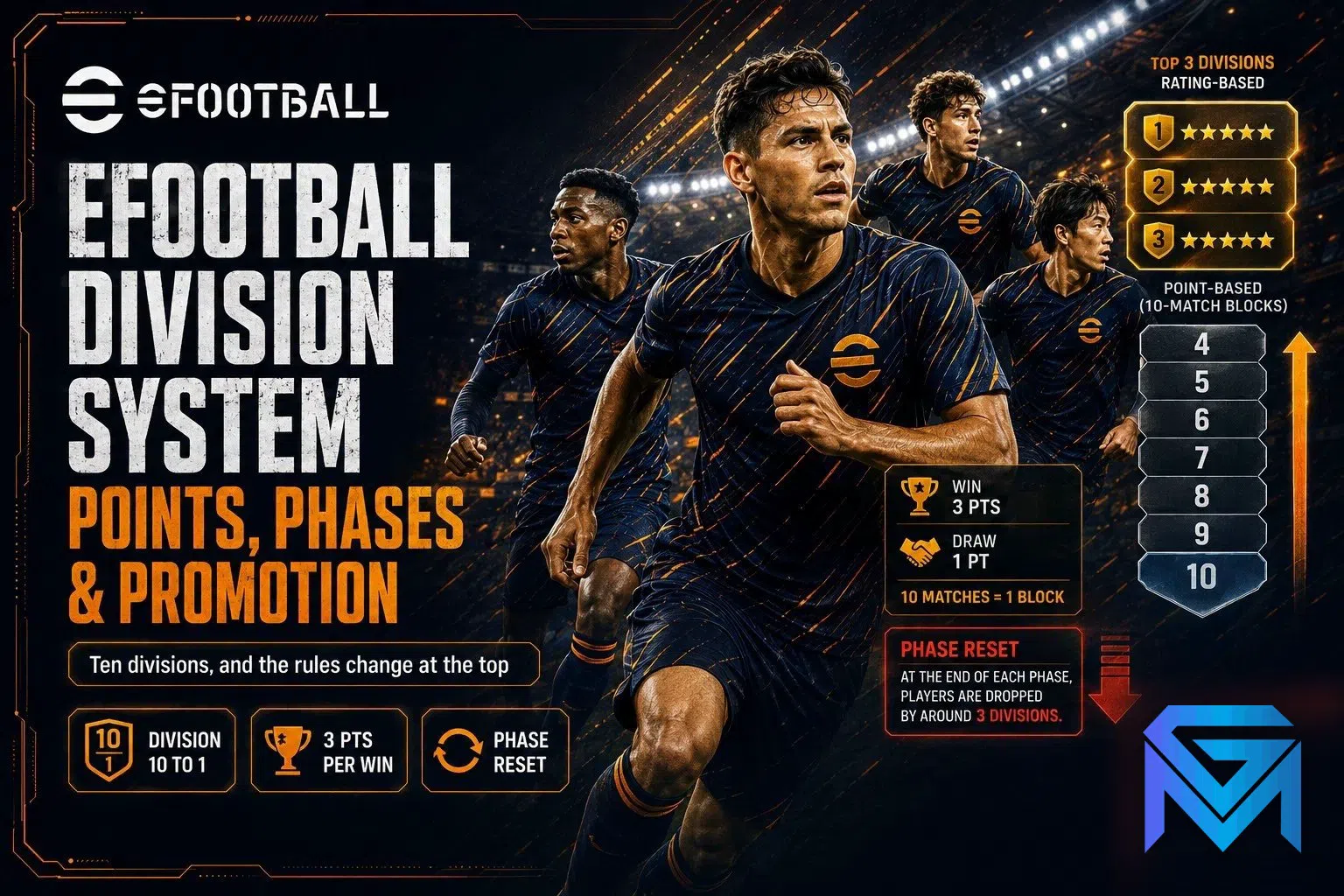
The eFootball League is the game's ranked ladder, and it runs on ten divisions. You enter at Division 10, take 3 points for a win and 1 for a draw across a ten-match block, and you are promoted the moment you clear that division's points target. For the detail behind that, see EFootball Game Modes Explained.
That much is simple. What catches most players out is that the ladder does not keep the same shape all the way up. The lower and middle divisions run on those fixed point blocks, the top three abandon them for a rating that moves with the quality of the opponent you beat, and every few weeks a Phase reset hands back roughly three divisions of the ground you covered. Understanding where each of those switches happens is what turns an aimless grind into a climb you can actually plan, because the tactics that get you out of Division 8 are not the ones that hold in Division 3.
What is the eFootball League and how is it structured?
The eFootball League is the game's main online competitive mode, reached through the Match menu. You take your Dream Team against other players' squads across ten divisions, numbered from Division 10 at the entry point up to Division 1, where the best players in the world sit.
Everything in the mode is built around that numbering, and it runs in the reverse of what new players expect: a lower number is a higher rank. Division 10 is where every new account begins, and it exists mostly to teach the mode's rhythm. Division 1 is the ceiling, and reaching it does something no other division does — it stops giving you a tier to climb and hands you a global numerical rank instead, so you are suddenly measured against the entire player base rather than against a promotion threshold.
The mode requires an internet connection and matches are played with your Dream Team exactly as it is built, which means your squad, your manager, your formation and your individual player instructions all travel with you into every fixture. There is no separate "ranked squad", so any change you make for the league is a change to the team you use everywhere else. If you are still assembling that squad, our eFootball beginner's guide to player cards, coins and squads covers the foundations the league assumes you already have.
How do you earn points and get promoted?
In the lower and middle divisions, promotion runs on a straightforward league table. A win is worth 3 points, a draw 1, and a loss nothing. Each division gives you a block of 10 matches to reach its promotion target, and clearing that target promotes you immediately.
The immediate promotion matters more than it sounds. Once you hit the threshold you can skip whatever fixtures are left in the block rather than playing them out, so a strong start does not just bank points, it saves you matches. The same shortcut works in the other direction: if you fall below the retention threshold and relegation is already decided, the remaining games can be skipped as well.
Because the sample is only ten matches long, consistency beats streaks. A single early defeat removes a tenth of your opportunities and three points from your ceiling in one go, which is why players who queue when they are tired or distracted tend to stall two or three divisions below where their squad should take them. The practical habit is to treat the block as a set: play it in a small number of focused sessions rather than a match here and a match there.
Three points in the table are also worth thinking about as a target rather than a hope. Before you queue, look at how many wins the block still needs and play accordingly. A draw that protects a retention line is a good result; the same draw when you needed a win to promote inside the remaining fixtures is a wasted match.
What changes once you reach Divisions 3 to 1?
The top three divisions drop the ten-match points block entirely. They switch to a Rating in the Elo family, where beating a strong opponent moves your number further than beating a weak one, and losing to a weak opponent costs you more.
This is the single biggest structural change in the ladder, and it changes what a good session looks like. Under the points block, ten wins and ten losses are just twenty matches. Under a rating, the same twenty matches can leave you net negative if the wins came against squads well below you and the losses came against squads at your level. Reaching Division 1 means crossing a specific rating threshold rather than filling a table, so the climb stops being about volume and starts being about win quality.
Two safety mechanics soften the top half of the ladder. Divisions 9, 6 and 3 act as floors: once you have crossed into one of them you cannot be relegated below it for the remainder of the Phase, however badly a run of matches goes. Konami has also reworked relegation in the elite bracket so that top-division players are protected from dropping mid-Phase, which community consensus reads as a deliberate move to remove the relegation anxiety that used to make Division 1 players stop queueing once they arrived. Exact behaviour here has changed across seasons, so it is worth reading the rules panel on the eFootball League screen in the version you are actually playing.
The practical consequence is that the floors are worth sprinting for. Getting into Division 6 early in a Phase converts a soft position into a guaranteed one, and from there a bad week costs you nothing permanent.
What are the three matchmaking groups?
The ten divisions are grouped into three matchmaking brackets, and under normal conditions you only face opponents from your own bracket. They are the Novice bracket (Divisions 10 to 7), the Intermediate bracket (Divisions 6 to 4) and the Elite bracket (Divisions 3 to 1).
Each bracket has a distinct character. The Novice bracket is the learning ground, and to keep queue times short it blends in balanced matches against the AI that award the same progression as a match against a human. That is why the first few divisions clear so quickly, and also why a squad that looks dominant in Division 8 can suddenly look ordinary in Division 6. For the detail behind that, see how to farm GP without spending. For the detail behind that, see Defending Guide Pressure, Match-Up and Tackling.
The Intermediate bracket is where most accounts stall. Every opponent here is a real player, the tempo is noticeably higher than in the Novice divisions, and the manager playstyles start being used deliberately rather than left on a default. Players who never adjust their formation or instructions after the tutorial almost always hit their ceiling somewhere in Divisions 6 to 4.
The Elite bracket is a different game again. Squads are deep, opponents defend manually, and the rating formula punishes the sloppy matches you could previously absorb. Matchmaking itself weighs three things: your current division, your location, and your squad's collective strength. You have partial control over the second of those through the Matchmaking Area option in the eFootball League settings, which trades a wider opponent pool against higher latency.
What happens when a Phase ends and your division resets?
The league runs in Phases of roughly four weeks. When a Phase closes, rewards are paid out based on the highest division you reached during it, the standings clear, and every account is placed back down the ladder — usually by about three divisions from its peak.
The drop follows a fixed mapping rather than a random shuffle. A Division 1 finisher restarts around Division 4, a Division 2 finisher around Division 5, and a Division 3 finisher around Division 6. Peaks in Divisions 6 through 9 generally reset to Division 9, and a Division 10 account simply stays where it is. Exact placements have been adjusted between seasons, so treat the pattern as the rule and the specific rows as something to confirm on the league screen.
Two things follow from this that change how you should play. First, your peak division is the number that gets recorded, not the division you happen to be sitting in when the clock runs out, so there is no reason to protect a position at the end of a Phase. Second, because the reset is partial rather than total, the climb compounds: each Phase you start higher than you did the last time, and the early divisions you already cleared are not re-run from scratch.
The strategic reading is to push your ceiling early. A player who reaches Division 3 in week one and then stops has the same recorded peak as one who reaches Division 3 in week four, but the first player has three weeks left to attack Division 1 with the floor at Division 3 already secured.
Which rewards does climbing actually pay?
Climbing pays in three streams: a one-off bonus the first time you reach each division, a Phase reward paid at every reset based on your peak division, and a ranking reward for players who finish inside the global standings in Division 1. We cover EFootball Formations Explained separately.
The currencies involved are the ones that feed squad building rather than cosmetics. Expect GP, experience and training programmes, skill tokens and position trainers, with eFootball Points appearing in the higher tiers. The exact quantities are revised between seasons and campaigns, so the useful thing to hold in your head is the shape rather than the numbers: every division you climb pays more than the one below it, and the first-time bonus means the first climb through a division is always worth more than the ones after it.
That structure is why climbing compounds. Promotion rewards are pumped straight back into training, position changes and squad depth, which raises the collective strength that the matchmaker reads, which makes the next Phase's climb start from a better squad. A player who reaches Division 4 in three consecutive Phases will have meaningfully more training material than one who stayed at Division 8, and the gap widens each cycle. Our guide breaks down how training programs raise level and progression points.
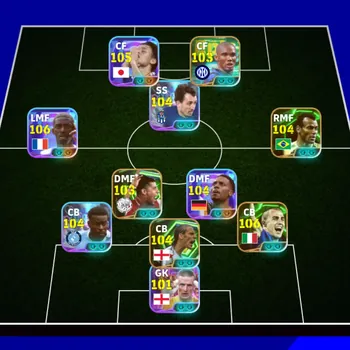
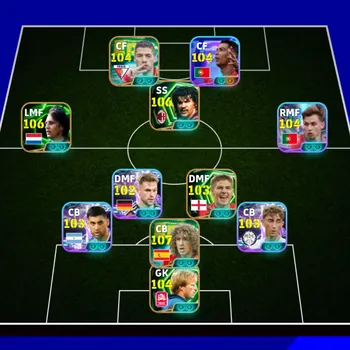
It is also worth noting what the rewards are not. Nothing in the league pays out top-tier cards directly, so the ladder is a progression engine rather than a shortcut to a finished squad. Players who want to see what a fully built Dream Team looks like before committing months to one can browse the eFootball team-building listings on GameMarket.gg to get a sense of the squads that hold up in the elite bracket.
What kind of squad actually holds up as the divisions get harder?
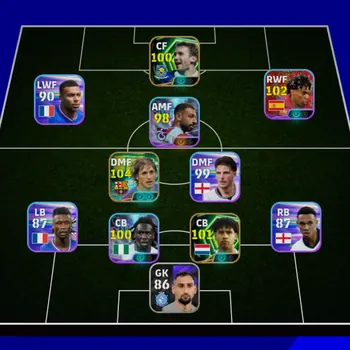
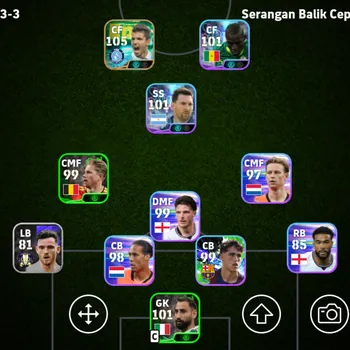
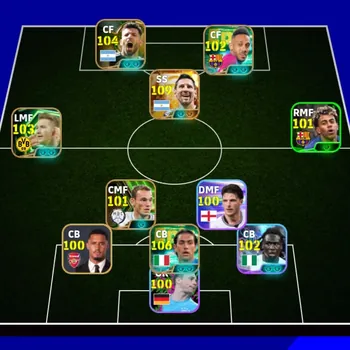
A squad that climbs is built around a spine, not around ratings. The common mistake is stacking the front line with the highest-rated attackers and leaving midfield to whoever is left, which works in the Novice bracket and collapses once opponents defend properly.
Three midfield roles carry most of the weight. A defensive midfielder set to a defensive individual instruction sits in front of the centre-backs and absorbs counterattacks instead of drifting forward. A box-to-box central midfielder with genuine stamina does the running that links defence to attack across ninety minutes. An attacking midfielder on a creative playmaking role makes the vertical runs that punish a defence once your strikers have pulled it apart. Get those three right and a mid-rated squad will beat a top-heavy one regularly.
Your manager matters more than most players realise. Team playstyle — Possession Game, Quick Counter, Long Ball Counter, Out Wide, and the Overload option added in the v6.0.0 season update — determines how your players move off the ball, and a manager whose playstyle proficiency is high applies a squad-wide statistical benefit that shows up in close matches. Community consensus puts the useful threshold somewhere around the mid-eighties in proficiency, and the practical rule is simple: pick the playstyle you actually want to play, then find the highest-proficiency manager for it rather than the highest-rated manager overall.
Formation follows from that choice rather than the other way round. The Fluid Formation system introduced alongside v6.0.0 lets you carry a separate attacking and defending shape, which is genuinely useful in the Intermediate bracket where opponents commit numbers forward. Finally, keep two attacking options with the Super Sub skill on the bench. Stamina bars in the current engine start flashing around the hour mark, and introducing a fresh Super Sub against a tired full-back is one of the most reliable ways to break a deadlock.
Which in-match habits separate a Division 4 player from a Division 1 player?
The difference at the top is rarely the squad. It is defensive discipline, stamina management and shot selection, and all three are habits rather than purchases. Elite players make fewer unforced mistakes per match, and the rating system in the top divisions rewards exactly that.
Defending is where most points are lost. When an attacker sprints at your back line, the instinct is to pull a centre-back out and lunge. Good players never do this, because the gap that opens is precisely what a through-ball is waiting for. The correct habit is to hold the match-up button so your defender tracks the attacker's body and blocks passing angles, keep the defensive line straight, and bring a central or defensive midfielder back to chase the carrier from behind.
Stamina is the second habit. Wingers and central midfielders in the current engine fade sharply after the sixtieth minute, and a tired player loses speed, positioning and passing accuracy at the same time. Plan the substitution window before the match rather than reacting to a red stamina bar, and treat the bench as part of the tactical plan.
The third is patience in the final third. Lower-division matches reward shooting early and often; elite opponents defend the near post and the cutback lane deliberately, so the reliable route becomes moving the defence sideways until a gap opens rather than forcing the first half-chance. Players who cannot resist the long-range shot tend to plateau in Division 4 with good possession numbers and a poor conversion rate.
How long does reaching Division 1 realistically take?
With a functioning squad and the habits above, the Novice divisions clear in a few sessions, the Intermediate bracket takes most of a Phase, and the Elite rating climb takes whatever is left. Division 1 inside one Phase is achievable, but rare on a first attempt.
The reason is the shape of the ladder rather than the difficulty of any one match. Divisions 10 to 7 pass quickly because the bracket blends AI opponents and the point blocks are short. Divisions 6 to 4 are where the calendar goes, because every match is a real opponent and a bad ten-match block can cost you a week. Divisions 3 to 1 then change the rules entirely, and a rating climb has no fixed length: you are not filling a table, you are proving a win rate against opponents who are also proving theirs.
What genuinely accelerates the climb is not spending. Free-to-play accounts appear in the global rankings every Phase, and they do it through tactical discipline and by using the partial reset to their advantage rather than by buying depth. The three levers that matter most are a manager with high playstyle proficiency, a midfield spine with correct individual instructions, and playing your ten-match blocks in focused sessions instead of scattered matches.
The realistic expectation for a determined new player is Division 4 to 6 in the first Phase, Division 3 in the second once the floors start working in your favour, and a genuine Division 1 attempt in the third. Each Phase's partial reset means that timeline shortens rather than repeats.
Common questions about the eFootball League
Is the eFootball League the same on mobile, console and PC? The mode, the ten-division structure and the Phase cycle are the same across platforms. Your progress and Dream Team follow your KONAMI ID when the account is properly linked, so the ladder you are climbing is not reset by moving devices.
Can I change which opponents I get matched against? Not directly, but you can adjust the Matchmaking Area setting inside the eFootball League menu, which widens or narrows the geographic pool. A wider pool shortens queue times at the cost of higher latency, and latency in the elite bracket is a real competitive factor.
What happens if I stop playing partway through a Phase? Nothing decays for inactivity. Unplayed matches in your block simply go unplayed, your current division stands, and your Phase reward is calculated from the highest division you reached, so a strong early run is not lost by taking the last fortnight off.
Where do I check my current division and when the Phase ends? The eFootball League screen inside the Match menu shows your division, your position in the current block and the Phase's start and end dates. Checking the end date before you queue is the simplest way to avoid starting a ten-match block you have no time to finish.
If your Phase is running out faster than your climb is, the eFootball League listings on GameMarket.gg are the place to see what is available for the ranked ladder specifically, and the wider eFootball boosting category collects everything aimed at moving a squad up the divisions. The full eFootball marketplace gathers every category in one place.
GameMarket.gg is a trusted digital marketplace for everything gaming-related. We serve the gaming community by providing secure access that enhances every gaming journey.