Blood Strike Wildcards Explained: How They Work in Battle Royale
By John Ganang 23 August 2026, 06:00 WIB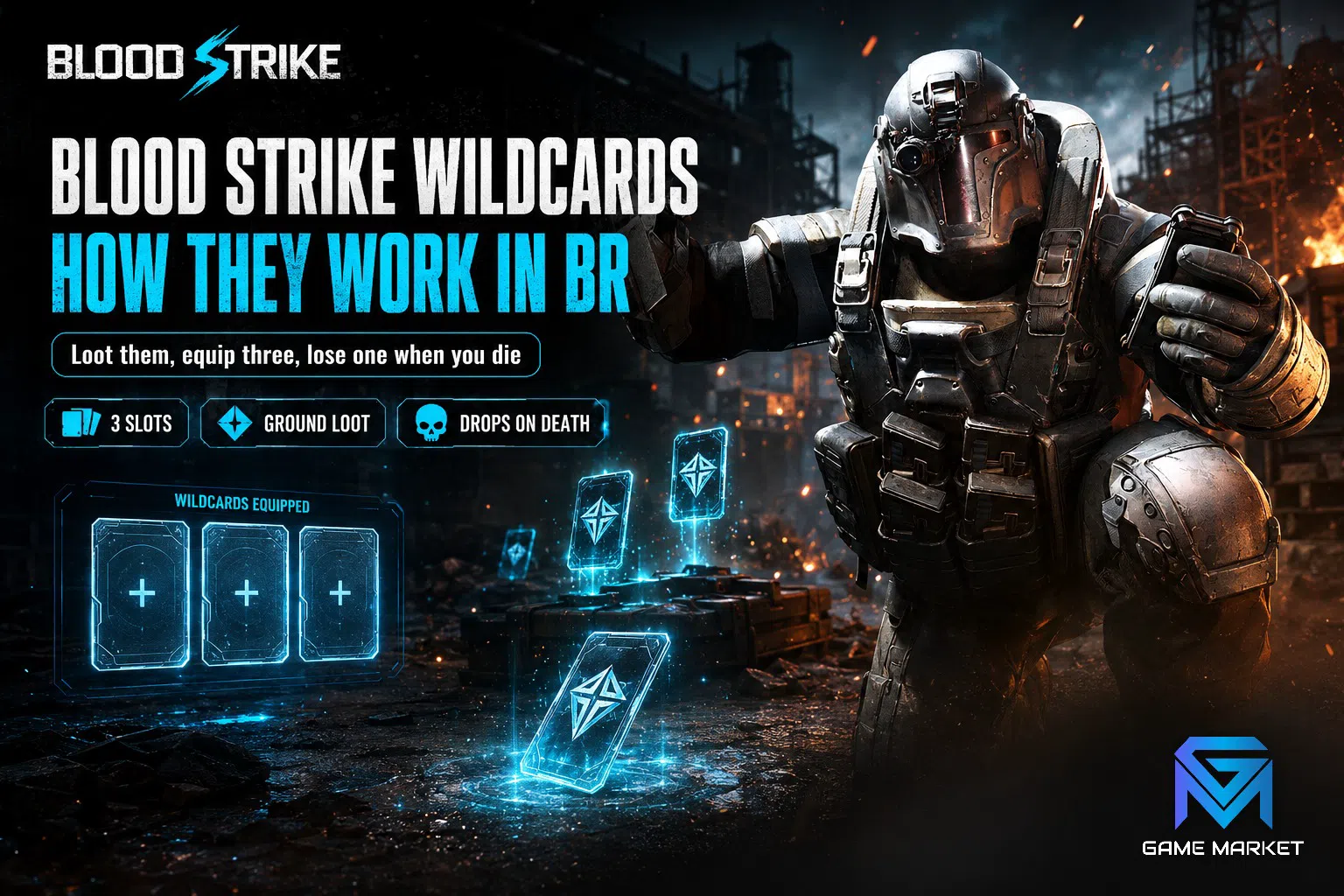
Wildcards are Blood Strike's in-match passive system: you find them in ground loot during a Battle Royale match, you can have up to three equipped at once, and each one grants a passive skill that works automatically. They are match-only, and when you die one equipped Wildcard drops for someone else to take.
NetEase introduced the system in the 10 February 2026 BR mid-season update with an explicit design goal, stated in the patch notes: to break players out of fixed combat playstyles. That framing matters, because Wildcards are not a progression track you grind. They are a mid-match decision layer that rewards players who loot with a plan and punishes players who treat every drop as a pickup. This guide covers what Wildcards actually are, where they spawn, the three-slot cap, the death-drop rule, how the Legendary tier arrived and then changed, and how the whole system should reshape the way you loot, rotate and play the final circle.
What are Wildcards in Blood Strike?
Wildcards are pickup items that grant passive skills for the duration of a single Battle Royale match. NetEase describes them as a way to "gain passive skills and build your very own combat playstyle." They apply automatically once equipped, with no button to press and no cooldown to manage.
The key word is passive. Blood Strike already has an active ability layer in its Strikers, where each character carries a primary skill on a cooldown plus a secondary trait. ALONDRA, added in March 2026, is a clean example: her Arc Snare is an active thrown device, while her Jetpack is a passive that simply exists whenever she is airborne. Wildcards sit alongside that system rather than replacing it, which means your effective build in any given match is your Striker's kit plus whatever three Wildcards you happened to find.
That combination is the whole point. Two players running the same Striker with the same weapons can play very differently depending on which Wildcards they picked up, and neither of them chose their Wildcards before the match started. The system deliberately introduces variance into loadouts that had become predictable, which is why it landed as a mid-season change to Battle Royale rather than as a menu feature.
Because they are match-scoped, Wildcards also behave unlike almost everything else you interact with in Blood Strike. There is no Wildcard inventory to manage between games, no upgrade currency attached to them, and nothing to unlock in advance. Each match hands you a fresh, random set of options.
Where do you find Wildcards during a match?
Wildcards come from ground loot. The official wording is that while looting supplies on the map you have a chance to pick up Wildcards of different rarities. They are not bought in the in-match shop, not tied to your Striker, and not awarded for kills, so the only reliable way to find them is to open supplies.
This makes early looting density genuinely matter. A landing spot that produces four buildings of supplies is now worth more than it was before February 2026, because it is not only feeding you armour, ammo and cash, it is also rolling for Wildcards. Landing somewhere quiet with thin loot means you can be fully kitted on paper and still be carrying zero passives into the mid-game.
There has also been event-driven Wildcard sourcing. During the Starship Cruise period that began on 12 March 2026, a starship appeared above The Valley and Skyline Beach and near the shores of Shutter Island, and NetEase stated that the ship contained both a wealth of supplies and the Legendary Wildcard. Ground rifts teleported players up to it. That is worth understanding as a pattern rather than a permanent feature, because the 28 April 2026 update removed the Valley and Skyline Beach airships, docked them permanently as points of interest on the northern edge of Shutter Island, and disabled the space-time rift.
The practical takeaway from that sequence is that Blood Strike treats Wildcard sourcing as tunable. Where they spawn, and how good the best ones are, is something the developers adjust between seasons. Checking the current version announcement before assuming a route still works is a habit worth keeping.
How many Wildcards can you equip at once?
Three. NetEase's original announcement is explicit: each player can equip up to three Wildcards at the same time. That cap has been the constant of the system since launch, and it is what turns Wildcards from a pure buff into a decision.
A hard cap means every pickup after your third is a swap, not an addition. Once you are full, picking up a fourth card is an active choice to give one up, and doing that in the open mid-fight is exactly the sort of unforced error that gets people killed. Sort your slots during quiet moments — after clearing a compound, before a rotation, while the circle is still generous — rather than in contact.
The cap also means Wildcard value is relative, not absolute. A movement passive that would be excellent in a vacuum is a poor pickup if it displaces the sustain passive keeping you alive in the final circle. Judge each card against what it would replace, not against nothing. For the detail behind that, see Account Safety How to Avoid Scams.
Because the exact list of Wildcards and their numbers change with balance patches, NetEase points players to the Armory to read them. The March 2026 announcement says directly to head to the Armory to check out all Wildcard effects. That is the authoritative in-game reference, and it beats any external tier list that may be a season out of date.
What happens to your Wildcards when you die?
One of your equipped Wildcards drops. The rule from the patch notes is that after death, one equipped Wildcard will be randomly dropped — not all three, and not one you choose. The rest are simply lost with the rest of your match state.
This is the mechanic that gives the system its risk. Every player you eliminate is a potential Wildcard source, and every time you go down you are potentially handing a passive to the squad that killed you. In practice it creates a compounding effect in the late game, where the players who have won the most fights are the ones most likely to be running a full set of strong cards.
It also changes how you read a death box. Under the old model you looted a body for guns, armour plates and cash. Now a body can also be carrying a passive, and the card sitting next to the corpse may be worth more than the weapon. That is a genuine reason to push a third-party kill you would previously have ignored, and equally a reason not to linger — the same logic applies to everyone else on the server.
Note that only equipped Wildcards are involved. Because the cap is three and there is no reserve inventory, everything you are carrying is by definition equipped, so there is no way to hide a card from the death drop.
How do Wildcard rarities work, and what happened to Legendary?
Wildcards come in different rarities, and rarer cards carry stronger effects. The Legendary tier was added on 12 March 2026 as part of the second anniversary update, and NetEase described those cards as having the potential to turn the tide of battle through effects such as survival recovery and movement speed boosts.
The official framing called them "trump cards in the final circle," which is a useful description of what high-rarity Wildcards do. They are not small percentage nudges to a stat sheet. They are the kind of effect that changes whether you survive a bad rotation or win a one-versus-two in the last ring, which is precisely why their availability has been managed carefully since. Our guide breaks down Lucky Draw Explained Crates, Odds & Duplicates.
The management arrived quickly. The 28 April 2026 update states plainly that Legendary Wildcards will no longer appear on the map. Read alongside the removal of the Valley and Skyline Beach airships in the same patch, that reads as a deliberate pull-back after the anniversary season, in the same vein as the Grappling Hook being removed from regular loot and moved to the in-match shop for $10,000 in that update.
The honest position for a guide written in August 2026 is therefore this: assume the common and mid-rarity Wildcards are your realistic pool from ordinary looting, and treat any high-rarity card as a seasonal or event-gated bonus rather than something to plan a route around. Check the Armory and the current version announcement each season, because this is one of the faster-moving parts of the game.
How should Wildcards change the way you loot and rotate?
Treat Wildcards as a fourth loot priority sitting just behind armour, a working primary weapon and healing. They are strong enough to be worth a detour into an unlooted building, but never strong enough to justify taking a fight you would otherwise avoid or crossing open ground late in a rotation.
Early game, the argument is simple: loot volume is Wildcard volume, and there is no way to catch up later except by killing people. If you routinely land on the edge of the map for a safe start, you are systematically running fewer passives than the players contesting hot drops, and that gap shows up in the last three circles rather than in the first two minutes.
Mid-game, the discipline is about swaps. Once your three slots are full, stop opening supplies purely for Wildcards and start weighing replacements deliberately. This is also where the interaction with Blood Strike's other systems matters — ground weapon rotation was introduced from the season following the February 2026 update, meaning the guns available as floor loot change over time, so the loot pool you are digging through is not static either.
Late game, play around the drop rule. If you are the last player standing in your squad with three good cards, you are carrying a bounty, and dying in the open hands part of it to whoever is watching. Conversely, if you have been unlucky and are running one weak card, a clean third-party kill is now the fastest way to fix your build.
One more practical detail: Wildcards are not universally on. The 12 March 2026 update added room options to enable Wildcard and Grappling Hook, meaning custom rooms can be configured with the system switched off. If you scrim or run private matches, confirm the toggle before assuming your practice reflects ranked conditions.
Do Wildcards carry over between matches or affect your account?
No. Wildcards exist only inside a match. Nothing you pick up is saved to your profile, nothing is spent to acquire them, and starting a new game resets you to zero cards regardless of how the last one went. They have no bearing on what your account is worth or what it contains.
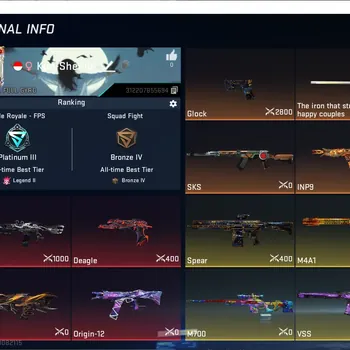
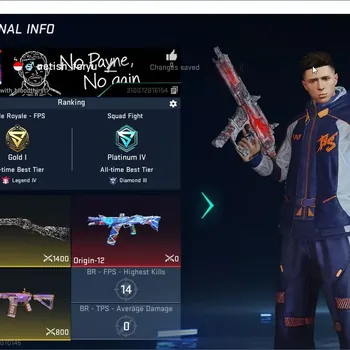
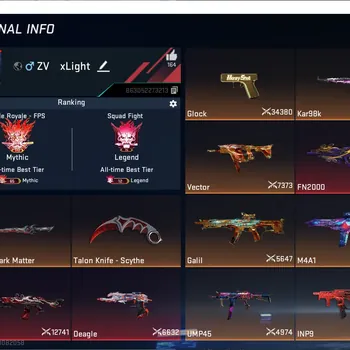
That distinction is worth being clear about, because it separates Wildcards from almost everything else players track. Your Strikers, your weapon skins, your rank and your Strike Pass progress are all account-bound and persist; Wildcards are disposable match state. If you are trying to understand what actually accumulates on a Blood Strike profile over time, our guide to Blood Strike account tiers from Starter to High-End breaks down the holdings that define a developed account.
Cosmetics are the clearest contrast. Skin rarity tiers such as Ultra, EVO and Eternal, and the limited collab items that run alongside them, are permanent entries in a profile's inventory — the Blood Strike rare skins and collab rarity guide covers how those tiers are structured. A Legendary Wildcard, by contrast, is gone the moment the match ends.
Region is the one place where the two worlds touch. Wildcard availability follows the game version your client is running, and version rollout and event timing can differ by region, so two players on different servers may not see the same Wildcard pool on the same calendar day. If you are unsure which region a profile sits on, how to check the server on a Blood Strike account walks through where that information is displayed. For the wider picture of how accounts are structured and compared, our Blood Strike accounts hub guide is the parent overview.
Common questions about Blood Strike Wildcards
Can you choose which Wildcard you lose when you die? No. NetEase's wording is that one equipped Wildcard is randomly dropped after death, so the card you lose is not under your control. Plan on the assumption that your single best card is as likely to drop as your weakest.
Do Wildcards cost Gold or any other currency? No. Wildcards are found in ground loot during a match, not purchased. The Grappling Hook is the tactical item that moved to the in-match shop for $10,000 in match cash in April 2026; Wildcards did not follow it there.
Where can I see what each Wildcard actually does? The Armory. The March 2026 announcement directs players there to check all Wildcard effects, and because the pool is adjusted between seasons, the in-game Armory is more reliable than any external list.
Are Wildcards available in every mode? They were introduced as a Battle Royale system, and custom rooms carry an explicit option to enable or disable them. Squad Fight and the other round-based modes run on their own economy and mechanics, so do not assume a Wildcard build transfers across modes.
Do I need a high account level to use Wildcards? No. Because they are picked up in-match rather than unlocked, they are available to any player in a Battle Royale game, which makes them one of the few power sources in Blood Strike that is not gated behind account progression.
Where to Find Blood Strike Top Up and Accounts
On GameMarket.gg you can compare Blood Strike top-up options before you spend.
If you want to spend your time learning the current Wildcard pool rather than rebuilding a profile from scratch, browse the Blood Strike accounts available from verified sellers and read each listing's stated region, skin inventory and rank details before you commit.
GameMarket.gg is a trusted digital marketplace for everything gaming-related. We serve the gaming community by providing secure access that enhances every gaming journey.