Blood Strike Gold Explained: What Strike Gold Buys and How It Works
By John Ganang 21 August 2026, 08:00 WIB
Strike Gold is Blood Strike's premium currency, and almost everything players actually want runs through it: the seasonal Strike Pass, Striker unlocks, crate pulls and the high-tier weapon finishes. It is spent, not held, and knowing what each tier of purchase costs — and which Strikers their abilities and roles make worth unlocking — is what separates a planned season from an improvised one.
The confusion most new players run into is that Blood Strike carries more than one kind of currency, and they do not behave the same way. Some of what lands in your account expires. Some of it never does. Spend the wrong one on the wrong thing and you lose value you did not know you were holding. This guide walks through what Strike Gold is, what it buys at each price band, how the Strike Pass changes the maths, and where the currency quietly differs from what a new player assumes.
What is Strike Gold in Blood Strike?
Strike Gold is the paid premium currency in Blood Strike, obtained through the in-game store and periodically through events and codes. It is the only currency that reaches the premium storefront, and it is consumed on purchase rather than accumulating as a stat on your profile.
That last point matters more than it sounds. Level, rank and cosmetic inventory are things a profile carries; Strike Gold is a balance that drains. It is closer to a wallet than to a possession, which is why a large Gold balance says something about what a player is about to do rather than what they have already achieved. Anyone reading a Blood Strike profile should treat the two categories separately: cosmetics earned are permanent, Gold sitting unspent is potential that has not been converted yet.
Gold also sits above the free progression track rather than replacing it. Blood Strike still hands out currency and cosmetics through daily play, events and the free Strike Pass lane. Gold buys the things that track cannot reach — the premium pass tier, the marquee skins, and the crates that hold them.
Why do some Gold balances expire?
Blood Strike distinguishes permanent Gold from timed or event Gold. Permanent Gold, typically what you purchase, stays until spent. Timed Gold arrives from events, pass rewards and promotions and carries an expiry date, after which it simply disappears from the balance.
This split is the single most common way players lose value without noticing. The store shows a combined figure in most places, so a balance that reads comfortably large can contain a chunk that evaporates at the end of a season. The practical habit is to check the breakdown before a large purchase and spend the timed portion first, on whatever the timed currency is eligible for, keeping the permanent balance intact for things that only permanent Gold can reach.
It also changes how you should read a stocked account. A balance is not automatically a durable asset, because part of it may be on a clock. The same logic applies to Gold that the rank ladder applies to competitive standing: check whether what you are looking at survives the season rollover before treating it as substance.
What does Strike Gold actually buy?
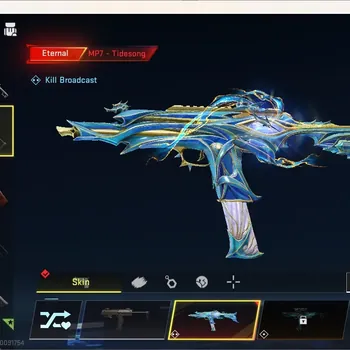
Gold buys four broad things: the Elite Strike Pass, direct Striker unlocks, crate and event pulls, and premium weapon or melee finishes. Costs run from a few hundred Gold for a Striker to several thousand for a top-tier weapon skin, so the spread across the store is wide.
Working upward through the bands makes the economy easier to read. The cheapest meaningful purchases are individual Strikers, with the premium ones commonly sitting around 800 Gold — a single, permanent unlock with a clear outcome and no randomness attached. The Elite Strike Pass sits nearby at 520 Gold for a season, which as the next section explains is a different kind of purchase entirely. Above that sit crates and event pulls, priced per attempt, where what you get is probabilistic.
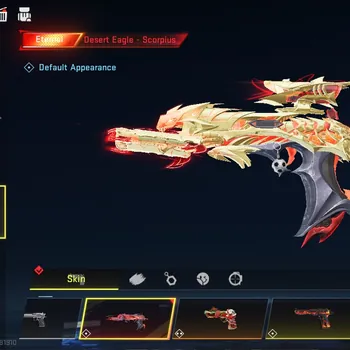
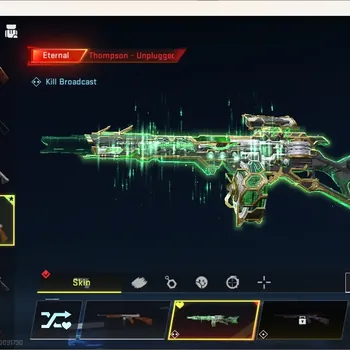
At the top of the store are the marquee weapon finishes. Community tracking of store pricing puts the highest tiers in the region of 6,000 to 7,500 Gold, which is an order of magnitude above a Striker unlock. That gap is the shape of the whole economy in one comparison: a deterministic character unlock is cheap, and a single top-tier cosmetic on a specific weapon is not. Which of those two a player spends on says more about their priorities than any total-spend figure would.
Collab items are their own category, because the crossover events that carry them run for fixed windows. They are bought with the same Gold, but the window is what makes them scarce rather than the price. The Blood Strike rare skins and collab rarity guide covers how those tiers are named and why a closed event changes what an item represents. For the detail behind that, see how Strike Gold pack tiers and bonus multipliers compare.
How does the Elite Strike Pass change the maths?
The Elite Strike Pass costs 520 Gold and runs roughly six weeks per season. Completing the full tier track returns 520 Gold in permanent currency, so a player who finishes the pass recovers what they paid and keeps the cosmetics. For the full tier-by-tier reward breakdown and season timing, see our Battle Pass Explained guide.
That refund structure makes the pass unlike anything else in the store, and it is the one purchase where the arithmetic genuinely favours the player — provided the track gets finished. A pass bought and abandoned at tier 30 is 520 Gold spent for a partial cosmetic set. The same pass completed is a cosmetic set acquired for nothing, plus whatever timed Gold the track pays out along the way. The variable is not the price; it is whether the season's playtime is realistically there.
So the honest way to evaluate it is as a commitment rather than a purchase. Roughly six weeks is a long window, but the tier track assumes steady play rather than a weekend burst. A player who logs in most days will clear it comfortably. A player who plays in bursts should look at how far into the season they are before buying, because the refund is all-or-nothing at the top of the track and a late start compresses the schedule badly.
This is also why the pass is usually the first thing to buy rather than the last. Bought early it is close to free and pays out currency that can fund the rest of the season. Bought late it is an ordinary cosmetic purchase with a discount attached.
How are Gold packs structured?
Gold is sold in tiered packs that scale from small to large, with a bonus amount attached that grows with pack size. Typical tiers run 100, 300, 500, 1,000, 2,000 and 5,000 Gold, each carrying a bonus that increases disproportionately at the top of the range.
The important structural point is that the bonus is not linear. At the smallest tier the bonus is a token few per cent; at the largest it approaches an extra sixteen per cent on top of the base amount. That means the per-Gold rate improves as pack size grows, which is the standard shape for this kind of storefront and the reason buying the exact amount needed for a purchase is usually the worst rate available.
It also means the packs and the prices interact awkwardly with the store's own price points. Purchases rarely line up with pack sizes, so a player buying for a specific item frequently ends up with an orphan remainder. Planning a season's spending in one pass — pass first, then Strikers, then anything discretionary — avoids repeatedly buying small packs at the worst rate. If funding routes rather than in-game spending are the question, the Strike Gold top up guide covers how the currency reaches an account in the first place.
What should you know before opening crates?
Crates are probabilistic: a fixed Gold cost per attempt with no guarantee attached to any single pull. Blood Strike surfaces drop rates in the crate interface, and reading them before committing is the difference between a decision and a hope.
The reason to treat crates differently from every other purchase is that they are the only part of the store where the outcome is not the thing you paid for. A Striker unlock is deterministic. A crate is a distribution. Two players spending identical Gold on the same crate can end a season with visibly different inventories, which is exactly why cosmetic rarity in Blood Strike correlates so loosely with total spending.
Practically, that argues for deciding the ceiling before opening rather than during. The store presents crates as a sequence of individual small decisions, and the cost of a session is only obvious in retrospect. Setting the number of attempts in advance converts an open-ended sequence into a single bounded choice, which is the same discipline that makes the Strike Pass a good purchase and an abandoned pass a poor one.
Can you get Strike Gold without paying?
Yes, in limited amounts. Events, seasonal login tracks, the Strike Pass reward lane and redemption codes all distribute Gold. Most of what arrives through these routes is timed rather than permanent, and the quantities suit small purchases rather than marquee items.
The free routes to earn Strike Gold are worth using precisely because of the timed-currency rule. Event Gold that expires is best converted into something immediately, and the cheaper end of the store fits it well: a Striker unlock, or a pass tier top-up. Holding timed Gold in the hope of accumulating enough for a high-tier skin is the mistake that structure quietly punishes, because the expiry arrives before the total does.
Redemption codes deserve a note of caution rather than enthusiasm. Codes are published by the publisher through official channels and expire quickly, and the volume of unofficial lists circulating means most codes a player finds are already dead. Treat them as an occasional small bonus, not a funding strategy.
How does Gold fit with the rest of an account?
Gold funds the cosmetic layer, and the cosmetic layer is the part of a Blood Strike profile that survives seasons. Rank resets, Gold drains, but a Striker or a weapon finish stays. Spending decisions are therefore conversions from a temporary balance into a permanent one.
Framed that way, the store stops looking like a list of prices and starts looking like a set of exchange rates. The Strike Pass converts 520 Gold into a cosmetic set at close to zero net cost if the track is finished. A Striker unlock converts around 800 Gold into a guaranteed permanent item. A crate converts Gold into a probability. A top-tier finish converts several thousand Gold into one specific, highly visible item. None of those is wrong; they simply differ enormously in certainty and in what they leave behind.
That is also why inventory rather than balance is what characterises an established account. Gold is the input; the Strikers, finishes and collab pieces are the output, and only the output persists. The Blood Strike account tier breakdown from Starter to High-End shows how those accumulated outputs get grouped in practice, and the Blood Strike account guide covering both sides of the market approaches the same inventory from the transaction angle.
Common questions about Strike Gold
Does Strike Gold expire? Permanent Gold does not. Timed or event Gold does, and the store often displays a combined total, so check the breakdown before a large purchase and spend the timed portion first.
Is the Elite Strike Pass worth 520 Gold? It refunds the full 520 Gold in permanent currency at the top of the tier track, so a completed pass costs nothing net. An unfinished pass is an ordinary cosmetic purchase, which makes available playtime the deciding factor rather than price.
Do bigger Gold packs give a better rate? Yes. The bonus attached to each pack grows disproportionately with size, so the largest tiers carry the best per-Gold rate and buying small amounts repeatedly is the most expensive way to fund a season.
Does Strike Gold give any competitive advantage? No. Everything it buys is cosmetic or convenience. Weapon finishes change appearance and effects, never damage, recoil or handling.
Can Strike Gold be transferred between accounts? No. The balance is tied to the account it was purchased on, and it is bound to that account's server region like the rest of the profile.
Where to Find Blood Strike Accounts and Top Up
On GameMarket.gg you can browse Blood Strike accounts other players have already built.
If you would rather fund a season directly than work out pack tiers, browse the Blood Strike top up options from verified sellers and check the delivery method and region before committing, since Gold lands on the region the account was created on.
GameMarket.gg is a trusted digital marketplace for everything gaming-related. We serve the gaming community by providing secure access that enhances every gaming journey.