Blood Strike Collab Skins Explained: Events, Rarity & Returns
By John Ganang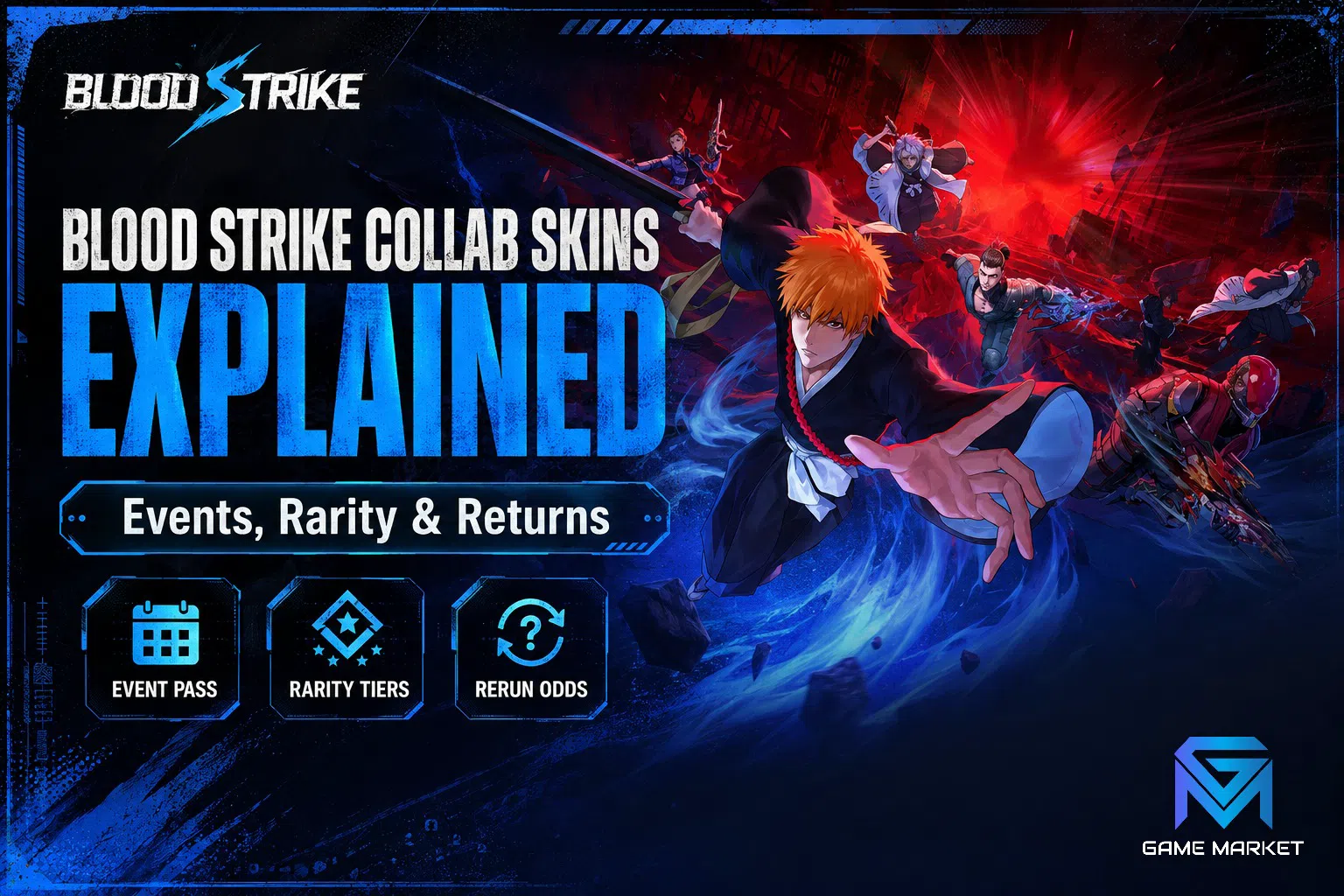
Collab skins in Blood Strike are crossover cosmetics released during limited-time partnership events with outside franchises — anime, film and brand tie-ins that put licensed characters, weapon finishes and melee items into the game for a fixed window. They are cosmetic only, tied to the event that introduced them, and once that window closes they leave the regular rotation. Some later return through reruns, but a return is never guaranteed, which is why collab items behave differently from the rest of the cosmetic pool. This guide explains what they are, how the events distribute them, how rarity works, and what actually happens to a collab skin after its event ends.
What are collab skins in Blood Strike?
Collab skins are cosmetic items produced under a licensing partnership between NetEase Games and an outside intellectual property. They cover Striker outfits, weapon skins, melee weapons, parachutes, sprays and profile items, and they are only obtainable while the crossover event is running.
The distinction matters because Blood Strike's cosmetic catalogue has two broad populations. The first is the permanent or recurring pool: Battle Pass rewards, standard shop skins, seasonal ranked rewards and items that cycle back through regular stores. The second is the collab pool, which exists because a licence permitted it for a defined period. When that licence window ends, the publisher generally stops distributing the items, and they disappear from the shop and from the draw pools that carried them.
This is a normal arrangement across live-service shooters, not something specific to Blood Strike. A crossover contract is negotiated for a term. Reruns happen when the two parties agree to extend or repeat, which is common enough to be worth waiting for but not something a player should treat as certain when deciding whether to engage with a running event.
Functionally, collab skins are still just cosmetics. They alter what a character or weapon looks like and sounds like. They do not change damage, recoil, handling, hitbox size or any statistic that determines the outcome of a fight — a point covered further down, because it is the single most common misconception about them.
Which collaborations has Blood Strike run?
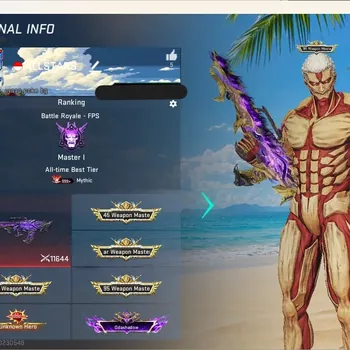
Blood Strike has run several anime crossovers, with Attack on Titan, Bleach and Tokyo Revengers among the most visible. Each brought a themed set — character-based Striker skins, matching weapon finishes, melee items and event-specific modes or map dressing that ran alongside the cosmetics.
The Attack on Titan partnership is the most prominent example because it went beyond cosmetics into a themed limited mode, pairing the skin release with an event game mode rather than dropping items into the shop alone. It also ran across more than one part, which is a useful illustration of how these partnerships can extend: a successful crossover is often revisited with a second wave carrying new items rather than reissuing the first wave's set.
Bleach and Tokyo Revengers contributed character-led Striker skins, with the licensed characters mapped onto existing Strikers rather than added as new playable operators with unique abilities. That mapping detail matters for anyone reading an account listing: a collab skin is applied to a Striker the account already owns, so the skin and the Striker are related but separate entries in the collection.
Because collab line-ups change and new partnerships are announced on a rolling basis, the reliable source for what is currently running is the in-game events tab and NetEase's official Blood Strike announcement channels. Any external list, including this one, is a snapshot rather than a live catalogue. For a wider picture of how these sets sit alongside the rest of the cosmetic pool, the Blood Strike rare skins and collab overview covers the broader rarity landscape.
How do collab skin rarities work?
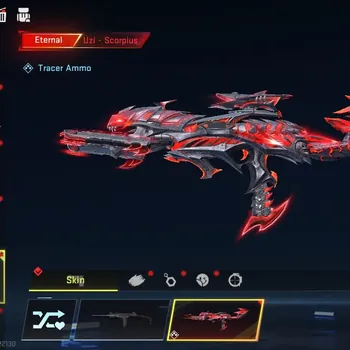
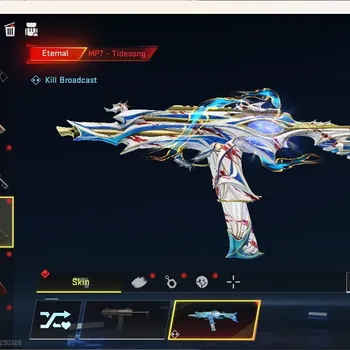
Collab skins use the same rarity ladder as the rest of Blood Strike's cosmetics, running from common finishes up through the top tiers usually labelled Ultra and Eternal. Rarity determines visual complexity — custom models, animated effects, kill effects and inspect animations — and it determines which distribution mechanic carries the item.
Lower-rarity collab pieces tend to be event-shop items: complete event missions, earn the event currency, exchange it directly. There is no randomness, just a time cost. These are the items most players finish during a crossover, and they are the reason event participation is worth starting early rather than in the final days.
The higher tiers behave differently. Top-rarity collab items, particularly animated melee weapons and the flagship character skin of a crossover, are usually placed behind a draw or a themed pack rather than a straight exchange. That means a randomised element, a pity or guarantee structure of some kind, and a much higher realistic cost in either time or Strike Gold to reach.
Two practical points follow. First, the exact odds, pity threshold and pricing differ from event to event — Blood Strike publishes them on the event's own information panel, and that panel is the only accurate source for a specific crossover. Do not carry assumptions from a previous collab into a new one. Second, rarity labels are consistent across the game, so a collab Ultra sits at the same tier as a non-collab Ultra even though scarcity after the event may differ substantially. The Blood Strike account tiers breakdown explains how collections at different rarity depths are usually categorised.
How do you obtain collab skins during an event?
During a live crossover there are typically three routes: event missions that pay event currency for an exchange shop, a themed draw or crate containing the higher-rarity pieces, and direct bundles in the store. Most events combine all three, with rarity determining which route carries which item. For the detail behind that, see Cash Explained Buy Stations, Supports & Respawns.
The mission route is the most reliable. Crossover events attach daily and cumulative objectives — play a number of matches, deal a threshold of damage, use a specific weapon class, log in across a set number of days. These pay out event tokens, and the exchange shop lists exactly what each token total buys. Because many of these objectives are cumulative across the event period, starting on day one and finishing on the last day are very different outcomes; missed daily objectives generally cannot be recovered.
The draw route covers the flagship items. Here the relevant mechanics are the pity counter, whether duplicates convert into a useful currency, and whether the pool is restricted to the collab items or diluted with older cosmetics. A restricted pool is meaningfully better for a player targeting one specific item, and it is worth reading the pool listing before committing. Duplicate handling in particular varies, and it is the difference between a long draw sequence being partly recoverable or largely wasted — the mechanics are covered in more depth in the game's general draw systems.
Direct bundles are the simplest: a fixed price for a fixed set, no randomness. They usually carry the mid-tier items of a crossover rather than the flagship, and they are frequently the most efficient route for a player who wants one particular outfit rather than the complete set.
One scheduling note that affects all three: the event window and the licence window are not always identical. Items sometimes remain claimable from an inventory or mailbox for a short grace period after the event tab disappears. Anything unclaimed past that grace period is generally lost, so claiming rewards promptly rather than leaving them queued is the safer habit.
Do collab skins ever come back?
Some do. Reruns happen when the publisher and the licence holder agree to repeat a crossover, and Blood Strike has revisited successful partnerships with later waves. But a rerun is a commercial decision made per partnership — it is not a scheduled feature, and no collab item should be assumed to be returning.
It is worth being precise here, because this is where most misinformation sits. The accurate statement is that collab items are period-limited, that some return through reruns or anniversary events, and that the publisher does not commit in advance to which ones will. The inaccurate statements that circulate are the two absolutes: that collab skins are gone permanently and can never reappear, and that everything eventually returns so there is no reason to engage with a live event. Neither holds.
When a rerun does happen, the returning set is not always identical to the original. Publishers commonly bring back a subset, add new items alongside the returning ones, or change the distribution route so an item previously behind a draw becomes a shop item or the reverse. A returning collab is therefore better understood as a new event carrying some familiar items than as a straight repeat. Our guide breaks down Skin Rarity Tiers Explained Ultra, Legendary & Epic.
The practical consequence for anyone tracking a specific skin is that the only dependable signal is an official announcement. NetEase publishes crossover news through the game's in-client announcements and its official Blood Strike social channels ahead of each event, typically with the item list and the exact window. Community trackers and third-party lists lag those announcements and frequently carry stale information from a previous wave.
Do collab skins change how the game plays?
No. Collab skins are cosmetic. They do not change weapon damage, fire rate, recoil, reload speed, movement speed, hitbox dimensions or any other value that decides an engagement. A collab weapon finish and the default finish on the same weapon perform identically.
The nuance worth knowing is visual rather than statistical. Some high-rarity skins, collab and otherwise, alter a weapon's model silhouette, its muzzle flash, or its iron-sight and scope picture. A busier model can make a sight picture marginally harder to read for some players, and a distinctive character skin is in principle easier to identify at distance. These are perceptual effects, they cut both ways, and they are far smaller than any difference in aim, positioning or map knowledge. Treating them as a competitive factor overstates them considerably.
The other genuine effect is on account composition rather than on matches. A collection containing collab items from events that have closed reads differently from one built entirely out of currently obtainable cosmetics, because the closed-event items cannot be added afterwards by a new player. That is a matter of what an account contains, not of how it performs. What actually determines match outcomes is covered in Blood Strike's core progression systems — ranks, Strikers and weapon handling — which the Blood Strike beginner's guide sets out in full.
How do collab skins sit within an account's collection?
A collab skin is stored in the account's cosmetic inventory and bound to that account, exactly like any other skin. It is applied to a Striker or a weapon the account already owns, appears in the collection screen under its rarity tier, and is tied to the account's server region.
Two structural points follow from that. First, a collab Striker skin requires the underlying Striker. The skin changes the appearance of a character the account has unlocked; it does not itself unlock that character. An inventory listing a collab outfit therefore implies the matching Striker is present, but the two are separate collection entries and are usually displayed separately.
Second, cosmetics do not move between server regions. Blood Strike separates accounts by region, and a collection built on one region stays there. Anyone examining an account's contents needs to establish the region first, because it determines which progression the collection is attached to — the method is covered in the guide on checking the server on a Blood Strike account.
Collab items also interact with the game's account-binding options. Blood Strike supports linking to external providers, and the collection follows the bound account rather than the device. A collection is therefore only as durable as the binding behind it, which is worth confirming before a device change. The broader picture of how skins, ranks and regions combine into an account's profile is set out in Blood Strike accounts explained.
How do you tell a genuine collab skin from a lookalike?
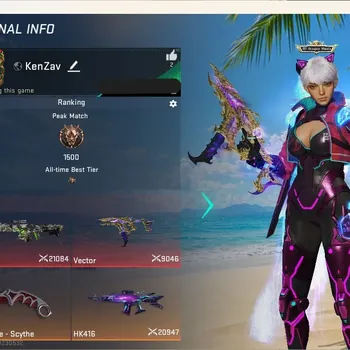
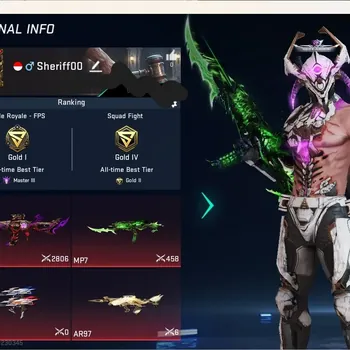
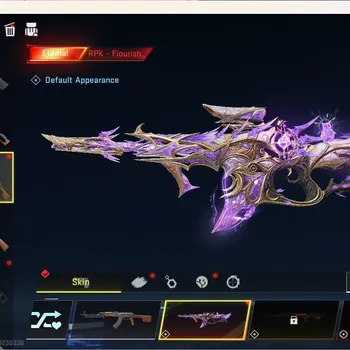
Check the in-game collection entry rather than a screenshot. A genuine collab item shows the crossover's branding in its name and description, sits at its stated rarity tier, and appears under the event or collection grouping the game assigns it. Lookalikes are usually non-collab skins with a superficially similar palette.
Blood Strike, like most shooters with a large cosmetic catalogue, ships themed skins that resemble popular franchises without being licensed. These are not counterfeits; they are simply separate items in the standard pool. The difference is visible in the item's own description text, which names the partnership for a real collab item and does not for a themed original.
Three checks resolve almost every case. Open the collection screen and read the item's full name and description rather than judging by the thumbnail. Confirm the rarity tier shown against what the crossover actually released at that tier. And check whether the item appears under a collab or event grouping in the collection interface, since the game generally organises licensed sets together rather than scattering them through the standard catalogue.
Screenshots are the weakest form of evidence for any cosmetic question, because they show a rendered model without the surrounding metadata. Anything that matters — the item name, the rarity, the grouping, the region and the account it belongs to — lives in the collection interface, not in the render.
Common questions about Blood Strike collab skins
Are collab skins obtainable after the event ends? Generally no. Once the crossover window closes the items leave the shop and the draw pools. They may return in a later rerun, but there is no route to obtain them in the interval.
Do duplicate collab items from a draw convert into anything? That depends on the specific event. Some crossovers convert duplicates into an event currency usable in the exchange shop; others do not. The event's information panel states the rule for that event.
Does a collab skin transfer if I change devices? Yes, provided the account is bound to an external login. The collection follows the account, not the hardware. An unbound account tied only to a device is the case where progress can be lost.
Do collab skins expire from my inventory? Permanent collab items do not expire once claimed. Some events also hand out trial or timed versions of a skin, which do expire — the item description states which type it is at the point of claiming.
Can collab Strikers be used in every mode? Yes. Collab skins are cosmetic layers on existing Strikers and weapons, so they carry into every mode the underlying content is available in, including ranked play.
Where to Find Blood Strike Accounts and Top Up
On GameMarket.gg you can browse Blood Strike top-up options, the Blood Strike market hub.
Whether you are tracking a live crossover or looking at what a collection already holds, the collab sets that have closed are the part of a Blood Strike account that cannot be rebuilt later. Browse the Blood Strike accounts marketplace to see how collections are actually composed across regions and rarity tiers, including the collab skin category where crossover inventories are listed in detail.
GameMarket.gg is a trusted digital marketplace for everything gaming-related. We serve the gaming community by providing secure access that enhances every gaming journey.