Blood Strike Accounts Explained: Skins, Ranks & Server Regions
By John Ganang 20 August 2026, 10:00 WIB
A Blood Strike account is defined by four things a listing cannot hide: the server region it was created on, the rank it currently sits at, the cosmetic inventory it has accumulated, and how its login is bound. Everything else is detail. Understanding those four is how you read any account at a glance.
Players coming from other shooters tend to assume account strength works like a power level, where a higher number means a better profile. Blood Strike does not work that way. NetEase built the game around region-locked matchmaking, a rank ladder that wipes itself every season, and a cosmetic economy where two items of identical rarity can be worlds apart in scarcity. This guide walks through each of those systems in the order that actually matters when you are sizing up a profile, and it assumes nothing beyond having installed the game.
What actually defines a Blood Strike account?
Four attributes carry almost all the weight: the server region, the current competitive rank, the skin inventory across Ultra and collab tiers, and the login binding. Level and total playtime are visible on every profile but tell you far less than any of those four.
The reason is that Blood Strike separates permanent things from temporary ones more sharply than most mobile shooters. Your region is set when the account is created and stays fixed. Your cosmetics stay with you forever once obtained. Rank, by contrast, resets on a seasonal cadence, and Strike Gold is a spendable balance rather than a holding. So a profile that reads as impressive because it shows Legend rank may in fact be lighter than a Gold-rank account carrying three discontinued crossover weapons, because one of those two things survives the next season and the other does not. Anyone comparing accounts, whether for their own progress planning or out of curiosity about how the game's economy works, should sort the attributes into permanent and resetting before anything else. The Blood Strike account tier breakdown from Starter to High-End is a useful companion here, since it shows how those same attributes get bundled into the labels you see on listings.
How do Blood Strike server regions work?
Blood Strike sorts players into four regional server groups: Asia, Europe, North America and South America. Matchmaking runs inside your region, and the region is fixed at account creation. It is not a setting you toggle later, which makes it the first thing to establish about any profile.
Region matters more in Blood Strike than in games with global matchmaking because latency in a fast time-to-kill shooter decides fights outright. At 40ms you trade evenly; at 200ms you lose duels you visibly won on your own screen. That is a mechanical disadvantage no amount of cosmetics compensates for, which is why region fit sits above inventory in any sane assessment of an account.
Region also quietly shapes the rest of the profile. Ranked progress, Strike Pass progress, event completion, titles, reputation and your friends list all live inside the region, so none of that travels if you switch to a fresh account elsewhere. Populations differ too: a busier region fills lobbies faster and at more even skill, while a quieter one can mean longer queues and wider skill gaps in the same match. If you are unsure which region a given profile sits on, the walkthrough on how to check the server on a Blood Strike account covers where the game surfaces it.
What does each rank on the Blood Strike ladder mean?
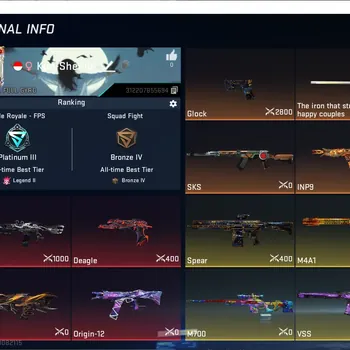
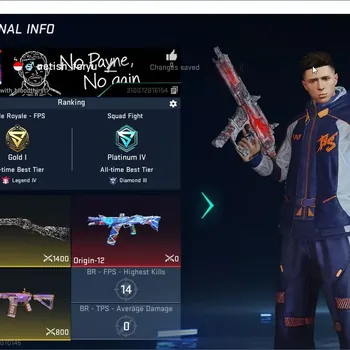
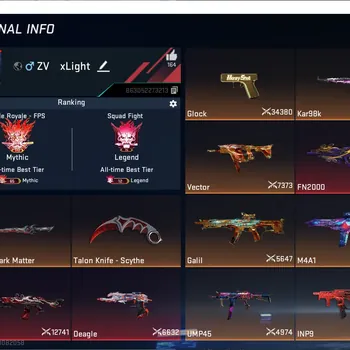
The ladder runs Unranked, Bronze, Silver, Gold, Platinum, Diamond, Master and Legend. Each tier reflects accumulated ranked points from placement and match performance, and the whole ladder resets when a season ends, so a rank is a snapshot of recent form rather than a permanent property.
In practice the tiers cluster into three bands that feel different to play in. Bronze through Gold is the learning band, where lobbies are mixed, players push open ground, and mechanical fundamentals decide most fights. Platinum and Diamond form the transition band: opponents start holding angles, pre-aiming common lanes and rotating with the zone rather than reacting to it, and a loadout that carried you through Gold begins to feel thin. Master and Legend are where the game's actual competitive population sits, and the difference there is less about aim than about information — knowing where a squad must rotate, when to break line of sight, and which fights to decline.
The seasonal reset is the part newcomers underrate. Because ranked points are wiped and everyone re-places, the rank shown on a profile decays in meaning the moment a season closes. Check where the current season sits in its cycle before treating a high rank as a durable feature of an account, because Legend earned two seasons ago and Legend earned last week look identical on the profile and mean quite different things about who is holding the controller.
How does Blood Strike skin rarity actually work?
Cosmetics sit on a rarity ladder that tops out at the Ultra and Eternal classes, spanning guns, Strikers and melee weapons. None of them changes damage, recoil or handling. Their scarcity comes purely from how they were distributed, which is why rarity and obtainability are two separate questions.
Ultra-tier items are the ceiling of the ordinary economy. They come from events, pulls and premium tracks, and the combination of odds and cost means most active players own a handful at most. An inventory with four or five Ultra weapons represents either sustained spending or a long run of luck. Eternal items, which several listings on the marketplace call out by name alongside the weapon they apply to, sit in the same premium band and are treated as the marquee entry on a profile.
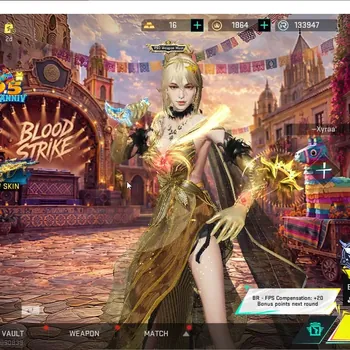
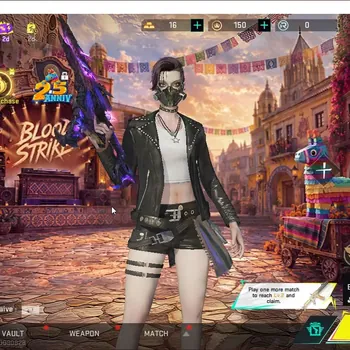
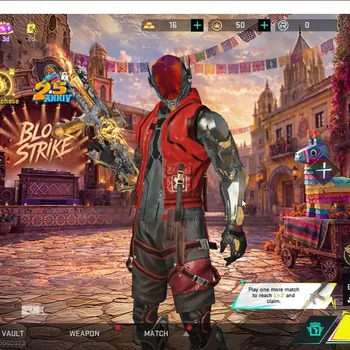
Striker skins deserve a separate mention because they are the cosmetic layer players actually see most. Strikers are the operator characters you select before a match, and an Ultra Striker changes the silhouette teammates and opponents read on screen. That visibility is why Ultra Strikers hold attention in a way a weapon camo does not, even though both are cosmetic-only.
Melee skins round out the set. Butterfly knives, katars, scythes and similar pieces show up repeatedly in the Ultra melee category, and because melee is drawn constantly while rotating, they are among the most-seen cosmetics in the game despite being the least consequential mechanically. The Blood Strike rare skins and collab rarity guide goes deeper on how the individual tiers are named and grouped.
Why do collab items behave differently from Ultra items?
Collab items are tied to a licensed crossover that runs for a fixed window and then closes. Once the event ends, the item generally stops being obtainable in-game, so its scarcity is set by a calendar rather than by drop odds. Ultra items, by contrast, can appear again in later events.
That distinction drives most of the confusion around Blood Strike inventories. An Ultra weapon is rare because the odds are long; a collab weapon is rare because the door closed. Blood Strike has run crossovers with Attack on Titan, Tokyo Revengers, Evangelion, One Punch Man, Bleach and The Seven Deadly Sins, and each brought weapon finishes and Striker outfits that only existed for that window. Accounts holding them are carrying items the current player base has no ordinary route to.
One accuracy note worth carrying: period-limited does not mean permanently gone. Publishers do sometimes rerun a crossover or reissue selected pieces, and NetEase has not ruled that out for Blood Strike. Treat a collab item as unobtainable for now rather than unobtainable forever, because the honest position is that a rerun is possible but not promised. That nuance is the difference between an accurate read of the cosmetic economy and the folklore that circulates in game chat.
What does login binding change about an account?
Login binding is how the profile is tied to an identity: a guest session held only on the device, or a social or platform account such as a Google, Apple or NetEase login. Bound accounts survive a lost phone; guest accounts frequently do not.
This is the single most consequential setting on a profile and the one players notice last, usually right after they need it. A guest-bound account exists as local data plus a device identifier. Reinstall the game, switch phones, or clear the wrong cache, and the progress can simply be gone with no recovery path, because nothing on the publisher's side identifies you as the owner. Binding the account to a social login converts it from device-local data into something recoverable.
Binding also determines whether a profile can genuinely change hands. An account still attached to someone else's social login is one password reset away from leaving your control, no matter what else is on it. That is why the marketplace listings state the login method up front and why it belongs on any checklist alongside region and inventory. If you take one action after reading this section, open the account settings and confirm what your own profile is bound to. For the full walkthrough of what changes when you do this and how to recover access afterward, see our guide to Blood Strike account binding, linking and recovery.
How do platform and cross-play affect an account?
Blood Strike runs on Android, iOS and PC with cross-play, so a single account can generally be played across devices. What does not travel cleanly is the binding method, since login options differ between mobile app stores and the PC client.
Cross-play means the platform tag on a profile is less about where the account can be played and more about how it was registered and what recovery route exists. A profile created through an app-store login on one platform may not offer the same sign-in path on another, and that mismatch — not matchmaking — is where cross-platform friction usually appears. Input method is the other practical difference: mouse aim and keyboard movement change how the same rank feels, so a Diamond earned on PC and a Diamond earned on a phone are not quite the same achievement even inside one region.
How do these four attributes fit together?
Read them in order of permanence. Region is fixed and gates everything about how the account plays. Login binding decides whether the account can be kept and recovered. Cosmetics are permanent once earned. Rank is the only one of the four that expires, and it expires on a schedule.
That ordering explains most of what looks strange about Blood Strike profiles at first glance. A modest-rank account on your own region with a bound login and two discontinued collab weapons is a stronger long-term proposition than a Legend-rank guest account on a region you cannot play at low ping, even though the second one has the more impressive number on it. Blood Strike's own category structure reflects this: profiles get sorted by what is in the inventory — collab items, rare skins, high-end depth, starter and mid-tier — rather than by rank alone, precisely because inventory is what survives the season rollover. The Blood Strike account guide covering both sides of the market lays out the same attributes from the transaction angle, and if Strike Gold balance is part of what you are weighing, the Strike Gold top up guide explains how that currency is funded and spent.
Common questions about Blood Strike accounts
Can I change my Blood Strike server region? No. The region is fixed at account creation and matchmaking is bound to it. Playing in a different region means starting a new account there, which leaves ranked progress, event completion, titles and friends behind.
Does my rank carry over between seasons? Not intact. The ladder resets each season and players re-place, so a rank reflects the current or most recent season rather than a permanent standing.
Do Ultra skins give any gameplay advantage? No. Ultra guns, Ultra Strikers and Ultra melee skins are cosmetic. They change appearance, occasionally inspect and kill effects, but never damage, recoil or handling.
Are collab skins gone for good once the event ends? They stop being obtainable through normal play once the crossover window closes. A rerun or reissue is possible in principle but has never been guaranteed, so treat them as unavailable rather than permanently retired.
What is the most common mistake new players make with their account? Leaving it on a guest login. It costs nothing to bind the account to a social or platform login, and it is the difference between recovering the profile after a lost device and losing it entirely.
Where to Find Blood Strike Top Up and Accounts
On GameMarket.gg you can compare Blood Strike top-up options before you spend.
If you would rather start from a profile that already sits on your region with the Strikers and finishes you actually want, browse the Blood Strike accounts available from verified sellers and filter by server, rank and inventory before anything else — the listings state the region, platform, rank, Striker pool and login method up front, so the four attributes above are all readable before you commit.
Before finalizing any purchase, it's worth reading through Blood Strike Account Scams Explained: Common Tactics and Warning Signs to recognize the delivery and payment red flags that apply regardless of which tier or region you're buying into.
GameMarket.gg is a trusted digital marketplace for everything gaming-related. We serve the gaming community by providing secure access that enhances every gaming journey.