Blood Strike Skin Rarity Tiers Explained: Ultra, Legendary & Epic
By John Ganang
Blood Strike sorts every cosmetic into a fixed rarity ladder, and Ultra sits at the top of it. Rarity in this game is not just a colour on a card: it decides whether a skin can be upgraded, whether it carries kill effects and finisher animations, and which acquisition channel it can appear in at all. Understanding that ladder is the difference between chasing a crate blindly and knowing exactly what you are chasing.
NetEase has kept the structure deliberately readable. A skin's frame colour tells you its tier, the tier tells you the feature set, and the feature set tells you the source. Once you can read those three signals together, you can look at any weapon skin, striker outfit or vehicle wrap in the game and predict how it behaves before you ever equip it. This guide walks the full ladder from the common end up to Ultra, explains what each step actually grants, and covers the upgrade system that sits on top of the highest tiers.
What are the skin rarity tiers in Blood Strike?
Blood Strike cosmetics run through a colour-coded ladder that ascends from Common and Rare through Epic and Legendary to Ultra at the summit. Each step upward adds capability rather than just visual polish: better base art, then custom audio and inspect animations, then kill effects, and finally the upgrade tracks reserved for the top tiers.
The lower rungs are the game's baseline. Common and Rare cosmetics arrive constantly, through level-up rewards, free Battle Pass lanes, event login streaks and basic crate pulls. They re-texture a weapon or swap an outfit's colourway, and that is the whole feature set. There is no custom reload, no unique inspect, no death effect. They exist to make sure no account looks completely default, and they saturate quickly.
Epic is where the game starts spending real production budget. An Epic weapon skin generally carries a bespoke material treatment rather than a recolour, and many Epics ship with a custom inspect animation. Epic striker outfits typically include a full model change instead of a palette shift, which is why they read clearly at distance in a firefight. Epics are the workhorse tier of the Battle Pass premium track and the reliable mid-value outcome of most crate systems.
Legendary raises the ceiling again. Legendary weapon skins commonly include animated elements on the model, custom firing or reload audio, a unique inspect sequence, and in many cases a distinctive kill banner. This is the first tier where the cosmetic changes the feedback loop of using the gun rather than only its appearance. Legendary striker skins tend to bring their own voice or emote flourishes.
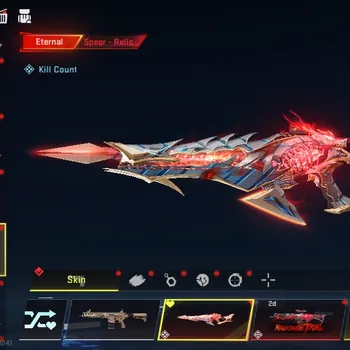
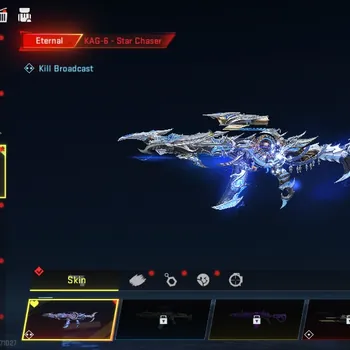
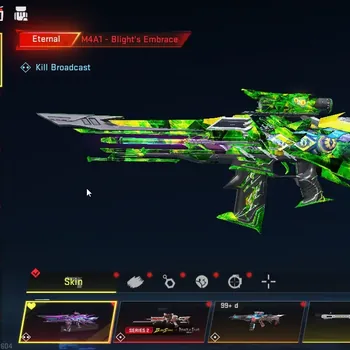
Ultra is the top of the published ladder and the tier the community actually talks about. An Ultra skin is built as a complete package: animated model, custom audio suite, unique kill effect, bespoke elimination banner, and an upgrade track that unlocks additional stages of that presentation over time. Ultras are also the tier most tightly bound to a specific event or collaboration window, which is why they carry so much identity on an account.
How do Ultra skin upgrade levels work?
Ultra skins are not static once obtained. They carry an upgrade track, usually stepped across several levels, and each level unlocks a further layer of the skin's presentation: a new effect colour, an expanded kill animation, a revised model state, or an upgraded elimination banner. You feed the track with duplicate pulls and event materials.
The mechanic matters because it changes what a duplicate means. In a system with no upgrade track, pulling the same Ultra twice is pure waste and typically converts to a generic currency. In Blood Strike's structure, duplicates of an upgradeable skin are the intended fuel for its later stages. A player who pulled a headline Ultra once and a player who pulled it five times own the same named skin but a visibly different object in the match.
That is also why Ultra progress is one of the most durable markers of how long and how deeply an account has engaged with a given event. Ranks reset each season, currency gets spent, but a maxed Ultra track records participation in a window that has already closed. The same logic underpins how the community reads a roster generally, which is covered in more depth in the Blood Strike accounts explainer covering skins, ranks and server regions.
Two practical notes. First, upgrade materials are usually event-scoped rather than universal, so stockpiling during an active window is more efficient than hoping to finish the track later. Second, an unfinished track is not a broken skin. The base Ultra is fully usable at level one, and the later stages are additive presentation rather than gated function.
Where do rare Blood Strike skins actually come from?
Rare cosmetics enter accounts through four main channels: the seasonal Battle Pass, the Lucky Draw and crate systems, limited-time event shops and challenge tracks, and direct bundles in the store. Each channel has a characteristic rarity ceiling, and knowing which channel produced a skin tells you most of what you need to know about it.
The Battle Pass is the most predictable source. Its premium track runs on a fixed schedule with a published reward list, and its top item is usually a Legendary or an Ultra-adjacent headliner. Because the list is visible up front and the progression is deterministic, the Battle Pass is where most players get their first genuinely high-tier cosmetic. If you are still mapping how the Pass sits alongside ranks and currency, the Blood Strike beginner's guide to ranks, strikers and Strike Gold sets out the full progression frame.
Lucky Draw and crate systems are the probabilistic channel and the usual source of the true headline Ultras. These run on published odds with duplicate-handling rules attached, and they are the reason two accounts with identical playtime can hold wildly different cosmetic inventories. If you are going to engage with this channel, read the odds sheet for the specific event rather than assuming a previous event's rates carried over.
Event shops and challenge tracks sit in between. They are time-bound but deterministic: complete the objectives or accumulate the event token, receive the listed item. The rarity ceiling is usually Epic to Legendary, with occasional Ultra headliners on the longest tracks. Collaboration events lean heavily on this format, and their return behaviour has its own rules worth knowing before you plan around them.
Direct store bundles are the simplest. They are purchased with Strike Gold, they are listed with their contents visible, and there is no probability involved. If you want to understand what that currency actually covers across the store, the Strike Gold explainer covering what it buys and how it works maps the full purchasing surface.
Are limited skins gone forever once the event ends?
Not necessarily. Blood Strike's limited cosmetics are period-limited rather than guaranteed-permanent exclusives. Some return through reruns, anniversary vaults or revival shops, and some do not come back at all within an observable timeframe. The accurate framing is that return is possible but never promised.
This distinction gets flattened constantly in community discussion, usually in one of two unhelpful directions. One camp insists every limited skin is permanently gone the moment its banner closes, which is demonstrably untrue for items that have already returned in later events. The other camp assumes everything eventually reruns, which leads to skipping windows for skins that then stay absent for a very long time.
The reliable read sits between them and depends on the skin's origin. Cosmetics built on an in-house theme are structurally easier to bring back, because NetEase controls the whole asset. Cosmetics built on a licensed collaboration depend on a partnership agreement with its own term, and once that term lapses the item cannot simply be redeployed at will. That is the mechanical reason collaboration items behave differently from first-party limiteds, and it is why NetEase words collaboration availability more cautiously in its own event notices than it does for in-house cosmetics.
The practical guidance follows from that. If a skin you want is first-party and you are short on resources, skipping is a survivable decision. If it is a licensed collaboration piece, treat the current window as the only window you can plan around, and make the call inside it. Always check the specific event's own terms rather than generalising from a previous one, since NetEase publishes availability rules per event in the in-game notice board and patch notes.
Does skin rarity affect weapon performance?
No. Blood Strike skins are cosmetic. An Ultra weapon skin does not raise damage, reduce recoil, speed up reloads or extend range compared to the default model. Every statistical property of a gun comes from the weapon itself, its attachments and its mastery level, never from the skin applied over it.
There is a narrower and more honest version of the argument worth acknowledging: visual clarity. Some skins have busier models, brighter animated elements or larger muzzle presentations that occupy slightly more of your sight picture, and some players find a cleaner skin easier to aim with. That is an ergonomics preference, not a stat difference, and it varies by player rather than being a property of the tier. Plenty of competitive players run Ultras without issue.
What genuinely changes a weapon's performance is the mastery system, which unlocks attachments and camo progression as you accumulate kills with a specific gun. That progression is entirely separate from the cosmetic ladder and is earned rather than pulled. Similarly, the roster side of your account is governed by striker abilities, which do affect play. The strikers explainer covering abilities, roles and how to unlock them covers that layer properly.
Keeping this line clear is worth the effort, because conflating cosmetic rarity with competitive advantage leads to bad resource decisions. Spending on cosmetics is a presentation choice. Improving outcomes in a match comes from weapon mastery, striker familiarity and squad coordination.
How do you read a Blood Strike cosmetic inventory at a glance?
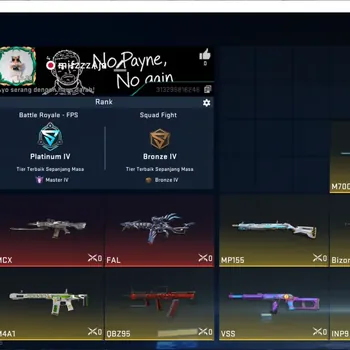
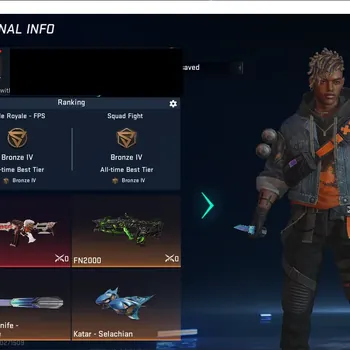
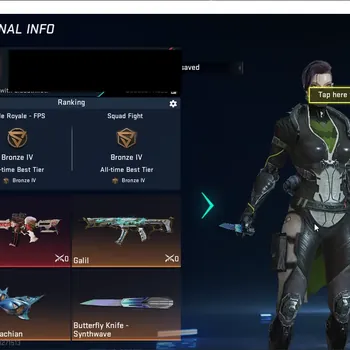
Start with tier distribution rather than headline items. Count how many Legendary and Ultra pieces are present, check whether Ultra upgrade tracks are advanced or sitting at level one, and note whether the high-tier items cluster in one event window or spread across several seasons. Those three readings describe an account faster than any single skin does.
Clustering is the most informative signal. A roster where every Ultra came from a single collaboration describes a player who engaged hard with one event. A roster with high-tier items spread across many separate windows describes sustained presence across seasons, which is a fundamentally different history even if the raw item count matches.
Then check the supporting layers, because cosmetics alone are an incomplete picture. Weapon mastery levels show where actual playtime went. Striker unlocks show roster breadth. Rank history shows competitive engagement, though it resets on a season cadence and should never be read as a permanent property. The account tiers explainer running from starter to high-end sets out how these layers combine into the tiers players actually recognise.
Finally, sanity-check the era of the items. Cosmetics from long-closed windows sit differently from recent-season pieces, and a roster that stops abruptly at a particular season tells you when that account's active period ended. Newer accounts naturally hold newer catalogues, and that is a description of timing rather than of quality.
How should you plan around limited cosmetic windows?
Decide before the window opens, not during it. Read the published reward list and odds sheet, identify the single item you actually want, and set a resource ceiling in advance. The events most likely to cause regret are the ones entered reactively, without a target and without a limit.
Prioritise deterministic channels first. The Battle Pass and event challenge tracks deliver known items for known effort, which makes them the efficient foundation of any cosmetic plan. Probabilistic crate systems should sit on top of that foundation with resources you have specifically allocated, never as the primary route to a target item.
If an Ultra with an upgrade track is your goal, plan for the track rather than the pull. Getting the base skin and getting a completed track are different projects with different resource requirements, and treating them as one thing is how budgets quietly expand mid-event. Decide up front which of the two you are actually pursuing.
Give the calendar its due weight as well. Seasons close, event shops empty, and upgrade materials generally expire with their window. Work backwards from the closing date to a realistic completion schedule, and if that schedule does not fit the time you actually have available, target the base skin and let the track go.
If you would rather explore rosters that already carry particular cosmetic histories rather than building one from an event window, browse the Blood Strike accounts available on GameMarket.gg and compare what each roster's tier distribution and upgrade progress actually represent.
Where to Find Blood Strike Accounts and Top Up
On GameMarket.gg you can browse Blood Strike accounts on GameMarket, Blood Strike top-up options.
GameMarket.gg is a trusted digital marketplace for everything gaming-related. We serve the gaming community by providing secure access that enhances every gaming journey.