Blood Strike Beginner's Guide: Ranks, Strikers & Strike Gold
By John Ganang 19 August 2026, 06:00 WIB
A new Blood Strike player needs three systems: the ranked ladder, running Bronze to Legend; the Strikers, whose abilities shape every fight and cost 800 Gold or 8,000 Reputation each; and Strike Gold, the premium currency shown simply as Gold in-game. Everything else — servers, weapon levelling, Wildcards, skin rarity, collabs — hangs off those three, and this guide covers them in the order a beginner meets them.
What is Blood Strike, and how does a match actually play out?
Blood Strike is NetEase Games' free-to-play battle royale for Android, iOS and PC. It compresses the genre into short matches on small maps and adds an in-match cash economy: you loot money, buy weapons from shops, and buy defeated teammates back.
That cash layer is the biggest surprise for players arriving from other battle royales. You bring a prepared loadout in, refine it with ground loot, then spend the Cash you find at in-match shops — on better weapons and on recalling downed squadmates. Players who spend it all on guns and cannot afford a buy-back lose winnable rounds.
Around that core sit solo, duo and squad queues, plus Squad Fight, a 4v4 round-based mode with its own ranked ladder, and rotating limited-time modes. Since 11 August 2026 there is also a third-person BR-TPS queue with its own ranked track. Progression is account-bound: level, rank, weapon levels and cosmetics all live on one account tied to one region.
Which server and platform should you commit to first?
Pick the regional server closest to where you live before investing any time, because progress does not move freely between servers. Blood Strike runs Asia, Europe, North America and Latin America servers, and both your ping and your matchmaking pool follow that choice permanently.
This is the decision most new players make carelessly and regret later. Transfers are not a menu toggle — they run through Settings, Customer Service and an application NetEase reviews case by case, historically opened only as specific programmes such as the Latin American transfer offered when that region launched in October 2023.
Platform is the easier half. Blood Strike runs on Android, iOS and PC, including a Steam client and the higher-spec Blood Strike Max build, and cross-play lets friends on different devices squad together — but it does not bridge regions. A friend on Europe is unreachable from an Asia account.
Do one more thing in your first session: bind the account. Until you attach a Steam or social login via Settings, Account, Bind Account, everything you earn sits on a guest profile that cannot be recovered if you lose the device — NetEase has run dedicated binding reward events because so many players skip it. Our full walkthrough on Blood Strike account binding, device linking and recovery covers exactly what changes once you do this and how to get back in if you switch devices later. If you are assessing an existing account rather than starting fresh, our walkthrough on how to check the server on a Blood Strike account shows where that information sits in-game.
How does the ranked ladder work?
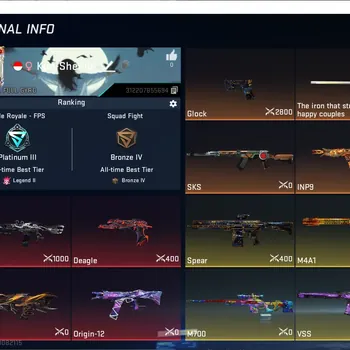
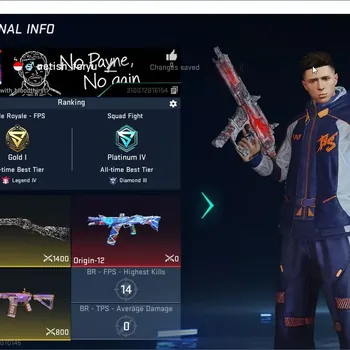
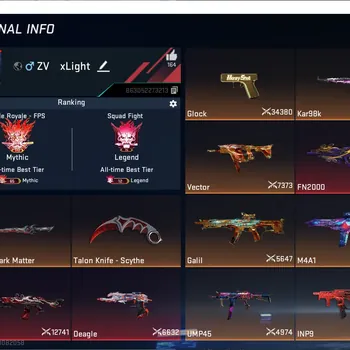
The ladder climbs Bronze, Silver, Gold, Platinum, Diamond, Master and Legend, with every tier below Legend split into numbered sub-divisions. You gain tier points for placement, eliminations and assists — and, unusually, you pay an entry cost in tier points to queue at all.
For a tier-by-tier look at points, resets and rewards, see our Blood Strike rank tiers guide. That entry cost is what makes the ladder feel different. It rises as you climb, staying flat across sub-divisions within a tier and jumping when you cross into a new one, so grinding a ladder you are losing on actively drains you. Play fewer, more deliberate ranked matches rather than queueing on autopilot.
Scoring also rewards survival more than newcomers expect: a five-kill mid-game death is usually worth less than a two-kill top-three finish, so rotating on the first circle tick beats chasing fights. Casual modes award no tier points at all.
Three structural details matter. The ladders are separate — Battle Royale, Squad Fight and, since August 2026, BR-TPS each track independently, and NetEase confirmed in its 11 August 2026 notes that BR-TPS and BR-FPS are matched separately, launching a Vanguard Season from 14 August awarding the Legendary QBZ95 – Glory skin and Rank Coins. Ranked seasons run roughly two months, not the monthly Strike Pass cycle. And your Behavior Score gates access: leaving matches can lock you out of ranked and cost the 500 Reputation weekly reward.
Climbing tiers pays Rank Coins, spendable in the Ranked Store on exclusives competitive with paid cosmetics — NetEase stocked the Ultra skin Origin-12 – Warrior there in March 2026. Unclaimed seasonal rewards land in your mailbox at the next reset.
If those tier-point swings and streak mechanics feel opaque, our companion piece on how Blood Strike rank points, losses and streaks actually work breaks down the exact math behind every gain and loss.
What are Strikers, and which should a beginner learn?
Strikers are the playable characters, each with one active ability and one passive that upgrade mid-match at Level 3 and Level 5 breakpoints. Five are free from the start, one unlocks at Character Level 4, and the rest cost 800 Gold or 8,000 Reputation.
That last point is the most valuable fact here for a free-to-play player: no Striker is paywalled, only time-walled. Reputation is the free soft currency — earned from events, tasks, ranked play and the Strike Pass — and buys exactly the same characters Gold does. New players routinely assume the roster is locked behind money.
KRAKEN, E.M.T., VAL, JET and ETHAN are available immediately, and HANK unlocks at Character Level 4. E.M.T. deploys a healing beacon and revives teammates 75% faster, so you contribute even when losing gunfights — NetEase revamped his model and cut his cast times in August 2026. VAL scans enemies onto the minimap, teaching awareness rather than mechanics. ETHAN plants a one-way bulletproof barrier with 400 HP, the most forgiving escape tool in the game. HANK's turret fights for you and his passive boosts SMG and shotgun damage inside 30 metres, which is where beginners actually fight.
Leave the high-execution characters until later: ZERO deflects bullets with a katana but demands parry timing, SPIKE's stealth runs on an energy budget that punishes movement, and ALONDRA's jetpack was nerfed in April 2026, cutting mid-air activations from five to three. Note too that the old EVO Platform for evolving Striker skills was removed on 10 February 2026, so any guide describing it as current is out of date.
What is Strike Gold, and what is it actually spent on?
Strike Gold — shown in-game simply as Gold — is the premium currency. You buy it through the in-game Mall or NetEase's official GamesClub portal, and it also trickles in free from events, logins and the Strike Pass. It funds Strikers, pass tiers and crates.
Gold sits at the top of a wider currency stack that is worth learning early, because spending the wrong one is how new players waste weeks:
- Gold — premium. Striker unlocks (800 each), Strike Pass tiers, skin draw pools, event shops, Rename Cards.
- Reputation — free. Locked Strikers (8,000 each), weapons, vehicles, camo chests, Room Cards. Also paid at 500 per week for a clean Behavior Score.
- Noble Coins — from events and passes; spent in the Noble Coin Shop on cosmetics and weapon skins, often at mission-gated discounts.
- Rank Coins — ranked-only, earned by advancing tiers, spent in the Ranked Store.
- Upgrade Points — free, spent on weapon upgrades.
- Cash — in-match only. Looted on the battlefield, spent at shops and on buy-backs, gone when the round ends.
Top-up packs are tiered, typically from around 100 Gold to 5,000 Gold, with the bonus percentage rising on larger bundles; prices vary by region, so check the in-game Mall rather than a third-party figure, or our Blood Strike top up options. One spending order holds for almost every new account: Strikers before skins. Eight hundred Gold buys a permanent character with a permanent ability; the same amount buys a fraction of a crate — and the Striker has a free path the crate does not.
How do the Strike Pass and event economy work?
The Strike Pass runs three tracks — free, Elite at 520 Gold, Premium at 1,040 Gold — on a one-month cycle. The mechanic that matters is the refund: NetEase confirms Elite returns a full 520 Gold at max level, making a completed pass effectively free.
That refund turns the pass into a rolling loan rather than a purchase: finish the Elite track every season and the same 520 Gold funds every subsequent pass indefinitely, while failing to finish it simply costs 520 Gold. Buy Elite only if you expect to play most days that month.
Passes carry real gameplay content, not only cosmetics. The Lava Realm pass in February 2026 put the HK416 rifle and a free BAS attachment on its free track. The current Urban Pulse pass, running 15 August to 14 September 2026, headlines the Ultra skin MP5 – Heatwave, adds Lucian – Renegade on Elite, and offers the AK47's M-LOK Barrel — also obtainable by simply levelling the gun, so nothing functional is locked behind money alone. Collaborations get their own themed passes alongside the seasonal one.
What weapons and loadouts should you build first?
Pick one assault rifle and one SMG and stay on them. Blood Strike unlocks attachments through per-weapon EXP, so spreading playtime across ten guns leaves you with ten under-levelled guns. The KAG-6 is the consensus safe first rifle for a new account.
Attachments come in two flavours. Standard ones unlock as a weapon levels; BAS Attachments are a higher class tied to weapon level or the Strike Pass, and they reshape a gun's identity — the HK416's Type-C Collapsible Stock cutting sprint-to-fire delay, the AK47's M-LOK Barrel stabilising recoil. NetEase raised the AK47's cap to 100 in August 2026, so there is real runway on a gun you commit to.
Prioritise recoil control first, then effective damage range, then mobility, then magazine size — and watch the trap that catches most beginners: an attachment raising displayed damage while lowering fire rate can make your real time-to-kill worse. Test in the Range first.
The meta moves every patch, and as of August 2026 NetEase has been pulling it away from close range. The 11 August update cost the P90 a point of damage across all body parts while reducing its drop-off at distance, the team calling its use cases too extreme. The QBZ95 lost a point of damage, and the HK416's Type-C stock lost its hip-fire and movement bonuses. Going the other way, the AK47 gained its cap raise and new barrel, the SVD's recoil was greatly reduced, and the Vector's hip-fire improved. Treat any tier list, including this one, as a snapshot.
One mechanic that confuses new players badly: since February 2026 there is a ground-weapon rotation. Some guns simply do not spawn as floor loot in a given season and can only be obtained from airdrops or in-match shops, and the pool changes each season. If the gun you levelled has vanished from the map, it is almost certainly rotation, not a bug.
What are Wildcards, and how do they change a match?
Wildcards are passive skills you pick up as ground loot mid-match, added in the 10 February 2026 update. They come in different rarities, you can equip up to three at once, and on death one equipped Wildcard drops randomly for someone else.
This is worth stating plainly because it is widely described incorrectly elsewhere: Wildcards are not a pre-match loadout slot, whatever several third-party guides claim. They are looted, stacked and partially lost on death, so a player deep into a good run carries real, transferable value.
The beginner takeaway is simple — pick them up. New players who read the wrong guide walk past Wildcards entirely, then wonder why opponents in the late circles feel stronger.
How does skin rarity work in Blood Strike?
Blood Strike's cosmetic ladder climbs Epic, Legendary, Ultra, Eternal and EVO, with common and rare grades below. Rarity is purely cosmetic — no skin grants a stat advantage — but it drives scarcity, event pricing and what a stacked account is worth.
Ultra is the first genuinely scarce grade, covering weapons, melee blades and Striker skins, and carrying custom draw animations, kill effects and inspect flourishes. Eternal sits above it as a seasonally exclusive premium grade distributed through named "Valor" prize pools — August 2026 brought VOLT – Mantra and KAG-6 – Star Chaser.
EVO is the ceiling and the only grade with a progression layer: EVO weapons evolve through stages of animation and effects as you feed materials into them. SCAR – Stellar was the first, and NetEase reruns them — it returned in a Stellar Valor pool in March 2026. July 2026 also added the Refine system, which spends Refinement Coins to customise a skin's styles and colours.
Two practical notes. Top-grade skins come from gacha pools rather than direct purchase, so the real cost of a specific Ultra is the expected spend to reach the pity counter, not one crate. And because rarity drives second-hand value, it is what separates one listing from another — our breakdown of Blood Strike account tiers from starter to high-end shows how those grades stack up.
Why do collab events matter so much?
Collaborations are Blood Strike's biggest content drops, and they are time-limited. Each runs roughly a month with its own themed Strike Pass, exclusive Striker and weapon skins, free mission tracks and often a bespoke game mode. Once the window closes, the items leave the shop.
The Attack on Titan Series 2 collab, running 1 to 31 August 2026, shows the full shape of one. Its Titan Strike mode equips ODM Gear for zip-line traversal and aerial attacks, has squads clear Titan outposts to collect Titan Power, then lets players transform into the Armored Titan or Beast Titan — and NetEase balance-patched those Titans on 11 August like any other content, a good signal that collab modes are not throwaway.
Crucially, collabs are not purely paid. Series 2 gave away KATYA – Female Titan through the free Regiment Trial mission track, alongside paid pools carrying RAN – Mikasa:Angel, ZERO – Levi: Battle-Hardened and ETHAN – Eren: Born Free. Earlier crossovers included One-Punch Man in July 2026 and Tokyo Revengers before it.
Do collab skins come back? Sometimes — Attack on Titan itself returned sixteen months after its first run, so "gone forever" is too strong. But a returning franchise does not guarantee the same items; reruns often swap in new pieces. Treat any expired collab item as unavailable unless NetEase announces otherwise, and note that NetEase reruns its own original skins far more readily than licensed ones. Our Blood Strike rare skins and collab guide goes deeper on which grades hold scarcity.
What should a beginner do in their first week?
Finish the tutorial, bind your account, pick your server deliberately, then narrow your focus: one Striker, one rifle, one SMG. Spend Gold on Strikers before cosmetics, and do not buy the Strike Pass unless you are confident you will finish it.
A practical order for the first seven days:
- Complete the tutorial. Skipping it reportedly leaves the Events tab locked — where redeem codes, event rewards and free Gold live.
- Bind the account to Steam or a social login before you earn anything worth losing.
- Choose your region to match where you live and who you play with; it is effectively permanent.
- Play the free Strikers — E.M.T., VAL, ETHAN, then HANK — and settle on one before spending Reputation.
- Level one rifle and one SMG rather than sampling everything, and spend a few matches drilling the Blood Strike slide-cancel movement tech that decides most close-range fights.
- Learn the Cash economy: keep enough to buy a teammate back.
- Loot Wildcards every match and hold up to three.
- Protect your Behavior Score. The weekly 500 Reputation and your ranked access both depend on it.
- Play ranked deliberately — every match costs entry points, and placement outscores kills.
- Check your mailbox at each season reset for unclaimed tier rewards.
One mechanical error deserves calling out separately: new players root themselves in place the moment they aim down sights. Blood Strike's time-to-kill is fast and its movement generous — standing still to aim is the fastest way to lose a fight you were winning.
Frequently asked questions
Is Blood Strike pay-to-win?
No, in the sense that matters most: every Striker is purchasable with free Reputation at 8,000 each, and skins are cosmetic only. Money buys speed and appearance, not power. The Strike Pass does carry weapons and attachments, but recent examples have been obtainable on the free track or by levelling the gun.
What is the difference between Gold and Reputation?
Gold is the premium currency — bought with money, occasionally granted by events — and unlocks Strikers at 800, pass tiers and crate pulls. Reputation is free, earned through play, events and Behavior Score rewards, and unlocks those same Strikers at 8,000 plus weapons, vehicles and chests.
Can I change my server later?
Not freely. Transfers go through Settings, Customer Service and a reviewed application, and NetEase has historically only opened them as specific programmes. Treat your first server choice as permanent, especially if you want to play with particular friends.
How long is a ranked season?
Roughly two months, which is longer than the Strike Pass cycle of about one month. They are separate systems on separate clocks — a common source of confusion. Ranks reset at season end, with your new starting placement derived from where you finished.
Do collab skins ever come back?
Sometimes, but never guaranteed. Attack on Titan returned for a second series roughly sixteen months after the first, yet reruns often introduce new items rather than re-selling old ones. Assume an expired collab item is unavailable until NetEase announces otherwise.
Where to Find Blood Strike Accounts and Market Options
Ready to browse listings instead of grinding for Strike Gold? Check mid-tier Blood Strike accounts with a solid Striker roster already unlocked, or browse the full Blood Strike market to compare accounts, top-up and service listings side by side.
If you would rather skip the grind toward a stocked inventory, browse entry-level starter Blood Strike accounts on GameMarket.gg if you want a head start on the ladder rather than a full skin collection. First read our Blood Strike account buying and selling guide on what to verify.
GameMarket.gg is a trusted digital marketplace for everything gaming-related. We serve the gaming community by providing secure access that enhances every gaming journey.
Curious how long you actually have to use everything covered above before the ladder resets? See Blood Strike Ranked Season Length: How Long a Season Actually Lasts for the full season calendar and what it means for climbing.