7DS Grand Cross Gold Farming Guide: Best Sources & Methods
By John Ganang 17 August 2026, 06:00 WIB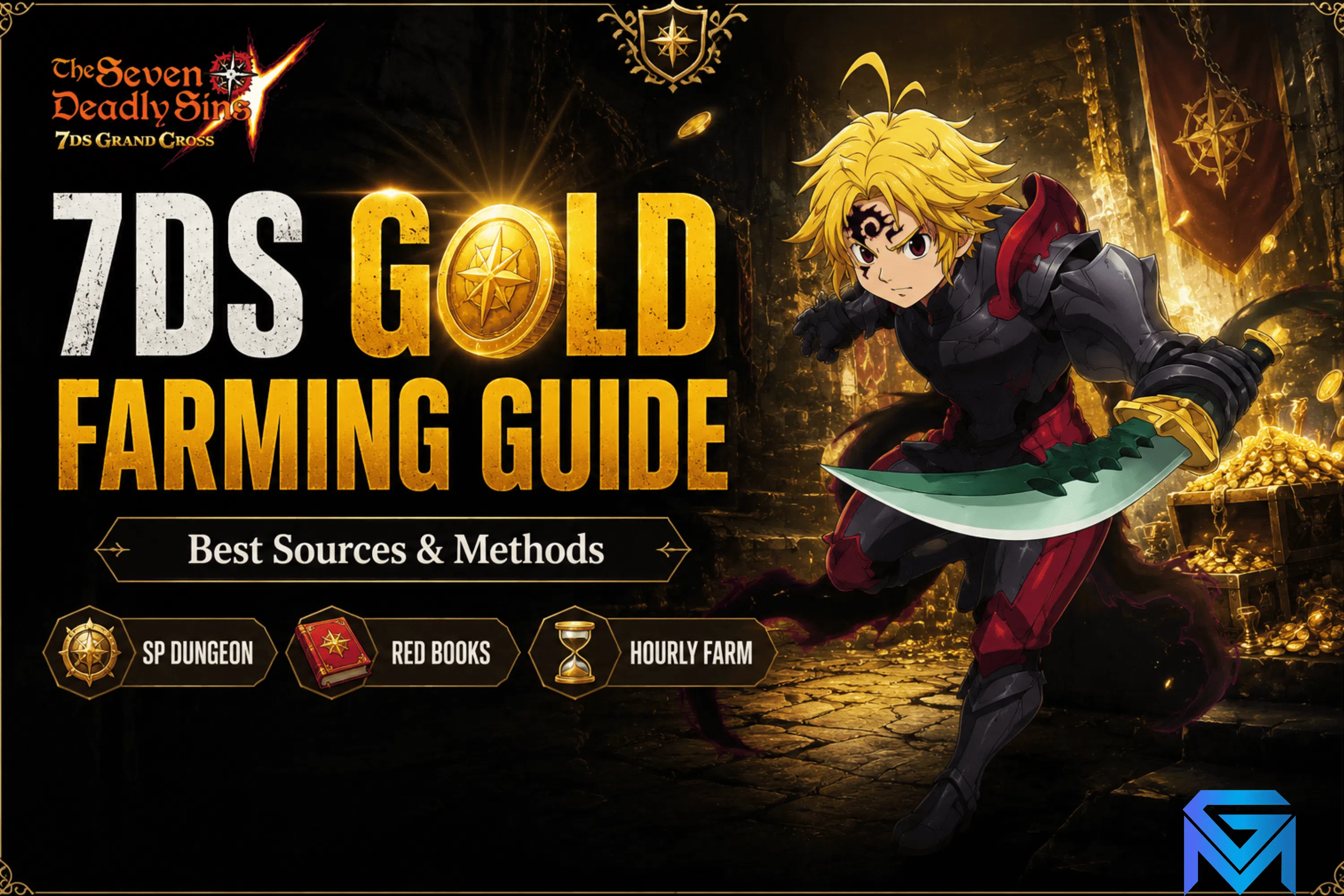
In The Seven Deadly Sins: Grand Cross, gold comes mostly from repeated Gold SP Dungeon runs and red-book farming, both of which are daily chores rather than one-time clears. An hourly service pays a real player to sit in those loops for you, so the account keeps banking gold on the hours you cannot spend at the game yourself. This guide covers where gold actually comes from, why it eats so much time, and exactly what to have a booster do with the hours you buy. For the detail behind that, see 7DS Grand Cross Race Teams Explained.
For the wider stamina, material and daily-reset routine this gold loop sits inside, see our 7DS Grand Cross farming guide.
Where does 7DS Grand Cross gold actually come from?
The bulk of your gold comes from the Gold SP Dungeon in Fort Solgres, opened with Gold SP Dungeon Keys, plus red-book runs in the Evolve dungeons that pay gold on top of their materials. Story, quests, and shop sell-offs add smaller amounts around the edges.
The Gold SP Dungeon is the anchor because it exists only to pay gold, so every key you spend there converts directly into currency. Red-book farming in the Evolve dungeons is the useful second source, since those stages drop 5-star Grimoires you can convert while also handing out gold, and they open with either stamina or Attribute Dungeon Keys rather than the limited gold keys. That matters because it gives you two parallel taps: the gold keys you should never let sit full, and a stamina-fed red-book loop you can run for as long as potions last. Both are worth naming clearly, because an hourly booster needs to know which tap to open on any given day, and the answer usually depends on what event is live and which resource the account is shortest on.
Gold is only one of the three ladders an account climbs; the 7DS Grand Cross rank up guide explains how User Rank, Combat Class, and PvP tier feed each other once the gold is flowing.
Why is gold farming so time-consuming?
Because the game rations it through timers. Gold SP Dungeon Keys regenerate roughly one every two hours and cap at ten held at once, and stamina refills slowly whether or not you spend it, so the only way to farm large gold is to keep showing up as those resources tick back.
The ten-key cap is the quiet tax most players pay without noticing. If keys are sitting full while you are asleep or at work, the regeneration timer stops, so you are losing gold you would otherwise have banked; the fix is simply to spend keys before they reach ten, which means logging in every few hours. Stamina works the same way against you, since a full bar wastes the trickle it should be accumulating, so every skipped session is red books and materials the account never farmed. You can push past the ceiling by buying extra keys and stamina potions with silver coins and friendship coins in the shop, and each stamina potion instantly restores 36 stamina, but converting those currencies and then burning them still takes a person sitting at the account. That is the real cost of gold: not difficulty, but attendance across the whole day, which is precisely the shape of work that suits paid hours rather than your own.
How do hourly services turn that grind into someone else's hours?
An hourly service rents you a real player who logs into your account and runs the gold loops on a schedule you set: clearing Gold SP Dungeon keys before they cap, farming red books, and grinding event tokens, for the number of hours in the package rather than toward one fixed target.
This fits gold farming better than any fixed-price boost, because gold has no finish line to sell; it is an open-ended rotation, so paying for the clock matches the work exactly. A booker running your account can do the two things that waste most self-farmed gold: keep the key count off ten so the timer never stalls, and leave a stamina-fed stage running while you would otherwise be offline. Netmarble's Auto Repeat setting is what makes those overnight sessions possible, and a paid session simply supervises it so the account is not left unattended for hours. Because the value is continuous attendance rather than a single clear, an hourly block converts almost one-to-one into gold and materials, which is why farming is the category these services were built for. For the detail behind that, see how costumes add permanent stats.
What should you tell a booster to farm?
Give a short, specific brief: spend every Gold SP Dungeon key on cooldown so it never caps at ten, set Auto Repeat to No Restriction with stamina-potion use enabled on a red-book stage, prioritise any half-stamina event, and empty event shops before they close.
Each instruction removes a way gold quietly leaks. Telling the booster to keep keys under the cap protects the regeneration timer, so no key-hours are wasted while the session runs. Asking for Auto Repeat on No Restriction with the stamina-potion box checked means the account keeps farming a chosen stage until stamina and potions run dry, which turns idle hours into banked red books instead of a paused game. Pointing the session at a half-stamina weekend such as Fort Solgres stretches the same money further, because each run costs half the stamina and therefore yields more per hour. Folding in event-token grinding matters because those shops expire, so gold and materials left unclaimed there are simply gone. A booster who is handed these four rules will bank noticeably more than one told only to "farm gold," and the brief takes a minute to write.
How much hourly time does a gold push need?
It depends on how far behind the account is, but the marketplace is built for both shapes: short bookings from a single hour for a daily top-up, up to hundred- and two-hundred-hour blocks for a serious catch-up. Larger blocks lower the per-hour rate, so planning ahead is cheaper than buying piecemeal.
Think about the request in terms of what you are trying to reach rather than a round number of hours. A daily maintenance habit, keeping keys spent and stamina burned, is a small recurring booking, and the daily and weekly packages on GameMarket.gg exist for exactly that cadence. A big one-off gold reserve, the kind that funds a wave of gear rerolling, Awakening and engraving stones, or hero limit-break materials, is where the large hundred-hour-plus blocks earn their lower per-hour price. Prices move with demand and seller, so treat any figure you see as accurate only as of this writing, and compare listings on their per-hour rate and the seller's reputation rather than on a headline total. The right size is simply the one that clears the backlog you actually have, and a quick look at the account's key and stamina waste tells you how much continuous farming it can absorb.
Why bank that much gold in the first place?
Because nearly every progression system in Grand Cross runs on gold. Rerolling and enhancing C-to-R grade equipment for the stats you want costs gold, and awakening, engraving, and hero limit-break materials all draw on the same pool, so a gold shortage stalls the whole roster.
This is the reason a farming session is an investment rather than a vanity number. Equipment reroll is the hungriest sink, since chasing usable substats on lower-grade gear is a gold cost you pay over and over until the roll lands, which means a deep reserve is what lets you actually optimise instead of settling. Awakening and Super Awakening raise a hero's Combat Class in large steps, and the stones and limit-break materials that feed them are bought and applied with gold, so the currency is the gate between an owned hero and a battle-ready one. Because the demand never really stops, gold farmed while you were offline is progress you did not have to trade your own evenings for, which is the entire case for handing the loop to paid hours.
If you are new to how heroes, Diamonds and teams fit together, start with the 7DS Grand Cross beginner's guide before committing a large gold budget.
How do you keep the account safe during a gold-farming session?
Buy through a marketplace that holds your payment until the work is confirmed, and hand the account over cleanly: note its server and region, share only the login the job needs, and favour sellers who livestream the session and connect from a location appropriate to your account's region.
Safety here comes down to one fact: a real person is logging into your account, so the seller's trustworthiness is the whole risk. Grand Cross accounts are tied to a build region, which means a login from the wrong location can trip a security check, so listings that spell out a region-appropriate connection and offer a livestream are protecting your account as much as reassuring you. The permanent roster is the valuable asset and gold is only what improves it, so spending a couple of minutes on a seller's rating, review count, and package terms is cheap insurance before a long farming block. A protected checkout that can step in and mediate a dispute is what turns a multi-hour handoff from a leap of faith into an ordinary purchase, and it is the part worth insisting on no matter how small the booking.
Common questions about farming 7DS gold with hourly services
What is the single best gold source to have a booster farm? The Gold SP Dungeon in Fort Solgres, because it pays gold directly and runs on keys that cap at ten. Pair it with red-book Evolve runs, which add gold on top of materials and open with stamina rather than the limited gold keys.
Can a paid session really farm overnight? Yes. With Auto Repeat set to No Restriction and stamina-potion use enabled, the account keeps clearing a chosen stage until stamina and potions run out, so an hourly booking can bank gold and red books during hours you would otherwise be offline.
Do half-stamina events change how much I should buy? They can stretch it noticeably. A half-stamina weekend such as Fort Solgres halves the stamina cost of each run, so the same hour of farming converts into more gold and materials; timing a booking around one is the cheapest way to bank a large reserve.
Is buying an hourly service safe for my account? It is as safe as the seller and the checkout. Use a marketplace that holds payment until the work is confirmed, share only the login required, and prefer sellers who livestream and connect from your account's region to avoid tripping a security check.
Where to Find 7DS Grand Cross Boosting and Hourly Services
On GameMarket.gg you can see how 7DS Grand Cross boosting orders are handled.
Once you know how much continuous farming your account can absorb, browse the current 7DS Grand Cross hourly services listings on GameMarket.gg, compare sellers on their per-hour rate and rating, and book the package that matches whether you need a daily gold top-up or a large catch-up block.
GameMarket.gg is a trusted digital marketplace for everything gaming-related. We serve the gaming community by providing secure access that enhances every gaming journey.