eFootball Accounts Explained: Levels, Card Collections & Value
By John Ganang
An eFootball account's real progress is measured by four things together: manager level, GP (Game Points) balance, the tier and count of collected player cards, and how far its Dream Team squad has been built through Contract renewals and Featured Player packs — not by manager level alone. It is worth reading EFootball KONAMI ID Login Explained alongside this.
What Determines an eFootball Account's Overall Value?
An account's value comes from the combined weight of its manager level, GP balance, the rarity spread of its player cards, and how complete its Dream Team squad is across multiple positions and playing styles.
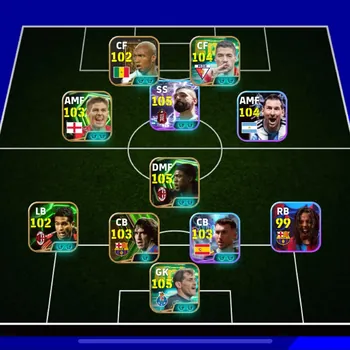
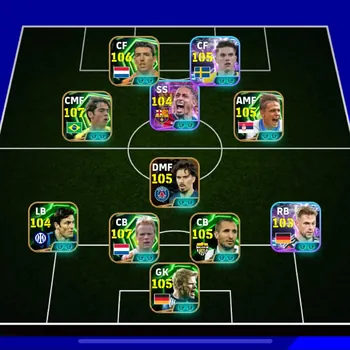
Manager level alone is a poor shortcut because it only tracks accumulated experience points from matches, training, and events — it says nothing about whether that time was spent building a balanced squad or grinding one favorite formation. A more reliable read comes from cross-checking manager level against the account's player card roster: how many Featured, Epic, or Legendary-tier cards it holds, whether those cards have been leveled up and had their playing styles trained, and whether Contract renewals have kept the best cards active instead of expired. GP balance matters too, since a healthy reserve means the account can still respond to new Featured Player releases or seasonal campaigns rather than being tapped out. Squad depth across multiple positions — not just a stacked front line — is another marker experienced buyers and sellers look at, because a squad that only has strong forwards but weak defenders or goalkeepers is far less flexible in competitive online matches.
How Does Manager Level Reflect Account Progress?
Manager level rises from experience earned in matches, training drills, and event completion, so it tracks time invested but not skill or squad quality — a high level with a thin roster still plays like a beginner account.
Experience points accumulate from nearly every activity in eFootball: league and cup matches, dream team friendlies, daily training menus, and event-specific challenges. Because experience keeps flowing from casual activities as well as competitive ones, two accounts at the same manager level can look completely different under the hood. One might have spent that time carefully building contracts on a small set of Featured Players, while the other spread GP thin across many average cards without ever completing a strong first eleven. This is why manager level should be read as a rough indicator of account age and activity, not a guarantee of card quality. When comparing accounts, it helps to look at level growth alongside squad rating and completed events, since those extra data points reveal whether the level was earned through meaningful squad building or simply through repeated low-effort matches.
What's the Difference Between a Regular and a Full Epic Account?
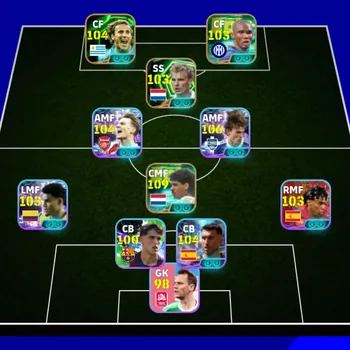
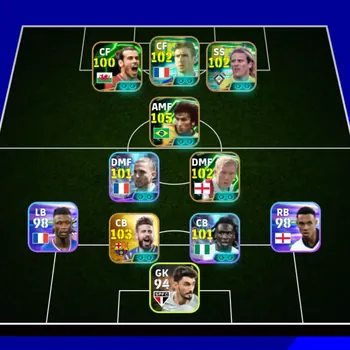
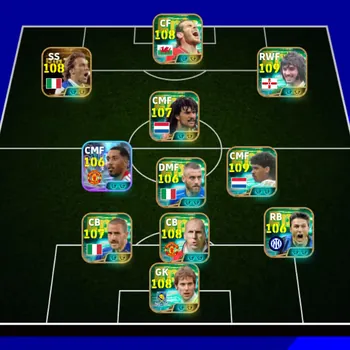
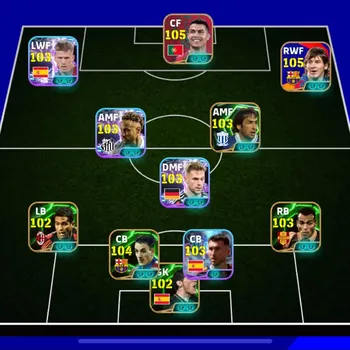
A regular account mixes Basic and mid-tier cards with a handful of standout players, while a Full Epic account has replaced most or all of its starting eleven with Epic-tier or higher cards across every position.
Card tiers in eFootball run from Basic up through Featured, Epic, and Legendary, with each step up bringing higher base stats, stronger playing style fit, and better boost potential through training points. A Full Epic account represents a significant, sustained investment because reaching that tier consistently across eleven starting positions — plus useful substitutes — takes many Featured Player pack pulls or long-term Contract management, not just a single lucky pull. Buyers and sellers describe this milestone specifically because it changes how the account performs in Divine Moments of Truth and higher-division online matches: a squad built entirely from Epic-tier cards can compete much more consistently against other high-level opponents than a squad relying on one or two standout players surrounded by weaker fillers. Recognizing this distinction matters because a "high level" account is not automatically a Full Epic one, and the two claims should never be treated as interchangeable. If that part matters to you, EFootball Team Strength Explained goes deeper.
What Should You Check Before Trusting an Account's Squad Strength?
Check the actual starting eleven's card tiers and training levels, not just the squad rating number, since rating can be inflated by strong bench players who never take the field in real matches.
Squad rating is calculated from every card owned, including substitutes and reserves that rarely see playtime, so a high overall rating can hide a starting lineup that is much weaker than the number suggests. A more accurate check walks through each of the eleven starting positions individually: goalkeeper, both center backs, full backs, the midfield core, and the front line, confirming that each slot holds a trained card appropriate to its playing style rather than a generic filler. It also helps to confirm whether key cards have had their Contracts renewed recently, since an expired or soon-to-expire Contract on a star player means that card could become unusable to keep. Training point allocation is another marker worth checking — a card at maximum level with points spent on stats matching its position performs noticeably better than the same card left untrained. Together, these checks give a realistic picture of match-day performance instead of a number that can be skewed by an inflated bench.
How Do Mobile and Console Accounts Differ?
Mobile and console eFootball accounts run on separate progress systems tied to their platform, so a mobile account's manager level, GP, and card collection do not automatically transfer to a console version of the same game.
eFootball is built as a cross-platform title, but account progress historically follows the platform (and in some cases the linked platform account) where it was created and played. This means a mobile-focused account built up through daily missions and mobile-exclusive campaigns won't carry that same progress if the player switches primarily to a console session under a different linked ID. Control scheme also shapes how a squad gets used in practice: mobile play often favors simpler, more automated defending and quick-tap passing, while console play rewards manual defending and more precise dribbling inputs, so the "best" squad composition can differ slightly between the two even with identical cards. Anyone comparing or evaluating an account should confirm which platform its progress is tied to first, since platform mismatches are one of the most common points of confusion when judging whether an account's history and stats line up with what's being described.
What Makes a High-Roller Account Different From an Average One?
A high-roller account shows sustained heavy investment: multiple Legendary or Epic-tier cards, several fully renewed Contracts on top players, deep bench depth, and completion of high-difficulty events that casual accounts rarely finish.
The clearest signals of a high-roller account go beyond just owning one or two rare cards. Depth matters — having Legendary or Epic-tier options at multiple positions, including backup choices for rotation, shows investment spread across the whole squad rather than a single showcase player. Completion of demanding single-player content and high-tier online divisions is another marker, since those modes typically require a genuinely strong, well-trained squad rather than one lucky pull. GP reserves also tend to run higher on these accounts because heavy spenders and long-term players continually reinvest earned currency into new Featured Player campaigns instead of running their balance down to zero. When evaluating whether an account fits this description, it's worth checking training point distribution too: cards that are fully trained across the stats that matter for their position are a stronger signal of genuine investment than a roster of high-tier cards left at base stats. For the detail behind that, see EFootball Chance Deals and Contracts.
How Does GP (Game Points) Balance Affect an Account's Standing?
GP is eFootball's primary earned currency, spent on Featured Player packs, Contract renewals, and training points, so an account's GP balance shows how much near-term flexibility it has to keep improving its squad.
GP is earned gradually through matches, daily and weekly missions, and event rewards, then spent on the system's core progression levers: pulling from Featured Player packs, renewing Contracts on cards nearing expiration, and applying training points to sharpen a card's stats and playing style fit. An account sitting on a large GP reserve has more short-term flexibility to chase a new Featured Player release or patch up a weak position, while an account with a near-zero balance is effectively frozen until it earns more through normal play. This is why GP balance is often considered alongside card collection rather than instead of it — two accounts with similar rosters can have very different near-term ceilings depending on how much spendable currency sits in reserve. It also explains why some accounts with slightly weaker current squads can still be considered strong long-term prospects if their GP balance is healthy enough to fund a significant upgrade.
Frequently Asked Questions
Does a higher manager level always mean a stronger squad?
No. Manager level tracks accumulated experience from matches, training, and events, but says nothing about card tiers, training levels, or Contract status, so a high-level account can still have a weak starting eleven.
Can Featured Player cards expire permanently?
Cards use a Contract system that requires periodic renewal with GP; an expired Contract makes a card unusable until renewed, but the card itself is not permanently lost as long as renewal requirements are met in time.
Is squad rating a reliable way to judge an account?
Squad rating includes every owned card, including bench players who rarely start, so it can overstate real match-day strength; checking the actual starting eleven position by position gives a more accurate picture.
Where to Find eFootball Accounts, Top Up and Other Services
If you want to look at what's currently available rather than build everything from scratch, GameMarket.gg lists eFootball accounts at various progression stages, eFootball GP top-up options, and other eFootball-related listings in one place, with the full eFootball market hub available if you'd rather browse everything the game has to offer first.
Comparing manager level, card tiers, GP balance, and Contract status side by side is the most reliable way to judge what an eFootball account actually offers before relying on it. If you'd rather skip the research and browse ready accounts directly, the eFootball accounts listings on GameMarket.gg are a good place to compare options at a glance.
GameMarket.gg is a trusted digital marketplace for everything gaming-related. We serve the gaming community by providing secure access that enhances every gaming journey.