Strike Gold Top Up Guide 2026: Cheaper, Faster, Safer Ways to Fund Blood Strike
By GameMarket Team 15 June 2026, 20:05 WIB
Strike Gold is Blood Strike's premium currency, and funding it well comes down to three decisions: buying through a route NetEase actually recognises, sizing the purchase around the first-purchase and tiered bonus multipliers rather than the raw sticker price, and spending it on progression that keeps its value — Strike Pass tiers and permanent unlocks — instead of on single-roll Lucky Draw attempts.
What is Strike Gold and what does it actually do?
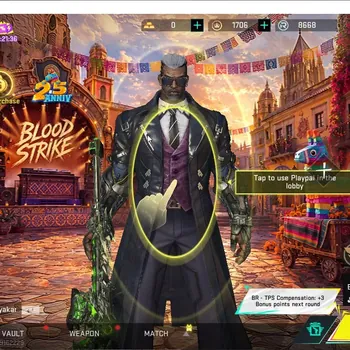
Strike Gold is the purchased premium currency in Blood Strike. It buys the Strike Pass, direct store cosmetics, Lucky Draw entries, Striker unlocks and various convenience bundles. It is account-bound, does not transfer between accounts or regions, and is completely separate from the Cash you pick up inside a match.
That separation is the single most useful thing a new player can learn, because the game uses at least three distinct value systems and only one of them costs real money. In-match Cash is generated and spent inside a single round at Buy Stations — it funds armour plates, weapon upgrades, support items and teammate respawns, and it resets to zero the moment the match ends. It never accumulates, so no amount of careful play in a battle royale round translates into store credit afterwards.
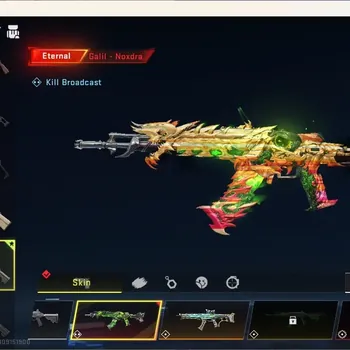
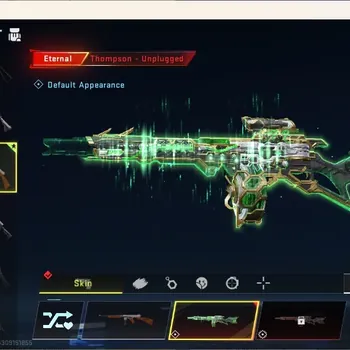
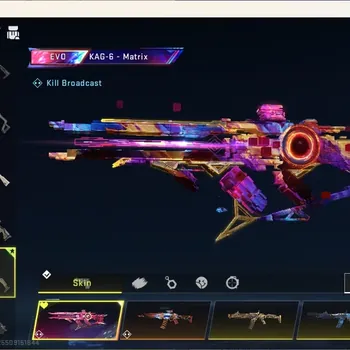
Strike Gold sits on the opposite side of that line. It persists on the account, it is the only currency the premium storefront accepts, and it is the gate in front of most of the cosmetic and progression content players actually recognise: Ultra and Legendary weapon skins, collaboration outfits, Striker unlocks that would otherwise require long grinds, and the paid track of the seasonal Strike Pass. Because it persists, the way you acquire it matters far more than the way you acquire Cash. A poorly-timed Strike Gold purchase is a permanent inefficiency on the account; a poorly-timed Cash spend costs you one round.
The third system is the free progression layer — the ranked ladder, weapon mastery levels, event tokens and the free Strike Pass track. None of it can be bought, and understanding that boundary stops the most common beginner mistake, which is spending premium currency chasing something the game was always going to hand over for playing.
How does topping up Strike Gold actually work?
Two routes exist. The in-game store bills through your Google Play or Apple App Store account and delivers instantly to the logged-in profile. NetEase's official web top-up portal bills through its own payment options and delivers to a player ID you enter manually. Both are first-party; the difference is billing rails and which bonuses apply.
The in-game route is the one most players default to, and it is the safest by construction: you are already authenticated, so there is no player ID to mistype and no region to select incorrectly. The trade-off is that platform storefronts add their own pricing layer, and regional App Store or Play Store pricing is not always the cheapest version of the same pack.
The web portal route asks for more care and can be worth it. You supply the player ID that Blood Strike shows on your profile card, the portal resolves that ID to an in-game name, and you confirm the match before paying. That confirmation screen is not a formality — it is the only checkpoint standing between your purchase and a stranger's account, and there is no reversal once delivery completes. Check the returned in-game name character by character every time, including on repeat purchases, because a saved ID from an old device or a mistyped digit resolves silently to somebody else.
Delivery on both routes is normally immediate. When it is not, the cause is almost always a queued platform receipt rather than a lost purchase, and the correct first move is to restart the client and let the entitlement re-sync before opening a support ticket. NetEase's official support channels are the only place a genuinely stuck transaction can be resolved, and they will ask for the platform receipt, so keep it.
Why does the bonus structure matter more than the price?
Because Blood Strike prices Strike Gold in tiers with escalating bonus percentages plus a one-time first-purchase multiplier on each tier, the cost per unit of Strike Gold is not flat. The same real-money spend can deliver noticeably different totals depending on which tier you buy and whether that tier's first-purchase bonus is still unclaimed.
The mechanic works like most mobile currency stores. Each pack has a base amount and a bonus amount, and the bonus percentage grows as the tiers climb, so larger packs carry a better effective rate. Layered on top, each tier typically carries its own one-time doubled or heavily boosted first purchase. Those one-time bonuses are the highest-value Strike Gold in the game, and they are also the easiest to waste — buying the smallest pack repeatedly consumes nothing but the small tier's already-claimed bonus, while the untouched first-purchase multipliers on the higher tiers sit there expiring in value terms.
Practically, that produces a simple ordering rule. If you intend to spend a given budget over a season, work out which single tier your budget most closely fits and claim that tier's first-purchase bonus before making any repeat purchases at all. Repeat purchases at any tier earn only the standing bonus percentage, so they should always come after the one-time multipliers you actually plan to use.
Exact pack sizes, bonus percentages and local prices change between seasons and between regions, so treat the numbers on your own store page as authoritative rather than any figure quoted elsewhere. What is stable is the shape: bigger tier means better rate, first purchase on a tier beats a repeat purchase on that tier, and the store page shows both numbers before you commit. Read the bonus line, not the headline price.
What is Strike Gold worth spending on?
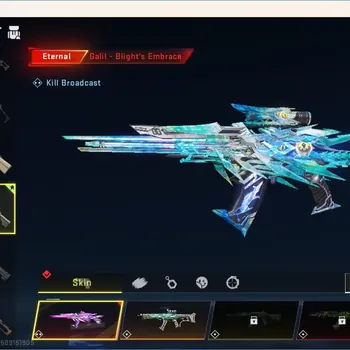
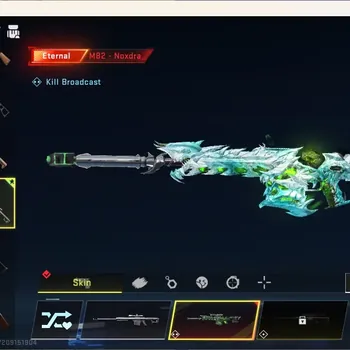
Ranked by durability of value: the Strike Pass first, because its paid track returns currency and permanent items across a whole season; then direct-purchase Strikers and permanent weapon skins you will actually use; then bundles that combine both. Single Lucky Draw pulls sit last, because their outcome is probabilistic and duplicate-heavy.
The Strike Pass is the clearest case. It is a fixed-price seasonal track with a published reward list, so you can see the entire return before paying, and a portion of that return is usually premium currency flowing back to the account. That combination — known contents, partial currency refund, items that stay on the account permanently — is what makes it the default recommendation for a player who intends to spend anything at all. Its one requirement is play time: the value is only realised if you actually climb the tiers before the season closes, which is why season timing matters and why buying a pass in its final week is usually a poor trade.
Direct store purchases come second because they are deterministic. When a Striker, an Ultra weapon skin or a themed outfit is available for a listed Strike Gold price, you know exactly what your currency converts into. Striker unlocks in particular carry gameplay relevance rather than pure cosmetics, since each Striker brings its own ability kit and the roster you own shapes what roles you can fill for a squad.
Lucky Draw is the category that deserves the most caution. Crate mechanics distribute their best items by chance and reward duplicates along the way, so the currency cost of reaching a specific target item is variable and can far exceed the cost of a comparable direct purchase. Blood Strike, like other NetEase titles operating under regional disclosure requirements, publishes odds for these draws — read them before committing, and treat any multi-pull discount as a discount on a gamble rather than a discount on the item you want.
Collaboration skins deserve their own note. Collab content in Blood Strike is period-limited: it is available during its event window and may or may not return through a later rerun. Reruns do happen, but they are not guaranteed for any specific item, so plan around the event window you can see rather than around a return you are assuming. For a fuller breakdown of how rarity tiers and collab availability interact, our Blood Strike Strike Gold spending breakdown covers what each rarity band actually delivers.
Which top-up mistakes cost players the most?
Four recur constantly: buying small packs repeatedly and burning through the low tier while high-tier first-purchase bonuses go unclaimed; topping up to the wrong player ID on the web portal; funding a Strike Pass late in a season; and paying an unofficial reseller for a discount that carries a chargeback risk to your account.
The repeat-small-pack pattern is the most expensive and the least visible, because nothing goes wrong — you get exactly what the store promised, just at the worst available rate. Reviewing the whole tier ladder once, before the first purchase of a season, prevents it permanently.
The wrong-ID error is rarer but unrecoverable. Delivery is instant and final, and support cannot claw currency back out of an uninvolved third party's account. The confirmation screen exists precisely to catch this, which is why skipping it on a "routine" repeat purchase is where it usually happens.
Season timing is a softer error with real cost. A Strike Pass bought with a week left cannot realistically be climbed to its high tiers, so a large share of the reward list simply never arrives. The pass is not refunded or carried forward, so the practical rule is to buy early in a season or not at all.
The fourth mistake is the one with consequences beyond currency. Unofficial resellers offering below-market Strike Gold are frequently funding those top-ups through payment methods that get reversed later. When the reversal lands, the entitlement is clawed back and the receiving account can be penalised — the buyer absorbs the loss and the risk, having paid for both. If a price is meaningfully below what the official store charges, the gap is being funded by something, and it is usually the buyer's account standing.
How does account state change your top-up decisions?
Server region and binding both matter before you spend. Strike Gold is tied to the account and its region, so a purchase made against one region does not travel to another, and an account without a proper login binding can be lost entirely — taking its purchased currency and unlocks with it.
Binding first. An account that only exists as a guest session on one device has no recovery path if that device is lost, reset or reinstalled. Linking it to a durable login before spending anything is the cheapest insurance in the game, and it takes a minute. Every Strike Gold purchase you make afterwards is protected by that one action.
Region next. Because currency, some event availability and matchmaking pools follow the account's server, checking which server your account actually sits on before a web-portal purchase avoids a class of problem that support cannot fix afterwards. Players who own more than one account, or who returned to an old one, are the most likely to get this wrong.
Existing account content is the last variable. What is already unlocked changes what your currency should buy — there is little sense funding a Striker unlock or a skin line the account already holds, and the value of a Strike Pass depends partly on how much of its track duplicates what you own. If you are weighing where an account currently stands, our guide to Blood Strike account tiers explains how starter, mid and high-end accounts differ, and our overview of skins, ranks and server regions covers the attributes that define an account's state. Newer players will find the fundamentals in our Blood Strike beginner's guide.
What does a sensible seasonal approach look like?
Decide the season's total budget before opening the store, secure the Strike Pass early if you play regularly, claim the first-purchase bonus on the single tier that fits that budget, then hold the remainder for deterministic direct purchases rather than committing it to draws.
The reason to set the number first is that every mechanic in the store is designed to be evaluated against a fixed budget and becomes hard to evaluate without one. A bonus percentage only tells you something useful when you know what you were going to spend anyway; without that anchor, a bigger tier always looks like better value even when it is more than you intended to spend.
Securing the pass early follows from the same logic, since the pass converts play time into rewards and the supply of play time shrinks as the season runs down. Claiming the first-purchase bonus on the right tier then extracts the store's largest one-time concession at the exact moment it is worth the most.
Holding the remainder is where most of the discipline lives. Direct purchases have known prices and known contents, so a leftover balance keeps its value indefinitely until something you actually want appears in the store. Currency spent on draws does not keep its value — it resolves immediately into whatever the odds produced. Waiting costs nothing; the store restocks.
Where to Find Blood Strike Accounts and Top Up
On GameMarket.gg you can browse Blood Strike accounts other players have already built.
If you would rather compare the current Strike Gold and Strike Pass options that sellers have listed, browse the Blood Strike top up listings on GameMarket.gg and check what is available for your server before you commit to a purchase.
GameMarket.gg is a trusted digital marketplace for everything gaming-related. We serve the gaming community by providing secure access that enhances every gaming journey.