Blood Strike Ranked Season Length: How Long a Season Actually Lasts
By John Ganang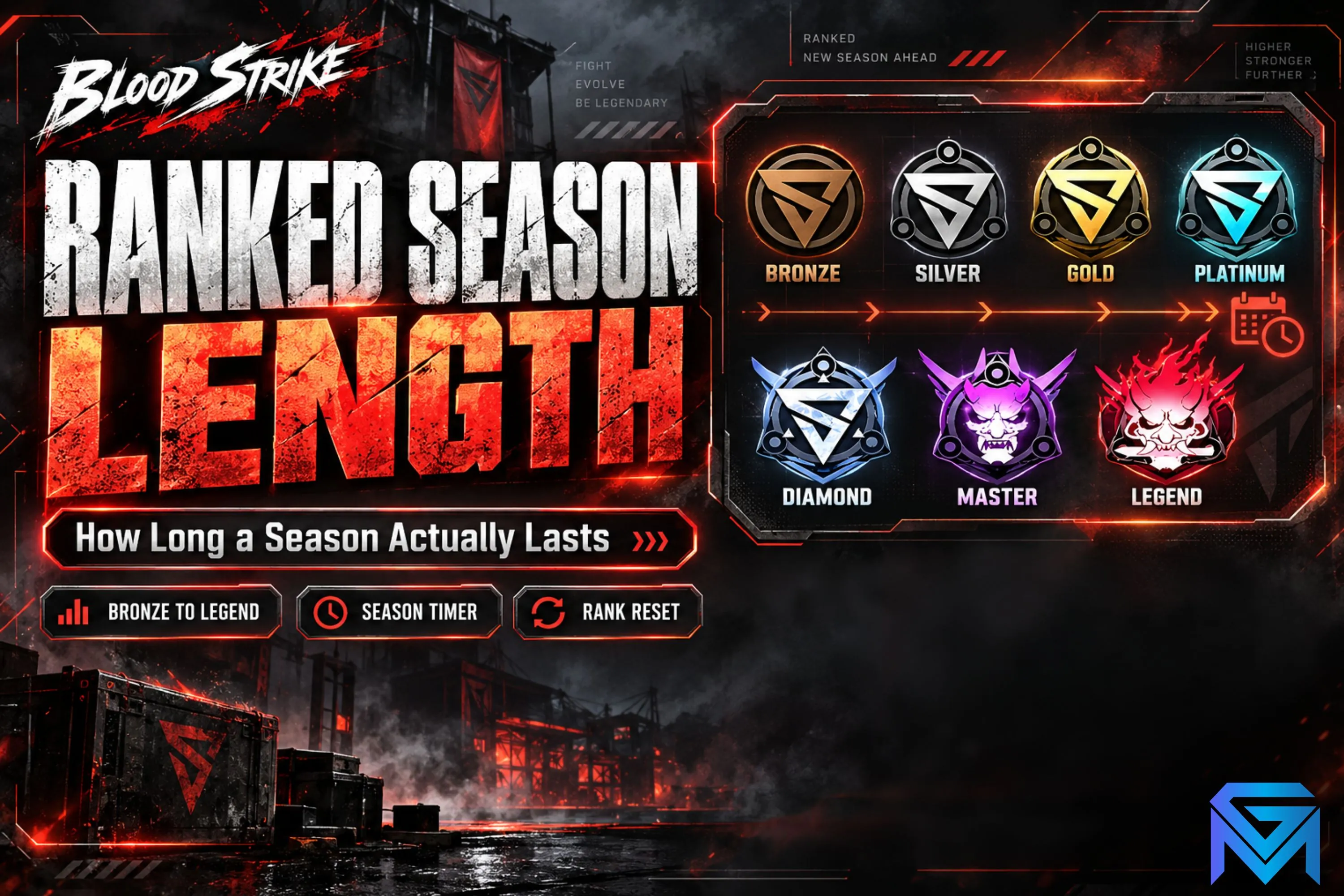
A Blood Strike ranked season runs for roughly two months from opening whistle to the next soft reset, longer than the four-to-six-week cycles common in other mobile shooters. That window covers seven main ranks split into four sub-tiers each, a separate points ladder for Battle Royale and Squad Fight, and a hard Legend threshold that never moves mid-season.
How long does a Blood Strike ranked season actually last?
NetEase runs Blood Strike ranked seasons on roughly a two-month cadence, matching the game's broader content-update rhythm rather than a fixed calendar date. Each season's exact start and end timestamps are published inside the ranked tab itself, not on a public roadmap, so the safest way to check how much time is left is the in-game countdown rather than a wiki page.
That two-month window is longer than it looks on paper, because the first one to two weeks of any new season are effectively a soft-reset sprint: everyone above Gold gets pulled back toward the middle of the ladder, so there's an unusually large pool of easier matches available right at the start. Players who buy into an account or a boosting package near the season's midpoint are working against a ladder that has already sorted itself into its steady state, which is one reason timing matters more in Blood Strike than in games with shorter, choppier seasons.
How many tiers are there between Bronze and Legend?
Blood Strike's ranked ladder has seven named tiers — Bronze, Silver, Gold, Platinum, Diamond, Master and Legend — and every tier except Legend is split into four numbered sub-tiers (IV up to I), for 24 climbable steps before the apex bracket. Diamond and Master are where match difficulty and queue times both increase noticeably, since the player pool thins out.
Each sub-tier costs roughly the same number of points to clear inside a given main tier, but the point cost jumps when crossing from one main tier into the next — going from Gold I to Platinum IV takes more points than going from Gold II to Gold I. There's no published formula for exactly how much the cost increases at each boundary, which is part of why third-party rank calculators disagree with each other near the Diamond-Master line.
Behavior Score also gates entry to this ladder independently of skill: accounts with a low enough score are locked out of ranked matches entirely until the score recovers, which matters for anyone buying a used account sight unseen. A high rank badge doesn't guarantee ranked-mode access on day one if the previous owner's behavior history came along with the account, so checking that the account can actually queue into ranked — not just what tier it last reached — is worth confirming before paying for anything above the starter bracket.
What's the point threshold to reach Legend rank?
Legend is not a sub-tier, it's a fixed point wall: Battle Royale players need 13,000 tier points to cross into Legend, while Squad Fight — which uses a much smaller point pool overall — only needs 112. Once a player is in Legend, the ladder shifts from tier-climbing to leaderboard-holding.
The top 250 Legend-ranked players on each leaderboard hold an Exclusive Title that has no separate point requirement of its own; it simply reflects whoever currently sits in that top-250 band, and it refreshes in real time as players gain or lose points. That means a Legend player can hold the title one hour and lose it the next without dropping out of Legend itself — the title is a live leaderboard position, not a permanent unlock.
This is also where account valuation gets tricky for buyers: an account listed as "Legend" only confirms it crossed the 13,000 or 112-point wall at some point, not that it currently holds the Exclusive Title, and not that it will still be Legend after the next reset pulls it back down. A buyer who specifically wants the top-250 title needs to check the live leaderboard at the time of purchase, not just the rank badge on the account itself, since the badge reflects the account's peak, not its position right now.
Do Battle Royale and Squad Fight ranks work the same way?
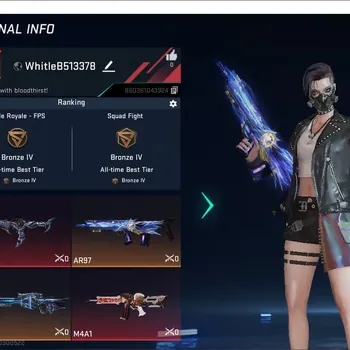
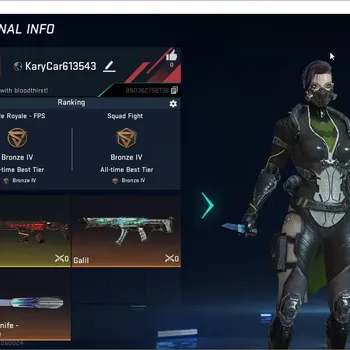
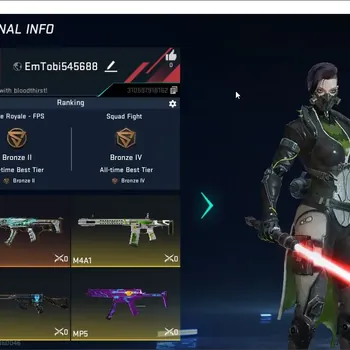
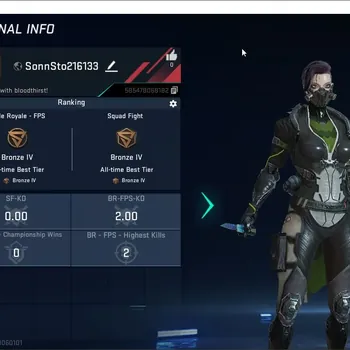
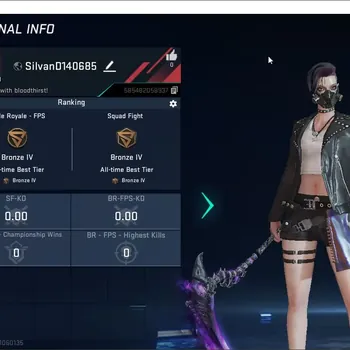
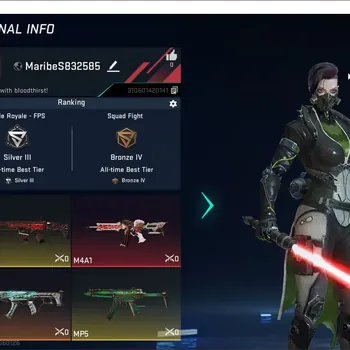
They share the same seven tier names and run on the same season calendar, but they are two separate ladders with two separate point economies. Battle Royale ranked is solo-queue only and scores based on placement plus contribution across a full lobby, while Squad Fight is a 4-player mode scored on a much smaller point scale — hence the 13,000-versus-112 gap at Legend.
Because they're tracked independently, a player's Battle Royale rank and Squad Fight rank can sit at completely different tiers at the same time, and each one resets on its own schedule at season's end. Anyone evaluating an account's rank should check both ladders, not just whichever one is displayed first on a seller's listing.
What happens to unclaimed season rewards when the season ends?
Rank-up rewards — rank coins plus the cosmetic drops attached to specific tiers — are meant to be claimed the moment a player reaches that tier, but Blood Strike doesn't forfeit anything left sitting in the claim queue. Whatever wasn't picked up before the season boundary gets pushed into the player's in-game mailbox at the start of the next season instead.
Rank coins earned this way spend in the Ranked Shop on rank-exclusive cosmetics that aren't sold anywhere else, which is part of why account listings that advertise "full season rank coin balance" carry real value beyond the visible skin inventory — some of that value is sitting unredeemed in the mailbox rather than already converted into gear.
How does the season calendar affect buying, boosting or top-up timing?
Because the ladder soft-resets everyone downward at the two-month mark, the first couple of weeks of a fresh season are the cheapest window — in time and in points — to push an account from Gold or Platinum up toward Diamond or Master, since the matches are easier and the point cost per win is unchanged. Boosting services booked right after a reset typically clear more tiers per hour than the same service booked six weeks into a season, when the ladder has hardened back into its normal difficulty curve.
The opposite logic applies to buying an already-high account or topping up Strike Gold for a shopping spree: doing that in the final one to two weeks before a season ends locks in a player's peak-tier reward eligibility (rewards are paid on peak tier reached, not tier held at reset) without exposing the new owner to a full season of decay risk, since the ladder resets again almost immediately after purchase.
Where to read more about Blood Strike ranks, gold and settings
The season calendar only tells half the story of what an account or a boost is actually worth — the other half comes down to the ladder mechanics, the currency behind cosmetics, and the settings a player brings into the matches themselves. A few sibling guides cover those pieces in more depth: the Beginner's Guide to Ranks, Strikers & Strike Gold lays out the full tier system for newer players, the Battle Pass Explained: Tiers, Rewards & Season Timing guide breaks down how the separate Battle Pass season clock overlaps with the ranked calendar, and Account Tiers Explained: Starter to High-End covers what actually separates a starter account from a high-end one beyond rank alone.
For players optimizing the climb itself rather than the calendar around it, the Ranked Guide 2026: How to Push Legendary Without 1,000 Matches goes deep on efficient climbing routes, the August Patch Calendar: Every Drop and Deadline shows how balance patches land inside a season rather than at its edges, and the Strike Gold Packs Explained: Tiers, Bonuses & Math guide breaks down which top-up tier gives the best return before a season-end spending push.
Where to buy Blood Strike accounts, boosting or Strike Gold around a season reset
Players timing a purchase or a boost around the reset window generally look at four different corners of the market rather than one: pre-leveled Blood Strike accounts for an instant tier and cosmetic head start, Strike Gold top-ups to fund a Ranked Shop or Lucky Draw run before the season closes, boosting services to clear the post-reset easy stretch faster than solo queue allows, and the full Blood Strike marketplace hub for browsing everything currently listed across all four categories at once.
Frequently asked questions
Does Blood Strike ranked season length ever change?
The two-month cadence is NetEase's standard, but individual seasons have run shorter or longer around major content pushes; the in-game ranked tab countdown is the only reliable source for the current season's exact end date.
Do Battle Royale and Squad Fight seasons end on the same day?
Yes, both ladders run on the same season calendar and reset at the same boundary, even though they track points independently the rest of the time.
Can a Legend player be demoted before the season ends?
No — Legend itself doesn't demote mid-season once reached, but the Exclusive Title for the top 250 is a live leaderboard position that can be lost and regained the same day without affecting Legend status.
Whether the goal is squeezing extra tiers out of a fresh reset or locking in peak-season rewards before one closes, buying, boosting and topping up all land differently depending on where the calendar sits — so check the countdown before checking out. GameMarket.gg lists verified sellers across accounts, top-up and boosting so that timing decision is easy to act on.
GameMarket.gg — the marketplace built around how games actually get played.