eFootball Position Training Explained: Convert a Player's Position
By John Ganang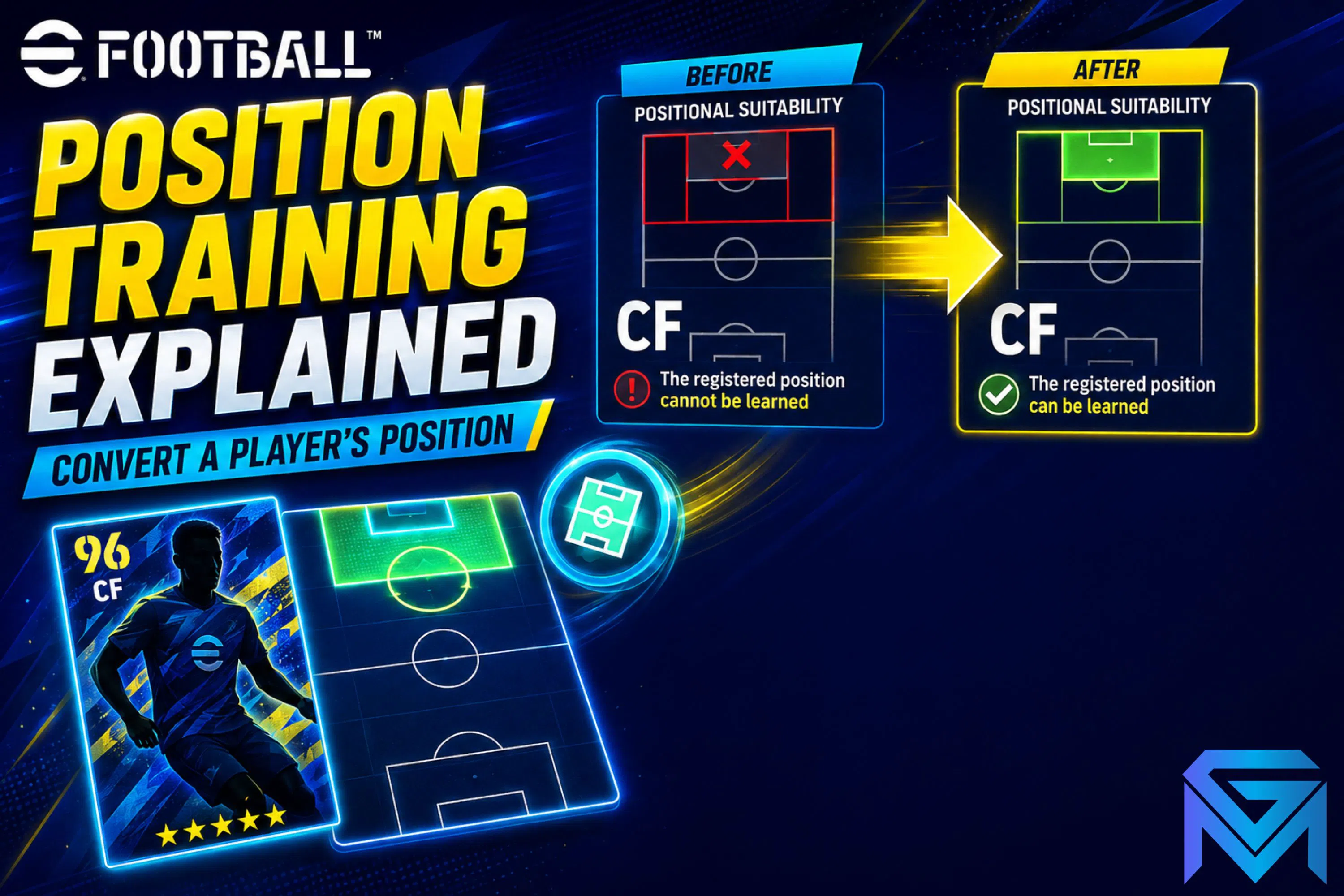
Position Training in eFootball lets you permanently add a new position to a player card so he plays there without the out-of-position penalty. It changes where a player is comfortable on the pitch — not his underlying stats — and it consumes a dedicated training item rather than GP.
That single sentence hides a lot of detail, and the detail is where squads are won and lost. Position familiarity quietly drives the on-pitch rating you see in the squad screen, decides whether a Playing Style stays active, and explains why a 101-rated card can look sluggish in a slot that should suit him. For a full breakdown of ratings, Playing Styles and skills, see our Player Stats Explained guide. This guide walks through the position map, what conversion actually does, where the training items come from, and which cards genuinely benefit — using the systems as they behave in the eFootball 2026 season. Konami's in-game help pages and the item descriptions inside Team Management remain the authority when a seasonal update shifts the specifics.
What is Position Training in eFootball?
Position Training is the feature that permanently unlocks an additional playable position on a player card. Once applied, the game treats that position as native: no familiarity penalty, no reduced in-slot rating. It is applied per card, per position, and it is not reversible.
You will find it inside Team Management, on the individual player's screen, usually alongside the other development options. The interface presents the player's position map — the small pitch diagram with circles at each role — and highlights which adjacent positions are eligible for conversion. Select one, confirm the cost, and the circle changes state permanently.
The important framing: eFootball does not let you turn a centre-back into a striker on a whim. Conversion is constrained to positions that are plausibly adjacent on the pitch map. A left winger (LWF) can usually reach LMF or a second-striker slot; a defensive midfielder (DMF) can reach CMF or centre-back. A goalkeeper cannot be converted at all. The system is designed to add tactical flexibility to a card you already own, not to redefine it.
How does the position map and position familiarity actually work?
Every card carries one Registered Position plus a set of familiarity ratings for every other role. The position map shows these as circles in different states: the registered position, other positions the player handles well, and positions where he is unfamiliar and takes a penalty.
Familiarity is a modifier layered on top of the card's raw attributes. The attributes themselves — Offensive Awareness, Ball Control, Finishing, Defensive Awareness and the rest — do not move. What moves is how effectively the game lets the player express them in that slot, and the squad screen reflects this in the rating shown under his name when he is placed there.
This is why two identical cards can post different numbers in your XI. Drop a natural CF into an SS slot he has never trained for and the displayed rating drops; the card is the same card, but the game is telling you he is working outside his comfort zone. Position Training removes exactly that gap and nothing else.
It is also worth understanding that familiarity interacts with your tactical instructions. A formation that asks its wide players to tuck inside, or a build that shuttles a midfielder between two roles during a match, exposes position familiarity far more than a rigid shape does. If you are still settling on a shape, our eFootball formation and tactics guide covers how the system decides where players actually stand once the whistle goes.
What does playing a player out of position cost you?
Playing out of position applies a visible rating reduction in the squad screen and a less visible behavioural cost during matches: slower reactions in the role's key duties, weaker positioning off the ball, and in many cases a Playing Style that stops applying entirely.
The behavioural half is the part players underestimate. A striker forced into a second-striker slot he is unfamiliar with will still shoot well, because Finishing is unchanged, but he will drift into the wrong pockets of space and arrive late to the chances that role is supposed to create. The stat sheet says he is fine. The match says otherwise.
The Playing Style consequence is sharper still. Styles such as Goal Poacher, Deep-Lying Forward, Box-to-Box, Anchor Man and Destroyer are tied to specific positions. If the style does not apply in the slot you have used, the card behaves like a generic player with those numbers — competent, but without the movement pattern you picked him for. Konami surfaces this in the player screen, where an inapplicable style is greyed out or shown as unavailable for the current position.
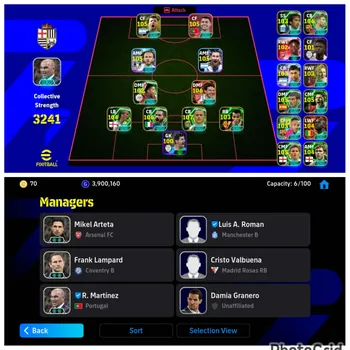
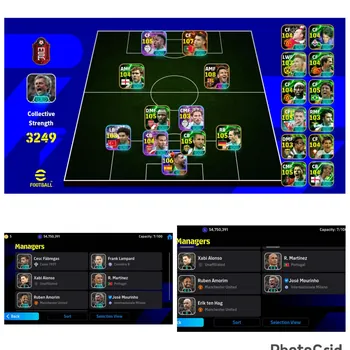
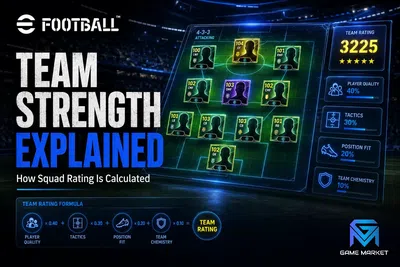
Squad Team Strength, the headline number on your squad screen, also responds to all of this. A squad stuffed with out-of-position stars can read lower than a tidier squad of slightly weaker cards playing where they belong.
How do you convert a player's position, step by step?
Open Team Management, select the player, choose the Position Training option, pick an eligible position from the highlighted circles on the position map, confirm the item cost, and apply. The change takes effect immediately and permanently on that specific card.
The practical sequence is short, but each step has a check worth making:
- Confirm the card is the one you intend to keep. Conversion is bound to that individual card, not to the player. If you later acquire a stronger version of the same footballer, the training does not transfer.
- Read the position map before spending. Only adjacent, eligible positions light up. If the slot you want is not offered, no amount of items will unlock it.
- Check the Playing Style column for the target position. This is the step most players skip. Confirm the style you actually want is applicable there before committing.
- Confirm the item cost. The dialogue states exactly what will be consumed.
- Apply, then re-check the squad screen. The rating in the new slot should now match his native level.
There is no undo. eFootball does not offer a reset for position conversions, so treat every application as final and plan the card's long-term role first.
What does Position Training consume, and where do those items come from?
Position Training consumes a dedicated Position Training item rather than GP or coins. These items arrive through events, campaign login rewards, seasonal missions, Tour and Event Match reward tracks, and occasional free packs — which makes them a patience resource rather than a purchasable one.
Because supply is event-driven, the sensible approach is to bank them and spend deliberately. During a heavy campaign window they accumulate quickly; during a quiet stretch between seasons they barely move. Players who convert impulsively during a busy month often find themselves short when a genuinely useful card arrives.
Two supply notes worth holding lightly rather than firmly: the exact reward tracks that grant these items change every season, and Konami has adjusted their distribution more than once across recent updates. Read the current campaign's reward list rather than assuming last season's sources are still active. The in-game item description is always the accurate statement of what a given item does.
If your priority right now is accumulating in-game currency rather than training items, the fundamentals in our eFootball beginner's guide to player cards, coins and squads lay out how the currency and card economy fit together.
Does converting a position change a player's stats or Playing Style?
No. Conversion does not add, remove, or alter a single attribute point. It changes which positions the card can occupy without penalty, and by extension which Playing Style is applicable — but the underlying numbers on the card are exactly what they were before.
This distinction matters when you are deciding where to spend. If a card's problem is that his Finishing is 78, Position Training will not fix it; that is a progression and card-quality question. If a card's problem is that he is excellent but standing in the wrong place, Position Training is precisely the fix.
The Playing Style effect deserves one more line because it is the real prize. Converting a wide forward to a second-striker position can activate a style that reshapes his movement entirely — the same attributes, expressed through a different off-the-ball pattern. That is often a bigger practical upgrade than a handful of progression points. Our eFootball team playstyle guide breaks down how those system-level styles interact with individual player behaviour, and our team playstyles explained guide covers what each tactic actually does on the pitch.
Which players benefit most from position conversion?
The best candidates are high-quality cards you intend to keep for a long time, whose ideal tactical role sits one step away from their registered position, and whose target Playing Style is applicable there. Depth pieces and short-term squad fillers rarely justify a limited item.
Four patterns come up repeatedly:
- The wide forward who should be a second striker. Common in squads built around a lone target man; converting the winger gives the shape a genuine second runner without acquiring a new card.
- The central midfielder who needs to sit deeper. Many strong CMF cards have the defensive attributes for a DMF slot but not the familiarity, and the conversion is usually adjacent and eligible.
- The full-back covering both flanks. Adding the mirrored side turns one card into genuine two-sided cover, which is disproportionately useful in a squad with thin defensive depth. It pairs naturally with the positioning work in our manual defending masterclass.
- The Epic or featured card you will never bench. Long-horizon cards return the most from a permanent, non-transferable investment.
The players who do not justify it: anyone you expect to replace within a season, anyone whose target position is not adjacent on the map, and anyone whose desired Playing Style is unavailable in the new slot. In those three cases the item does nothing you actually wanted.
How is Position Training different from Training Programs and progression points?
They are separate systems solving separate problems. Training Programs and progression points raise a card's level and attributes — they make the player better. Position Training changes where the player is comfortable — it makes the player usable elsewhere. Neither substitutes for the other.
Confusing the two is the single most common source of wasted resources. A player struggling in his natural position needs progression, not conversion. A player who is already strong but stuck in a slot your formation does not use needs conversion, not progression. Running the diagnosis backwards burns items on the wrong problem.
There is a sequencing argument as well. Because conversion is permanent and item-gated while progression is incremental and repeatable, most squads are better served by deciding a card's final role first, converting once, and then investing progression into that settled version.
What mistakes do players make with Position Training?
The recurring errors are spending on cards that will be replaced, converting before checking Playing Style applicability, assuming stats will improve, and expecting non-adjacent conversions the system never offers. All four are avoidable with a thirty-second check on the player screen.
A fifth is subtler: converting to fix a formation problem that a tactical adjustment would solve for free. If a card looks wrong in your XI, it is worth confirming that the issue is familiarity rather than shape, instructions, or the manager preset driving your team's movement. Comparing your setup against the options in our guide to eFootball managers by playstyle often reveals that the player was never the problem.
The last mistake is hoarding to the point of never using the items at all. They have no value sitting in an inventory. Once a card has clearly earned a permanent place and its target role is settled, spending is the correct move.
Frequently asked questions
Can Position Training be undone?
No. eFootball does not provide a reset for position conversions. The added position is permanent on that card.
Does the conversion transfer to a newer version of the same player?
No. Training is bound to the individual card. A different version of the same footballer is a separate card with its own position map.
Can goalkeepers be converted?
No. Goalkeeper is excluded from the system, and outfield players cannot be converted into goalkeepers.
Will my Squad Team Strength go up after converting?
It can, because removing an out-of-position penalty raises the rating that card contributes in its slot. The card's own attributes are unchanged, so the effect comes entirely from correcting familiarity.
Is it better to convert a player or acquire one who already plays there?
It depends on what you already own. If your existing card is strong and the target position is adjacent and style-compatible, conversion is the cheaper route in real terms. If the target position is not eligible on his map, acquiring a natural fit is the only option.
Where to Find eFootball Hourly Services and Boosting
On GameMarket.gg you can book eFootball hourly services when you only need a few hours of help, compare eFootball boosting listings if you would rather hand over a full push, or look through the eFootball market hub for everything else available right now.
Building a squad where every card plays in a position it actually suits is the difference between a team that looks strong on paper and one that performs on the pitch — and if you would rather have that progression handled for you, browse the available eFootball boosting options on GameMarket.gg to see what is on offer for your squad.
GameMarket.gg is a trusted digital marketplace for everything gaming-related. We serve the gaming community by providing secure access that enhances every gaming journey.