Clash Royale Merge Tactics October Update: Supers, Elixir & Balance
By Sir Ayup 3 October 2026, 14:00 WIB
Clash Royale Merge Tactics Season 11 received its October overhaul on October 1, 2026, and the three headline changes all point in the same direction: every Elixir now matters more, and cheap troops matter most. Supers are no longer handed out at the start of a match, Elixir per round drops from 5 to 4, and a balance pass narrows the gap between low-cost and high-cost troops. Taken together, that shifts the mode away from building around a free Super and toward efficient merging with cheaper units. This breakdown covers each change, the new Boss Supers, what else arrived with the update, and how to adjust your strategy for the rest of the season.
Why the October Update Matters
Season 11 is unusual because it runs for three months without a ranked reset, from September 1 to November 30. Instead of a fresh season each month, the variety comes from a monthly rotation of Supers, the powered-up 5-Elixir versions of regular troops that each carry two abilities. September featured Rider Supers, and October brings back the Boss trait.
That long format raises the stakes of any mid-season change. A shift on October 1 is not a short-lived tweak, because it shapes the remaining two months of your climb. So players who adapt early have more time to benefit, while players who keep using September habits may find their results slipping without knowing why.
The developers explained their reasoning openly. Monthly Supers had made certain strategies too dominant, the gap between high-cost and low-cost troops had left fewer viable team compositions, and the preparation phase had become too hectic. Each of the three headline changes targets one of those problems, which is why they make the most sense read together rather than one by one.
Supers Move Into the Shared Pool
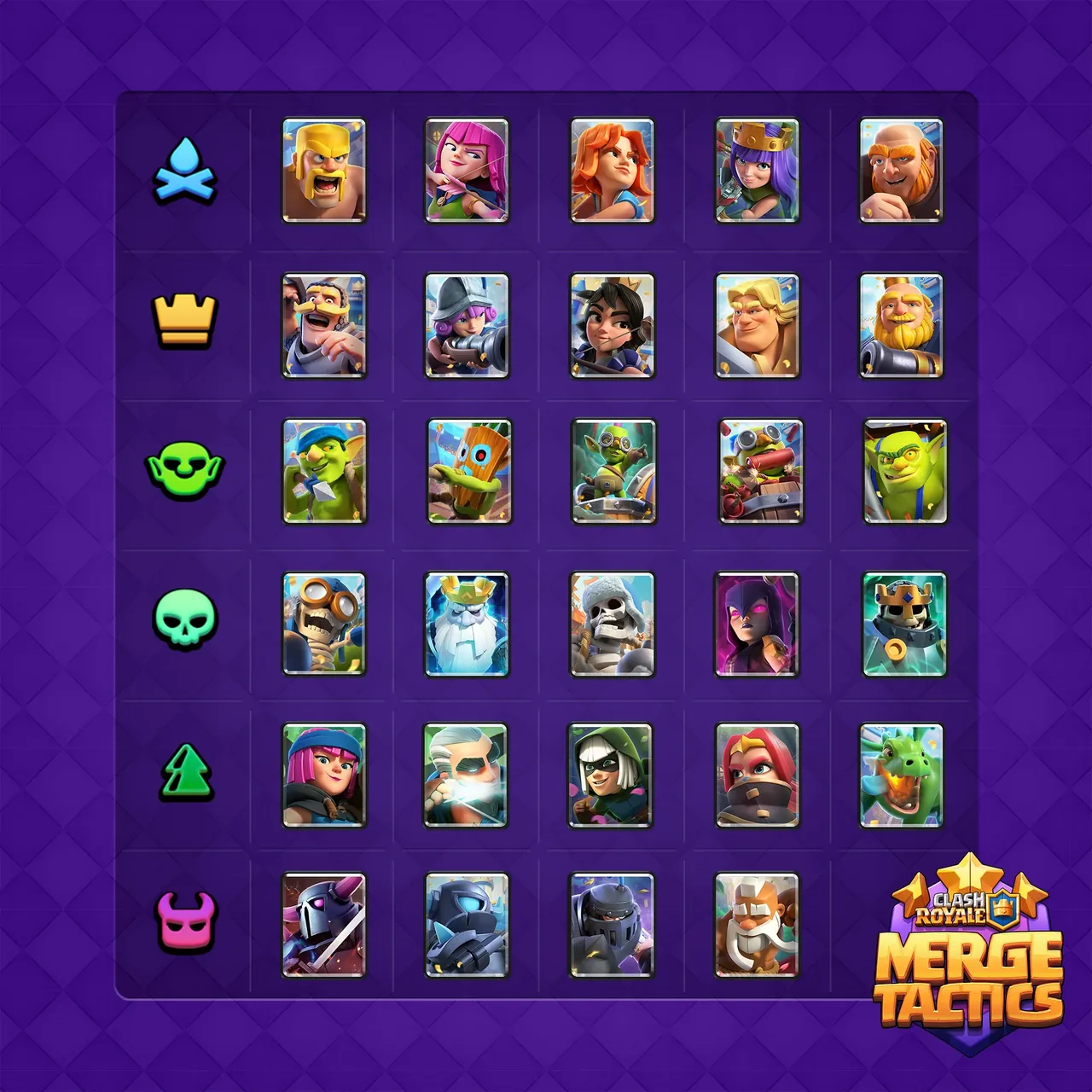
The first problem was how Supers were distributed, and it is also the change that alters the opening of every match.
In September, four Supers were randomly assigned to each player at the start of a battle. That made a strong opening partly a matter of luck, and it pushed many players into the same strategies built around whichever Supers they received. From October 1, Supers are no longer given as starting troops. Instead, they sit in the shared pool, where every player in the lobby can find and compete for them.
In their place, every match once again starts with a random 2-Elixir troop. So your opening is cheaper and less decisive, and the Supers become a contested prize rather than a guaranteed advantage. If another player is collecting the same Super you want, you are now competing for the same copies, which makes reading the lobby and adapting your plan more important than it was in September.
This also explains why the balance pass focuses on low-cost troops. If every match starts with a 2-Elixir troop and Supers are harder to secure, the cheaper units need to be strong enough to carry the early rounds on their own.
Elixir Per Round Drops From 5 to 4
The second change addresses the preparation phase, and it affects every decision you make between rounds.
Season 11 added more ways to build and power up a team than any previous season, which also led to far more buying and selling between rounds than intended. To make each purchase and sale more meaningful, the Elixir earned per round has been reduced from 5 to 4.
One Elixir sounds small, but it is a 20% cut to your income every round. Over a full match, that adds up to several fewer purchases, so constantly selling and rebuying troops in search of a better board now costs far more than before. Committing to a plan early and merging toward it is more efficient than rerolling your bench every round.
This is also where the shared-pool change and the Elixir cut reinforce each other. With less income, chasing a contested 5-Elixir Super is a bigger gamble, because a failed chase leaves you with less Elixir to fall back on. Cheap troops that merge quickly become the safer foundation.
The Balance Pass: Cheap Troops Up, Expensive Troops Down
The third change completes the picture by adjusting troop power directly. The stated goal is to reduce the power gap between high-cost and low-cost troops at the same Merge Level, so that more team compositions are viable.
The balance values reported for this update give 2-Elixir troops a 25% increase to both Hitpoints and Damage at every Merge Level, while 4-Elixir troops lose 17% of their Hitpoints and Damage. 3-Elixir troops appear to be unchanged. Check the in-game troop cards to confirm the exact values for the troops you use, because they decide how your board performs in practice.
The implication is straightforward. A merged 2-Elixir troop now holds its ground much better against a merged 4-Elixir one, and since 2-Elixir troops are cheaper to collect and merge, they reach higher star levels faster. So in October, a board built from well-merged cheap troops can compete with one built around expensive units, especially in the early and middle rounds when Elixir is tight.
That does not make 4-Elixir troops useless. Their abilities and trait contributions still matter, and a fully merged expensive troop can still carry the late game. But they are no longer the automatic choice they were in September, and investing in them now needs a clear reason, such as completing a key trait.
If you want the earlier context, our breakdown of the Season 11 launch balance changes explains the September adjustments this update builds on.
October's Boss Supers

With Supers now in the shared pool, it helps to know what you are competing for, because October's lineup is built around the returning Boss trait.
The October Boss Supers are Mega Knight, P.E.K.K.A, Mini P.E.K.K.A and Monk. Their defining mechanic is a two-stage design: each Boss Super upgrades to Stage 2 when its HP drops below 50%. So they become more dangerous as a fight goes on, which rewards keeping them on the field rather than letting them fall early.
- Mega Knight: In Stage 1, he jumps onto enemies every few seconds, dealing area damage and stunning them for 2 seconds. In Stage 2, each hit knocks back and stuns its target.
- Monk: In Stage 1, every third hit knocks his target back, giving him a natural way to disrupt enemy formations.
- P.E.K.K.A and Mini P.E.K.K.A: Both return as Boss Supers with their own two-stage abilities, so check their in-game cards before building around them.
Because the Boss Supers gain power below half HP, pairing them with troops that protect them or draw fire early can push them into Stage 2 at the right moment. Our overview of how Supers work in Season 11 covers the system in more detail, including how they compare with September's Rider Supers.
Modifiers, Skins and Badge Changes

Beyond the three core changes, the October update brings several smaller additions that are worth knowing before you queue.
- New modifier rotation: Every league from Bronze I to Diamond has a new pair of modifiers for October. For example, Silver IV features Battle Royale and Goblin's Treasure, while Diamond features Jump Tile and Cursed Tile.
- Level 5 skins: Battle Machine and Dagger Duchess receive new Level 5 skins. Players who already have these Rulers at Level 5 receive the skins automatically.
- Badge changes: From the end of Season 11 on November 30, Merge Tactics badges follow the same structure as other Clash Royale badges, with a Silver Badge for reaching Diamond League and a Gold Badge for finishing in the Top 10,000. These rules do not apply in October.
- Bug fix: Equipment from Dagger Duchess is no longer auto-equipped, matching how other equipment works.
The badge change is the one with long-term weight. Since Diamond League now earns a Silver Badge, reaching Diamond by the end of the season has a permanent reward attached, which makes adapting quickly to the October changes even more worthwhile.
How to Adjust Your Strategy for October
With all of the changes laid out, the adjustments follow naturally from the same idea: less Elixir and stronger cheap troops reward efficiency over gambling.
- Build from cheap troops early: Use your starting 2-Elixir troop and other low-cost units as your foundation, since they gained the most from the balance pass and merge fastest.
- Sell and reroll less: With only 4 Elixir per round, commit to a plan early instead of constantly rebuying, because every wasted Elixir now costs a larger share of your income.
- Treat Supers as a bonus, not a plan: Pick up a Boss Super when the lobby lets you, but avoid draining your Elixir chasing one that other players are also collecting.
- Invest in 4-Elixir troops with purpose: Use them when they complete a trait or fill a specific role, not as default upgrades.
- Protect your Boss Supers: Position them so they survive long enough to reach Stage 2 below 50% HP, where they do their best work.
The October overhaul does not ask you to relearn Merge Tactics. It asks you to spend more carefully. Players who build around efficient merging and treat every Elixir as scarce will find the remaining two months of Season 11 much easier to climb than those still playing the way September rewarded.
If you want to start from a more developed account, you can explore trusted Clash Royale Accounts, keep your daily progress and Merge Tactics climb on schedule with reliable Clash Royale Hourly Services, or push toward Diamond League faster through dependable Clash Royale Boosting.
GameMarket.gg is a trusted digital marketplace for everything gaming-related. We serve the gaming community by providing secure access that enhances every gaming journey.