Battlefield REDSEC Rapid Royale: Everything You Need to Know
By Rivan WiBattlefield REDSEC is shaking up its battle royale with a brand-new mode built for players who find the standard formula too slow. Rapid Royale arrives on October 13, and this GameMarket.gg breakdown covers everything it changes, from a shrunken player count to the mechanics that keep you in the fight longer. The whole pitch is right there in the name: faster drops, smaller zones, and matches measured in minutes rather than the long grind of a full-size battle royale. The question the mode is really asking is whether this quicker, punchier take can win over players who are tired of waiting around for the action to start.
What Rapid Royale actually is
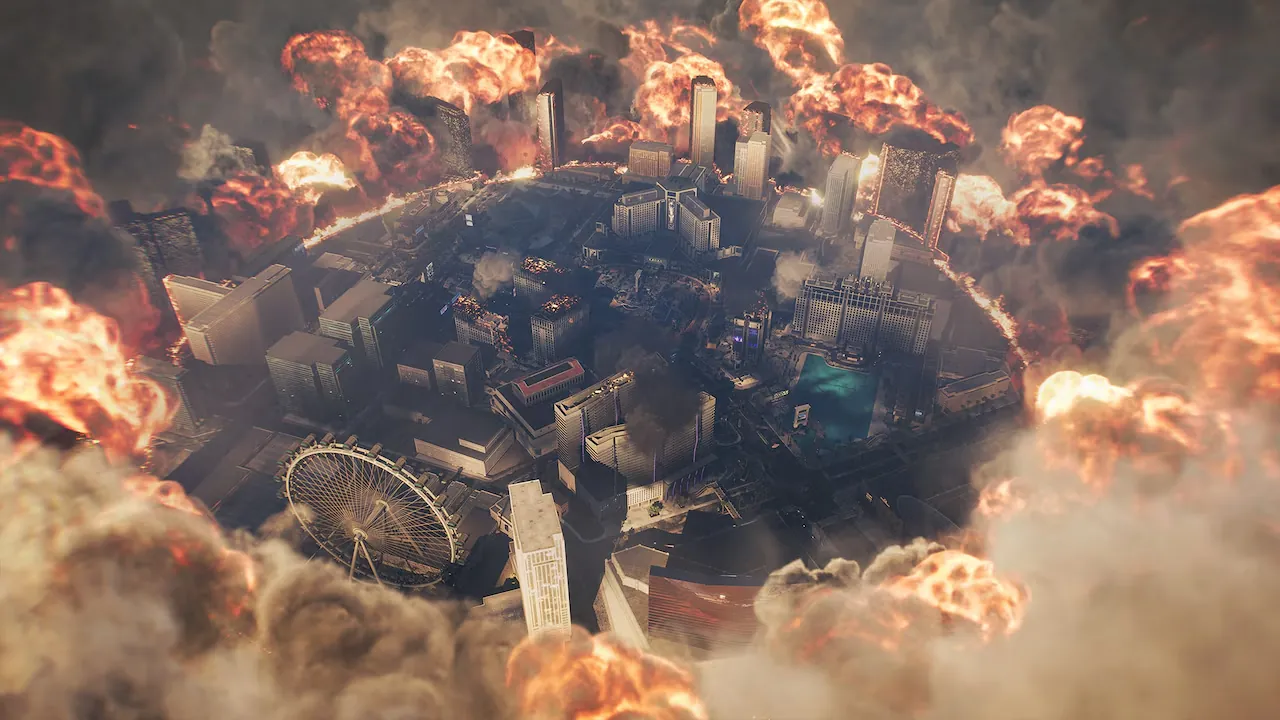
Rapid Royale is a faster, more compact version of REDSEC's battle royale, tuned from the ground up for speed and constant action. Instead of the standard mode's 100-player lobbies, it drops the count to a tighter 36 players, and matches wrap up in roughly 10 to 13 minutes rather than dragging on. It runs alongside the normal battle royale instead of replacing it, so you can pick the pace you are in the mood for.
The mode launches in both Trios and Solos, giving you the choice of squadding up with two friends or going it completely alone. At launch it plays out across two maps, Vegas Strip and Mirak Valley, with Area 51 lined up to join later and more maps planned down the road. That rotation is designed to keep the fast format feeling fresh rather than letting a single arena get stale.
For anyone new to it, REDSEC is Battlefield's free-to-play battle royale, built on the foundation of the modern Battlefield shooter and known for its destructible environments and large-scale firefights. Rapid Royale takes that same core and strips out the downtime, so the Battlefield feel stays intact while the pacing gets a serious jolt of adrenaline.
What makes it so much faster
The speed is not just a smaller lobby; nearly every part of the match has been retuned to cut out dead time. Right from the start, the intro cinematic is gone, the insertion height is lower, and the deployment aircraft fly closer together, so squads land faster and run into each other almost immediately. You are fighting within moments of the match beginning instead of gliding across an empty map.
The shrinking play area is just as aggressive. Each map runs on its own customized circle timings and sizes, with smaller combat zones and faster-closing rings that force players together constantly. There is far less time spent wandering in search of the next fight, which is exactly the point of the whole mode. If you have ever felt a standard battle royale go quiet for minutes at a time, Rapid Royale is the direct answer to that complaint.
Looting has been streamlined too, so you spend your time shooting rather than scavenging. Armor is more plentiful, ammo pickups hand out extra resources, and overall loot density is higher, meaning you gear up quickly and get back into the action. Loot chests even refresh midway through the match to keep resources flowing, and heavy vehicles like tanks and IFVs are excluded so fights stay focused on fast, infantry-driven chaos.
The close-quarters intensity is amplified by a feature REDSEC added to its battle royale: proximity chat that lets you hear nearby enemy squads. In a mode built around constant, compressed encounters, being able to overhear a rival team arguing over loot a room away, and knowing they can hear you too, adds a layer of tension that fits Rapid Royale perfectly. When fights are this frequent and this close, every footstep and stray voice line becomes information, and that human unpredictability is part of what makes the faster pace so gripping.
Redeploy Tokens keep you in the fight
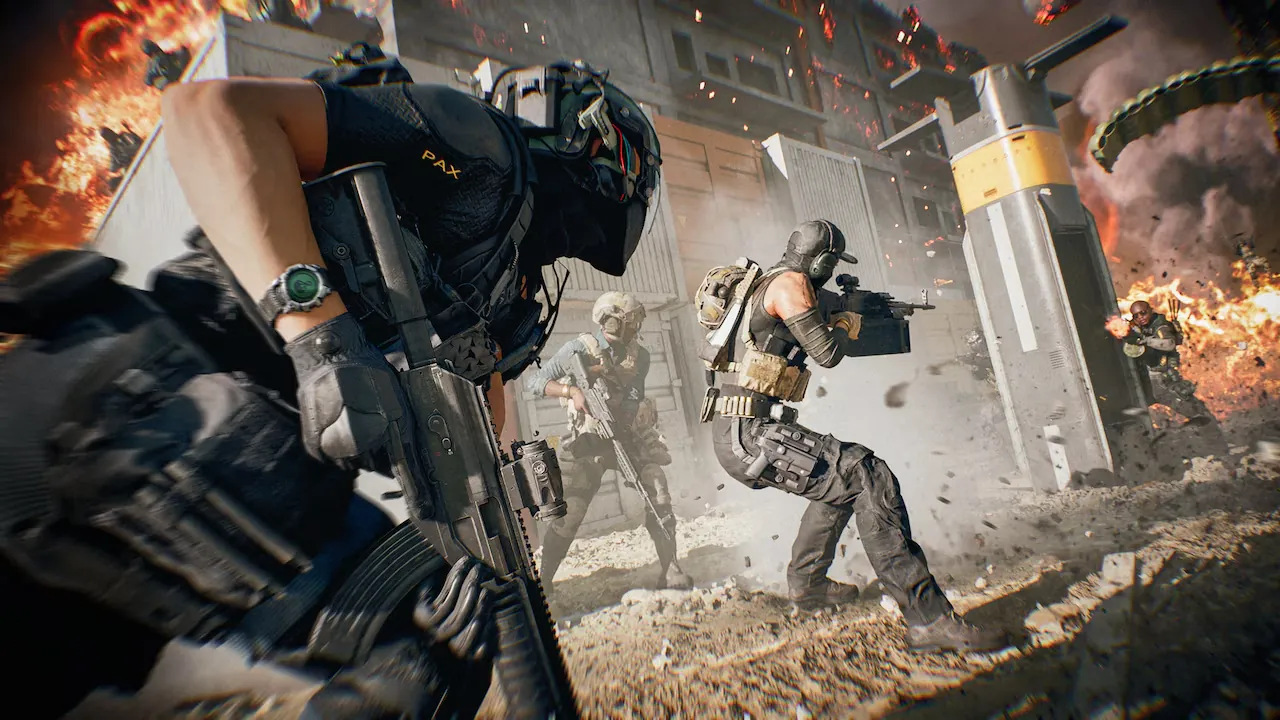
One of the biggest changes to the formula is that getting eliminated does not always mean sitting out the rest of the match. Rapid Royale introduces Redeploy Tokens, which let eliminated players return to the fight, and they work differently depending on your mode. You earn them through squad eliminations or by finding them as rare loot, so staying aggressive is rewarded with more chances to respawn.
In Trios, tokens are a shared squad resource, and when a teammate goes down, spending one opens a redeploy window that lets them rejoin the fight. In Solos, the system is simpler, with each token granting a single redeployment for you alone. Either way, the result is a mode that punishes mistakes less harshly than a traditional battle royale, encouraging bolder plays instead of hyper-cautious hiding.
That generosity has a hard limit, though, which keeps the endgame tense. Tokens become harder to earn as the match goes on and are disabled entirely once the final circles close in, so eliminations in the closing moments are permanent. It is a smart balance: early fights feel loose and action-packed, while the finale regains the do-or-die stakes that make battle royales thrilling.
Intel Cases, Ordnance Drops, and progression
Rapid Royale also layers in systems that reward aggression with more than just survival. Every eliminated soldier drops an Intel Case, which grants XP toward Field Upgrades that unlock class abilities during the match. Crucially, you can grab these from any defeated player, not just the ones your squad took out, so looting the aftermath of someone else's battle pays off.
The map also rains down rewards at regular intervals through Ordnance Drops, waves of loot released throughout the match. These contain some of the best gear in the mode, including Custom Weapons, Call-ins, Armor, Ammo, Redeploy Tokens, and Battle Pickups, and because their landing spots are telegraphed in advance, they become natural flashpoints where squads collide. Fighting over a telegraphed drop is a reliable way to guarantee the kind of constant action the mode is chasing.
Together, these systems give Rapid Royale a sense of momentum that standard battle royale often lacks. There is always a reason to push forward, whether it is chasing a Field Upgrade, contesting an Ordnance Drop, or banking tokens to keep your squad alive. The mode is clearly designed so that playing aggressively is not just viable but actively the smart strategy.
The two launch maps feed into that design as well. Vegas Strip leans into tight, built-up urban fighting, while Mirak Valley offers a more varied mix of terrain, so each one asks for a slightly different approach even within the same breakneck format. With Area 51 and more maps promised later, the plan is clearly to keep the rotation lively so the fast pace never settles into a single predictable routine, which is exactly what a mode like this needs to hold players over the long term.
Rapid Royale or standard battle royale?
So here is the honest answer to the question the mode keeps raising. If you love the slow build, the careful positioning, and the big-map tension of a classic 100-player battle royale, the standard REDSEC mode is not going anywhere, and Rapid Royale is not trying to replace it. The two running side by side means you never have to give up the experience you already enjoy.
But if you have ever quit a match out of boredom during a quiet stretch, Rapid Royale is almost certainly going to click for you. The shorter matches, denser fights, and forgiving respawns are tailor-made for players who want maximum action in minimum time, and the quick 10-to-13-minute runs make it easy to fit in a few rounds without committing to a long session. It is battle royale distilled down to the parts most people actually show up for.
It also lowers the barrier for newcomers in a way the standard mode does not. A 100-player map can be intimidating for anyone still learning the ropes, but a 36-player match with generous respawns gives new players far more chances to actually practice fighting instead of dying once and spectating for ten minutes. Because REDSEC is free to play, trying Rapid Royale costs nothing, so there is no reason not to drop in and see whether the quicker rhythm suits you better than the slow burn of the full-size mode.
Either way, the arrival of Rapid Royale on October 13 gives REDSEC players a genuine choice in how they want to drop in. The only way to settle whether faster and punchier beats slow and tense is to try both for yourself, so queue up a few rapid rounds, see how the quicker pace feels, and decide which version of the battlefield is really for you.
Modern Battlefield gear and services move fast too, so if you want to kit out and keep up, you can explore trusted Battlefield accounts, save time ranking up with reliable Battlefield hourly services, or climb faster through dependable Battlefield boosting.
GameMarket.gg is a trusted digital marketplace for everything gaming-related. We serve the gaming community by providing secure access that enhances every gaming journey.