

NBA 2K27 DLSS 5 Explained — Neural Rendering & Should You Turn It On
By Rivan Wi 3 October 2026, 09:00 WIBNBA 2K27 is the first game in the world to run NVIDIA DLSS 5, and its neural-rendered visuals look so lifelike that a single screenshot can genuinely pass for a televised NBA broadcast. That is the real story, not just "better graphics." DLSS 5 is not a sharper version of the same picture. It is a brand-new rendering stage that paints light, skin, and shadow the way a real camera would, and NBA 2K27 happens to be the proving ground that the entire PC gaming world is now judging it on. So whether you already own a new RTX card or you are just staring at the clips in disbelief, being the first game out of the gate makes NBA 2K27 the title the whole PC world is using to decide what DLSS 5 really is, which is exactly why it is worth understanding what the technology does, what it costs to run, and whether this jump to photorealism is one we even needed.
Why NBA 2K27 suddenly became a graphics landmark
For years, each NBA 2K release looked a little cleaner than the last, and most people stopped paying close attention. NBA 2K27 broke that pattern because it did not just ship a yearly visual upgrade, it became the launch title for an entirely new rendering technology. DLSS 5 went live on September 3, 2026, and at launch it was available in exactly one game: this one. Because 2K's Visual Concepts studio got early access to the technology, NBA 2K27 turned into the single public showcase for it, so nearly every photorealistic clip circulating right now is pulled from this title and nothing else. That is why your feed is suddenly full of "is this real or a game?" reactions, and it is exactly why the footage blurs the line the way it does. The game did not quietly get prettier. It became the first real argument for where PC visuals are heading next.
What DLSS 5 actually does differently
To understand why the faces look photographed, you have to understand how DLSS 5 differs from everything before it. Earlier DLSS versions were about reconstruction. They took a lower-resolution frame and intelligently rebuilt it, to the point where the AI could draw roughly 23 out of every 24 pixels you saw on screen. That made games run faster, but it was still rebuilding a picture the engine had already designed. DLSS 5 does something categorically different. NVIDIA calls it 3D-guided neural rendering, and instead of reconstructing existing pixels it generates new visual information as the final stage of the graphics pipeline. It takes the game engine's rendered frame as a fixed foundation, then layers in lifelike lighting and material detail on top of it.
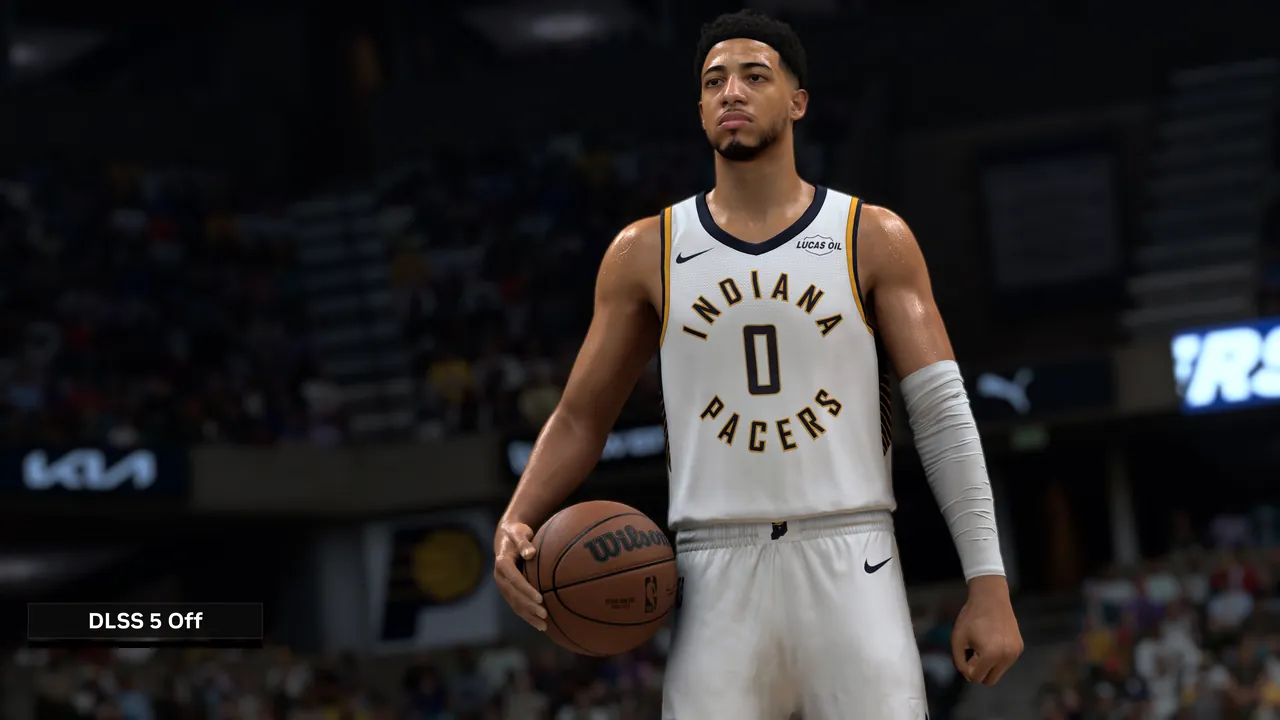
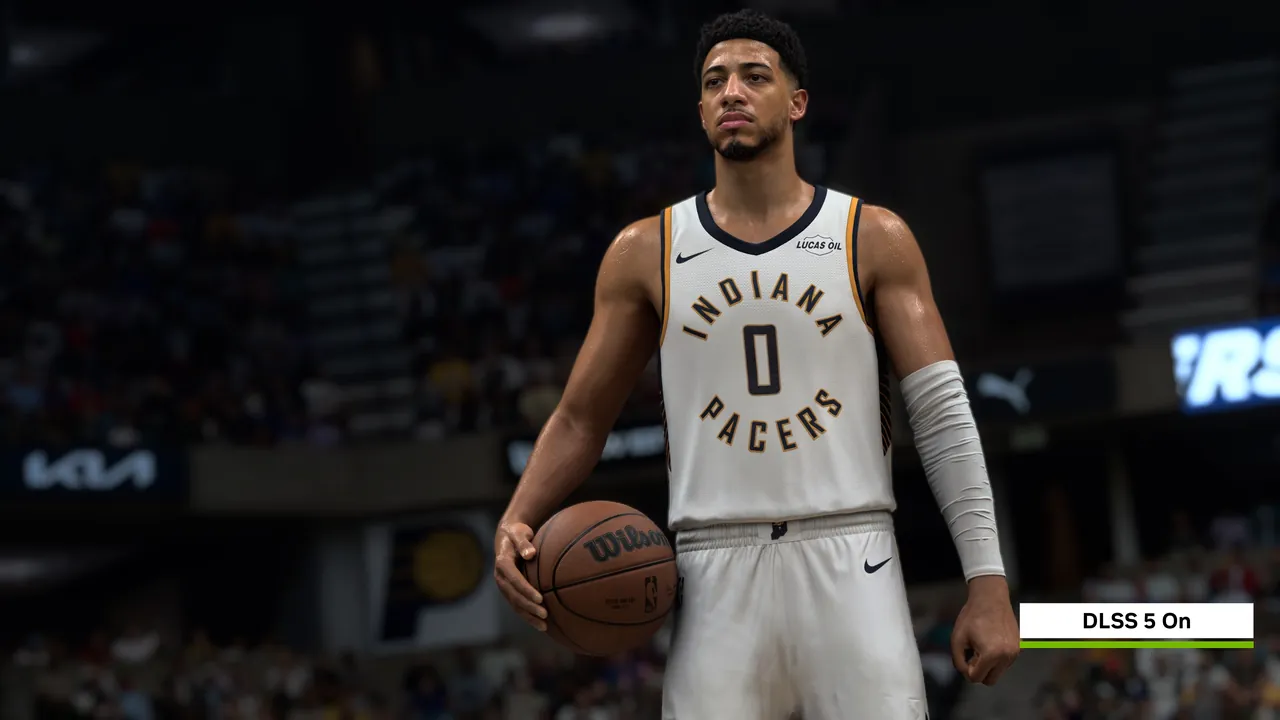
In practice, that shift is what produces the uncanny realism. Because the AI model is adding real light behavior rather than guessing at pixels, you get natural subsurface scattering in skin, light transmission through hair and jersey fabric, deeper contact shadows where a foot meets the hardwood, and refined global illumination and ambient occlusion across the whole arena. The model also runs on a strict one-frame-in, one-frame-out basis and behaves deterministically, meaning the same scene always produces the same result, so the realism stays stable instead of shimmering frame to frame. That combination is the reason a player's face in NBA 2K27 reads less like a 3D model and more like a close-up photo, which loops straight back to the question the clips keep asking.
It also helps to be clear about what DLSS 5 is not, because the names get confused easily. This is not simply frame generation inserting extra frames for higher numbers, and it is not an upscaler stretching a small image to a big screen. Those tools chase performance. DLSS 5 chases fidelity, spending AI power to make each frame look more physically correct rather than just making more of them. NVIDIA's own leadership has framed this as a turning point for the medium, describing it as a kind of "GPT moment for graphics" where hand-crafted rendering and generative AI finally blend. That framing sounds like marketing until you see it in motion, because the lighting reacts to movement the way light does in a real gym, so a drive to the basket carries believable bounce light and reflected color instead of the flat, baked look older games fall back on. The point is not that NBA 2K27 has more effects, it is that the effects finally behave like physics, and that is precisely why the footage keeps getting mistaken for a live feed.
The hardware reality behind the hype
All of that neural rendering has to run somewhere, and this is where the dream meets your wallet. Because DLSS 5 sits at the end of the rendering pipeline and does heavy AI work on every frame, it is demanding, so at launch it only runs on the newest hardware. Official support covers the entire RTX 50 series, including RTX 50 series laptops, plus GeForce NOW streaming on RTX 5080-class cloud rigs. Official RTX 40 series support was confirmed as coming later rather than at launch, so owners of the previous generation are waiting. You also need at least Game Ready Driver 616.64 WHQL for it to work.
Performance tells the same story. Running NBA 2K27 at the Ultra preset with ray tracing, NVIDIA's own numbers show the RTX 5090 reaching up to 370 FPS at 4K and up to 590 FPS at 1440p, while the RTX 5080 hits around 410 FPS, the RTX 5070 Ti around 350 FPS, and the RTX 5070 around 260 FPS at 1440p. Those are strong figures, but notice they come from the top of the stack, so the smooth, photorealistic experience everyone is sharing is currently gated behind current-generation cards. The realism is absolutely real, but it is not free, and that cost is a big part of whether this leap is worth it for any individual player.
There is an important piece of good news hiding in that demand, though. When DLSS 5 first surfaced, it reportedly needed two flagship cards working together just to run, yet within about six months the team had squeezed roughly a 5X improvement out of it so it runs on a single GPU, with further optimization expected through the fall. Because the technology is getting cheaper to run so quickly, the hardware wall around it is likely to keep shrinking over time, which is also why the official RTX 40 support on the way is realistic rather than wishful. And if you do not own the right card at all, there is still a door in: GeForce NOW streams NBA 2K27 with DLSS 5 from cloud rigs, so you can see the photorealistic version on modest hardware without buying anything. That matters for the bigger question, because it means the "do we need this?" debate is not only for people with expensive PCs, it is slowly becoming something almost anyone can judge for themselves.
So is this level of realism actually necessary?
This is the honest debate, and it is the exact question the hype tends to skip. Not everyone is celebrating. The core criticism is philosophical: when an AI model decides how skin, hair, and lighting "should" look, some players feel they are no longer seeing the game as its artists intended, and the harshest take calls it a filter layered on top of real craft. That concern was not helped by the first reveal back in March, which looked almost cartoonishly overcooked. The reason was mundane: NVIDIA had pushed every intensity slider to maximum for that demo, so later balanced builds shown off at Gamescom looked dramatically more convincing and natural by comparison.
There are real safeguards here, which is why the balanced builds land better. DLSS 5 ships with developer controls like Structure Intensity for fine detail and Tone Intensity for lighting and color, plus semantic scene recognition and per-object masking, so studios can dial realism in rather than blast it everywhere. There is even per-pixel control for fine-tuning specific characters, which matters a lot for a sports game. Because NBA 2K27 is built on the faces of real athletes, the goal was never to invent new features but to light the existing, scanned geometry more believably, so the technology adds how a face catches gym light without changing whose face it is. That restraint is the difference between realism and a filter, and it is why the balanced version preserves artistic intent instead of overriding it.
Crucially, it is an optional setting. If you do not like the look, you can leave it off and play the game exactly as it shipped, which already answers the loudest version of the complaint. The more thoughtful worry is not about this game at all, but about the future: that some studios might one day lean on DLSS 5 as a shortcut for good visuals instead of treating it as a bonus on top of already well-crafted art. That is a fair thing to watch for across the industry. For NBA 2K27 specifically, though, the realism is a genuine option layered on top of a game that already looked good, and you are the one holding the switch, which means the "do we need it?" question honestly comes down to you rather than to NVIDIA.
Should you turn DLSS 5 on? A quick decision guide
Here is the practical way to decide, in order of what matters most for your setup and how you play.
- If you own an RTX 50 series card and you play NBA 2K27 for the presentation, atmosphere, and MyCAREER cutscenes, turn it on. This is the single best showcase of what your hardware can do right now, and it is the whole reason the game looks like a broadcast.
- If you are a competitive online player who cares most about the highest, most stable frame rate, treat it as optional. The visual payoff is huge, but it is resource-heavy, so test it against DLSS off and keep whatever keeps your gameplay smooth and responsive.
- If you are on an RTX 40 series or older card, hold off for now and wait for the official support that is on the way, rather than chasing unofficial workarounds that are not guaranteed to run cleanly.
Whichever bucket you land in, the takeaway is the same: NBA 2K27 is no longer just this year's basketball game, it is the first real test of photorealistic neural rendering, and that is exactly why one clip can leave you unsure whether you are watching a match or a menu.
If you want to jump into NBA 2K27 and experience these next-gen visuals for yourself without the long grind, you can explore trusted NBA 2K27 Accounts, save time building your MyCAREER or MyTEAM roster with reliable NBA 2K27 Hourly Services, or climb the ranks faster through dependable NBA 2K27 Boosting.
GameMarket.gg is a trusted digital marketplace for everything gaming-related. We serve the gaming community by providing secure access that enhances every gaming journey.